


The devastating flash floods that have swept through the mountainous region of Nepal have plunged the nation into a state of crisis, with the tragic loss of life and the agonizing uncertainty surrounding hundreds of missing people, including a significant number of foreign nationals. The disaster, which struck with little to no warning, has transformed the serene landscape of the Rasuwa district into a scene of utter devastation, marking one of the most severe natural calamities the area has faced in recent times. The initial reports paint a grim picture, with the death toll confirmed at seventeen, but officials and witnesses on the ground are bracing for the number to climb substantially as rescue teams manage to reach the most isolated and heavily affected communities. The sheer force of the water, which tore through the Bhote Koshi river valley near the border with Tibet, has rewritten the geography of the region, washing away entire hamlets and leaving behind a trail of mud, debris, and broken lives. The international community is now turning its eyes toward the Himalayas, awaiting news of hundreds of people whose whereabouts remain unknown, and hoping against hope for a miracle as the search and rescue operations continue against formidable odds.
At the heart of this unfolding tragedy is the staggering number of missing persons, which has become the focus of desperate international attention. The Nepali government’s spokesperson, Sasmit Pokharel, has confirmed that a total of 291 foreign nationals are unaccounted for, a figure that includes at least twelve British tourists, along with 93 Nepali citizens. This revelation has sent shockwaves through families across the globe, particularly in the United Kingdom, where relatives of those who ventured to Nepal for trekking and mountain adventures now wait in anguished anticipation for any news. The Bhote Koshi river, which is an integral part of the region’s appeal for adventure tourism, is now the site of a massive search operation, but the challenges are immense. The flooding occurred early Wednesday morning, catching locals and tourists alike in their sleep, leaving many with no chance to escape the torrent. Witnesses have described the horrifying speed with which the waters rose and engulfed entire villages, sweeping away homes, lodges, and vehicles in a matter of minutes. The number of missing suggests that the final death toll could be tragically higher than the current count, a reality that weighs heavily on the minds of rescue coordinators and the global community watching the situation unfold.
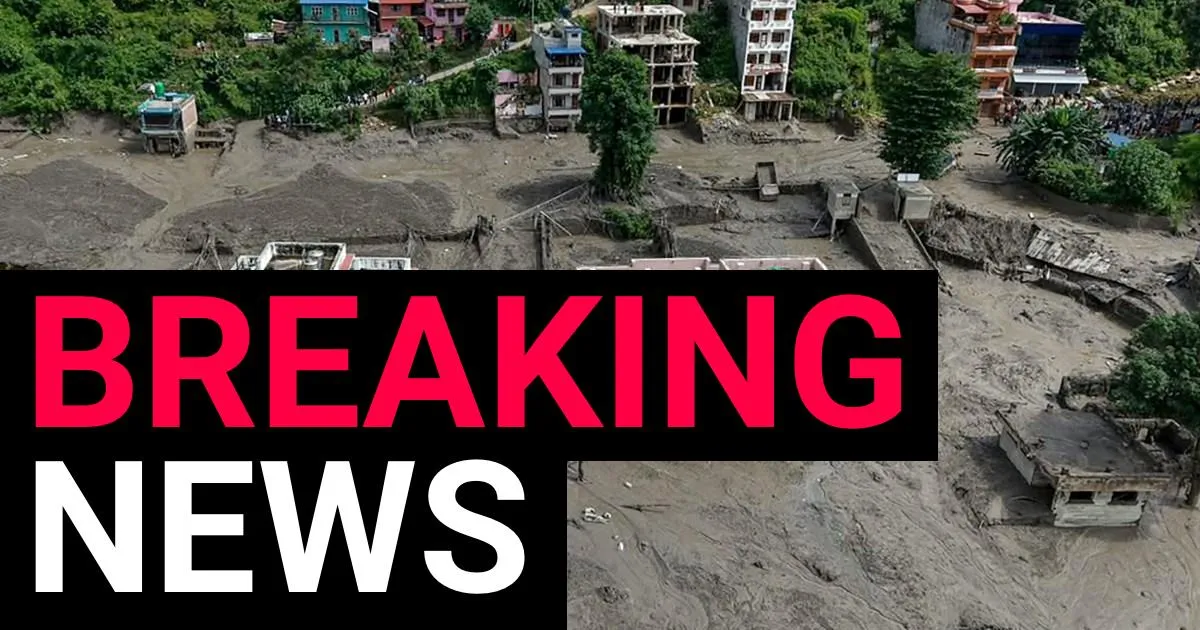
The physical devastation in the Rasuwa district is almost incomprehensible from the aerial footage and images emerging from the disaster zone. The floodwaters, brown and churning, have violently ripped through the landscape, leaving behind crumpled homes that look like toys discarded by a giant, and a major metal bridge that once served as a vital connection has been completely washed away, severing crucial supply lines and escape routes. The damage to infrastructure is not merely an aesthetic loss; it is a critical obstacle to the rescue efforts. Rescue helicopters have been dispatched to the area, but they are struggling to land due to the unstable terrain and the debris-strewn ground, making it incredibly difficult to ferry the injured to safety or deliver essential supplies to those stranded. The visual of homes reduced to rubble along the riverbank is a stark reminder of the vulnerability of human settlements in such volatile geographies. The river, which is normally a source of life and beauty, has become a furious engine of destruction, and its banks are now littered with the remnants of what were once thriving communities. The scale of the debris, from twisted metal to shattered timber, serves as a physical testament to the unimaginable force that the flash flood exerted on the region.
In the wake of the disaster, the immediate priority is rescue, but the logistical hurdles are proving to be a massive challenge for the Nepali government, which has now reached out for international assistance. Recognizing the scale of the catastrophe and the limitations of its own resources in such rugged terrain, the government has formally requested help from its powerful neighbors, India and China. This appeal for aid highlights the severity of the situation, as Nepal often relies on its own army and police forces for disaster response, but the scale of this flood has overwhelmed their capabilities. The request for assistance is not just about heavy machinery or more helicopters; it is about expertise in high-altitude rescue and the ability to navigate the treacherous conditions that are now preventing effective operations. The international response will be critical in the coming days, as the window for finding survivors narrows. The effort involves not only searching for the missing but also providing immediate medical care and shelter for the displaced survivors. The cooperation between Nepal and its neighbors, particularly in times of crisis, is now under the spotlight, as the world watches to see how quickly and effectively aid can be mobilized to the affected regions.
This isn’t the first time that Rasuwa has faced such a calamitous event, and the memory of a similar disaster is still fresh in the minds of the locals. In August of the previous year, the region experienced strikingly similar flash floods, a phenomenon that was attributed to the overflow of a glacial lake in neighboring Tibet, triggered by unusually high temperatures in the high mountain region. That event served as a harbinger of the risks that climate change poses to these delicate ecosystems, but the scale of the current disaster has now dwarfed that previous tragedy. Nine people lost their lives in the prior incident, and critical infrastructure, including the cross-border bridge, was damaged. Now, just a year later, the same area has been struck again, but with exponentially more devastating consequences. This repeated pattern is a dire warning sign that the region is becoming increasingly unstable. The melting of glaciers due to rising global temperatures is creating a dangerous number of unstable glacial lakes, which are essentially time bombs waiting to burst. The flooding in Nepal is a clear and present example of how global warming is not just an abstract environmental concern, but a direct and lethal threat to human life, particularly for those living in the shadow of the Himalayas.
Amidst the statistics and the geopolitical maneuvers, the true heart of this tragedy lies in the individual stories and the profound human toll that is unfolding. For every number in the missing count, there is a family member in Nepal, Britain, or elsewhere who is desperately searching for news. The community of Rasuwa, which once thrived on the flow of trekkers and the serenity of the mountains, is now a place of mourning and distress. The search and rescue operation is not just about logistics; it is a race against time for the families who are praying for a miracle. The long-term impact on the region will be staggering, as the local economy, heavily reliant on tourism, has been decimated, and the psychological scars on the survivors will take years to heal. The global community must not only rally to provide immediate disaster relief but also to support the reconstruction of the entire region, with a focus on building resilience against future floods. As rescue helicopters navigate the misty mountains, they carry the hopes of a nation. The story of this flood is a stark reminder of nature’s power, the consequences of a changing climate, and the enduring strength of the human spirit when faced with overwhelming adversity.