

The ongoing humanitarian crisis in the Democratic Republic of Congo (DRC) has reached a terrifying tipping point, as the country grapples with its largest outbreak of the rare and deadly Bundibugyo strain of Ebola. With official figures recording nearly 781 infections and 181 deaths, authorities warn that these numbers are likely a tragic undercount. The situation has become a perfect storm of misery, where the collapse of basic public infrastructure—specifically water and sanitation—has stripped the most vulnerable communities of their first and most vital line of defense against the viral spread.
Life in affected regions like Ituri has become a desperate daily struggle. In towns like Mongbwalo, where roughly 140,000 residents live, clean water is essentially a luxury item, inaccessible to the vast majority. Without the ability to wash hands or maintain basic hygiene, families are forced to rely on contaminated water sources, sometimes tainted by chemicals from local mining operations. For a mother like Tibakanya Mireille, who is watching the virus creep through her own community, the terror is palpable. She speaks of quarantined homes and neighbors lost to the illness, illustrating the agonizing helplessness of watching loved ones fade away while lacking the basic tools to protect those who remain.
The medical challenges are exacerbated by the unique and unforgiving nature of the Bundibugyo strain, for which no vaccine or definitive treatment currently exists. The virus spreads through bodily fluids, and because early symptoms often mimic common illnesses like the flu, it frequently goes undiagnosed until it is too late. The regional instability in the DRC compounds this; years of systemic violence have dismantled roughly 70 local health facilities and displaced millions, making the already difficult task of contact tracing nearly impossible. Today, only 43% of people who have come into contact with the virus are being successfully tracked, leaving the doors wide open for the disease to travel unnoticed through shifting, transient populations.
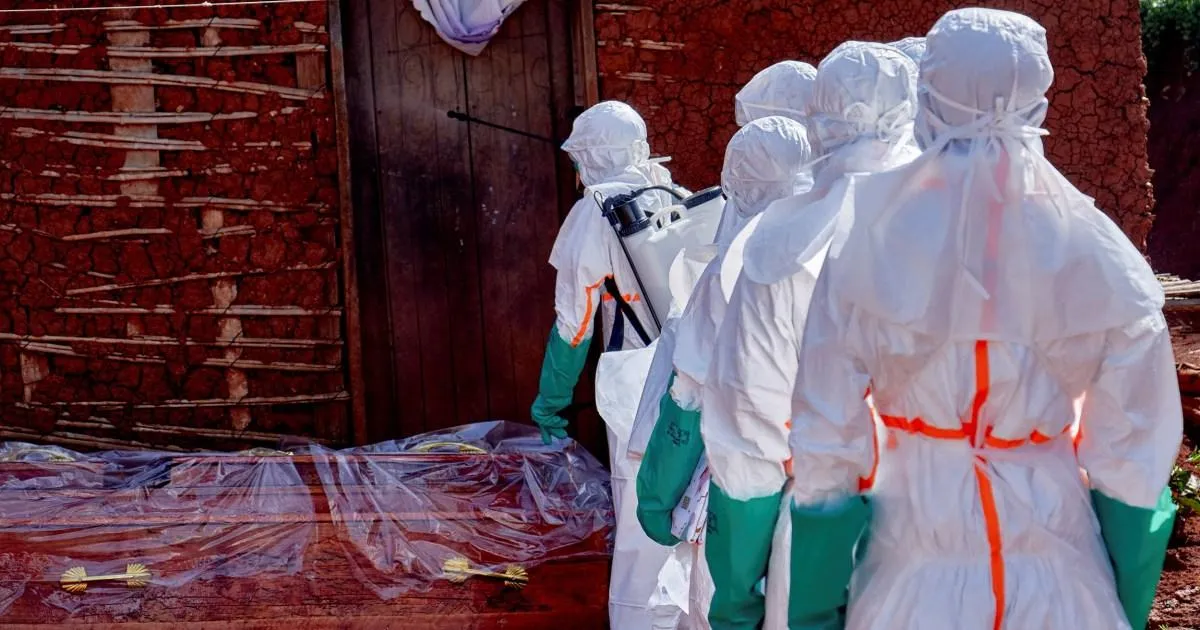
Faced with this mounting pressure, a profound erosion of trust has developed between the local population and healthcare workers. In their desperation to honor their dead and protect their communities, some locals have resorted to burning down isolation centers, viewing them as “death traps” rather than sites of healing. When authorities refuse to release the remains of those who have died of Ebola—a necessary measure to prevent further contagion—families are left in a state of mourning that conflicts with their traditional practices. This cultural divide, combined with fear and a lack of access to credible information, has severely hampered the containment efforts of international aid organizations.
Furthermore, the scale of this catastrophe cannot be separated from the shifting landscape of global funding. When international support wanes, lives are immediately put at risk; a clear example is the recent decline in contact tracing efficiency, which fell from an 80% success rate during the 2018 outbreak to its current abysmal levels, largely attributed to funding shortages and shifting geopolitical priorities. The withdrawal of crucial international surveillance support isn’t merely an administrative change in some distant office; it is a direct contributor to the unmonitored spread of a virus that demands constant vigilance. Every gap in funding represents a family that wasn’t reached, an exposure that wasn’t caught, and a transmission chain that wasn’t broken.
Despite the bleak reality, there are flickers of hope on the horizon. International medical teams report that a handful of patients have already recovered, and researchers in the UK are working to adapt proven COVID-19 vaccine technology to create a candidate for the Bundibugyo strain. While these advancements are promising, they remain in the developmental phase, leaving the current population to navigate the crisis with little more than raw endurance. As the world watches, the situation in the DRC remains a stark reminder that while technology can provide a path to safety, the strength of any health system relies on the basic human rights of water, sanitation, and the unwavering global commitment to the world’s most vulnerable.