


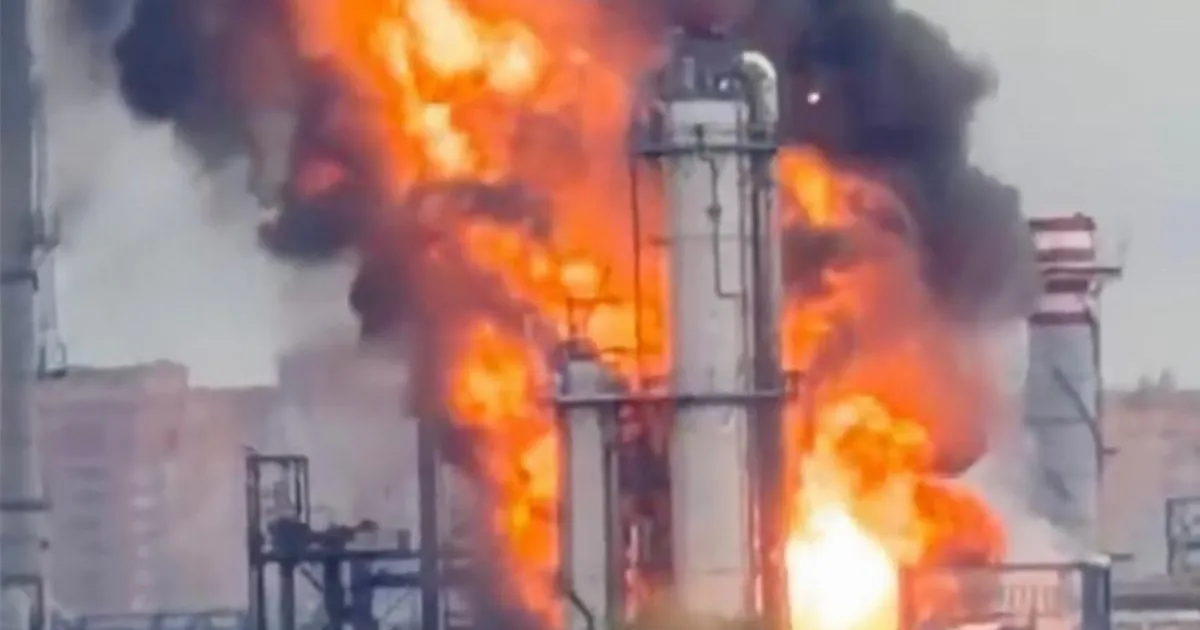
The war in Ukraine has taken a dramatic and symbolic turn as a massive swarm of drones breached Moscow’s supposedly impenetrable air defenses, slamming into the vital Kapotnya Oil Refinery. As world leaders gathered in France for the G7 summit to discuss the future of the conflict, the skies over the Russian capital turned dark with smoke. This daring breakfast-time assault was one of the most significant strikes on Moscow since the war began four years ago, signaling that no corner of Russia, regardless of its defensive technology, is truly safe from the reach of Ukrainian retaliation.
The impact of this strike extends far beyond the physical flames rising from the refinery. The Kapotnya facility is an economic powerhouse, providing roughly 40% of the capital’s fuel market and meeting 70% of the petrol needs for Moscow and its surrounding regions. Even though authorities, led by Putin loyalist Sergei Sobyanin, claimed they neutralized 60 of the incoming drones, the resulting fire at the refinery serves as a grim admission that their security measures failed. This breach is a psychological blow to the Kremlin, occurring just miles from the heart of Russian power and proving that even their most protected assets are vulnerable.
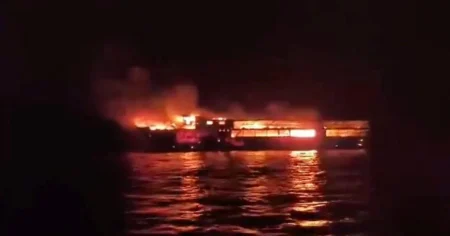
The operational disruption caused by the drone swarm was felt across the nation’s infrastructure. Travelers faced chaos as flights were suspended at all four of Moscow’s major airports—Domodedovo, Sheremetyevo, Vnukovo, and Zhukovsky—effectively grounding the city. While the authorities were quick to report that there were no casualties, the visual evidence of fires at the refinery, paired with reports of drones striking residential areas in Elektrostal and construction sites in Kotelniki, highlights the terrifying reality now facing average Russian citizens living far from the front lines.
These strikes are not isolated incidents; they are part of a calculated campaign to paralyze the Russian economy by targeting its lifeblood: oil. With successful hits on a massive fuel depot in the Krasnodar region and the Palkino pumping station in Yaroslavl, Ukraine is systematically dismantling the supply chains that fuel Russia’s war machine. Reports indicate that at least 25 Russian regions are already grappling with fuel rationing and shortages, suggesting that Kyiv’s strategy of attrition is beginning to bite deep into the domestic stability that the Kremlin relies upon to maintain the conflict.
The timing of this escalation carries a heavy diplomatic weight as well. The attacks followed closely on the heels of a massive Russian aerial assault on Kyiv, which left five people dead and inflicted horrific damage on an 11th-century cathedral—a strike that felt like a direct mockery of human heritage and civilian safety. President Volodymyr Zelensky, while traveling to the G7, revealed that his attempts to open a path toward peace had been once again rebuffed by Vladimir Putin. By refusing to engage in any meaningful dialogue or attend summit-level meetings with democratic nations, Putin has signalized his intent to continue the war at any cost to his own population.
Ultimately, these events underscore a deepening cycle of violence where diplomacy has been almost entirely replaced by destructive posturing. As the G7 leaders contemplate their next steps, the burning refinery in Moscow serves as a stark reminder that the cost of this war is no longer confined to the battlefields of Ukraine. With the Kremlin choosing to double down on aggression rather than negotiate, the drone strikes stand as a testament to Ukraine’s resolve to bring the reality of the war directly to the architect of the conflict, ensuring that the economic and social consequences of the invasion are felt inside the walls of Moscow itself.