


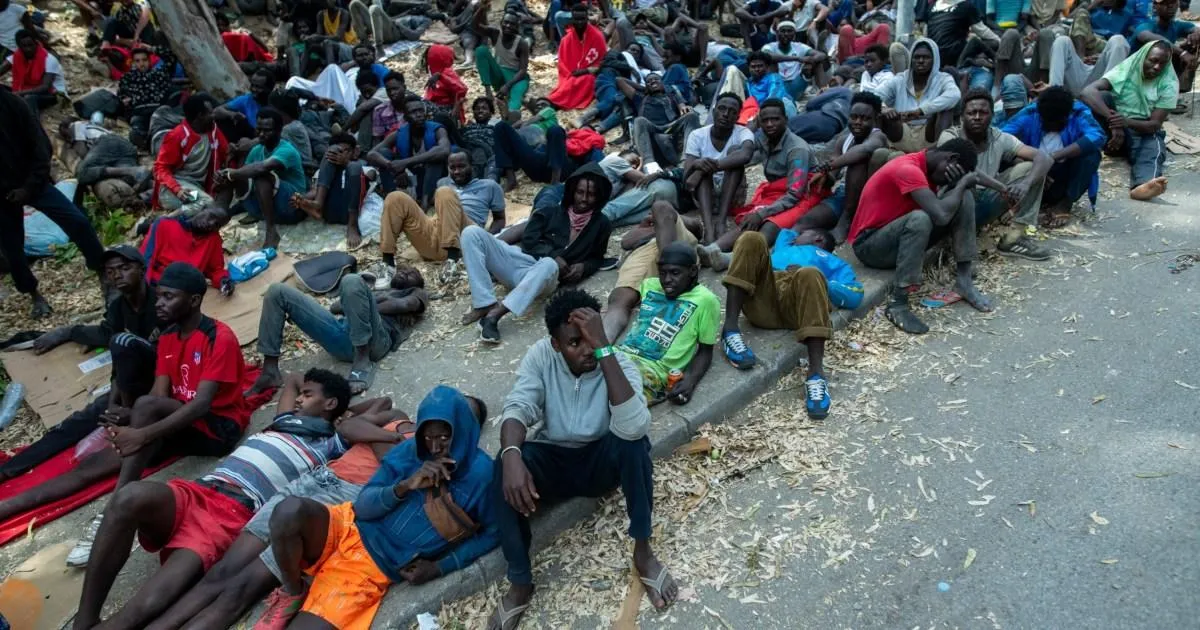
The recent humanitarian catastrophe in Ceuta serves as a stark, heart-wrenching reminder of the brutal intersection between geopolitical borders and individual human desperation. On the North African coast, the tiny Spanish-governed peninsula has become the stage for a tragedy of staggering proportions, as the sheer scale of thousands of people attempting to cross has overwhelmed the city’s resources and infrastructure. With at least 67 lives lost to drowning or crushing, the numbers represent more than just a logistical failure; they represent a profound loss of hope for thousands of individuals who felt they had nowhere left to turn but across a 20-foot fence or through dangerous, icy waters.
The human element of this crisis is best understood through the eyes of people like 26-year-old Soufiane ez-Znafry, a professional sous chef from Tangier who, like thousands of others, felt compelled to leave his life behind in search of a future. When he arrived in Ceuta, he didn’t find the sanctuary he had risked his life for, but rather a city that had effectively shut its doors. Stripped of his few belongings and left with nothing but hunger and a pair of sandals, his story mirrors that of the dozens of teenagers who fled their homes without telling their parents, now wandering the streets or hiding, terrified, trying to find a way to signal back to their families that they are still alive.
This wave of migration—consisting of roughly 50,000 individuals in a city of only 83,000—has left local officials, including Juan Jesús Vivas, insisting that the situation is fundamentally unsustainable. The city’s refusal to provide even basic nourishment or shelter has turned the streets into a landscape of survival, where the most pressing concern is not political policy, but the simple, gnawing agony of having not eaten for days. Amidst the chaos, reports have emerged of violence, with migrants claiming they have been beaten by masked individuals, adding a layer of physical terror to an already traumatic experience of displacement and exclusion.
From a policy perspective, the Spanish government and European authorities are grappling with a complex web of legal and strategic challenges. Prime Minister Pedro Sánchez has pointed to the influence of human traffickers, who allegedly weaponized a recent Supreme Court ruling—which prohibited the immediate expulsion of asylum seekers—to lure migrants with the false promise of residency. To combat the influx, the government has begun installing physical barriers like floating buoys, effectively hardening the borders to discourage further crossings. Meanwhile, thousands have already been processed and returned to Morocco, turning the tide of the crisis back toward the origin point, but leaving the underlying issues of regional economic hardship and instability unresolved.
The geopolitical fallout has been swift, with European nations reassessing their own border security in response to the pressure on Spanish territories. Italy, for instance, has moved to suspend elements of the Schengen agreement for those arriving from Spain, subjecting non-EU citizens to increased scrutiny. While politicians debate these technicalities of international law and border integrity, the people stuck in the middle—the young, the ambitious, and the desperate—are caught in a political tug-of-war. The debate has been further intensified by opportunistic right-wing movements across Europe, which are using the tragedy to fuel broader arguments about migration, often losing sight of the individual lives that have been discarded in the process.
Ultimately, the events in Ceuta are not just a story about a broken fence or a bureaucratic failure; they are a tragic reflection of a world where economic inequality and political instability force human beings to treat their own lives as disposable currency. As the international community debates “containment barriers” and “visual deterrents,” the reality on the ground remains one of profound sorrow. Whether through the lens of a teenager trying to reach his parents or a professional chef hungry on a foreign beach, the crisis reminds us that behind every headline and statistic, there is a person whose only “crime” was a desperate search for a life of dignity.