



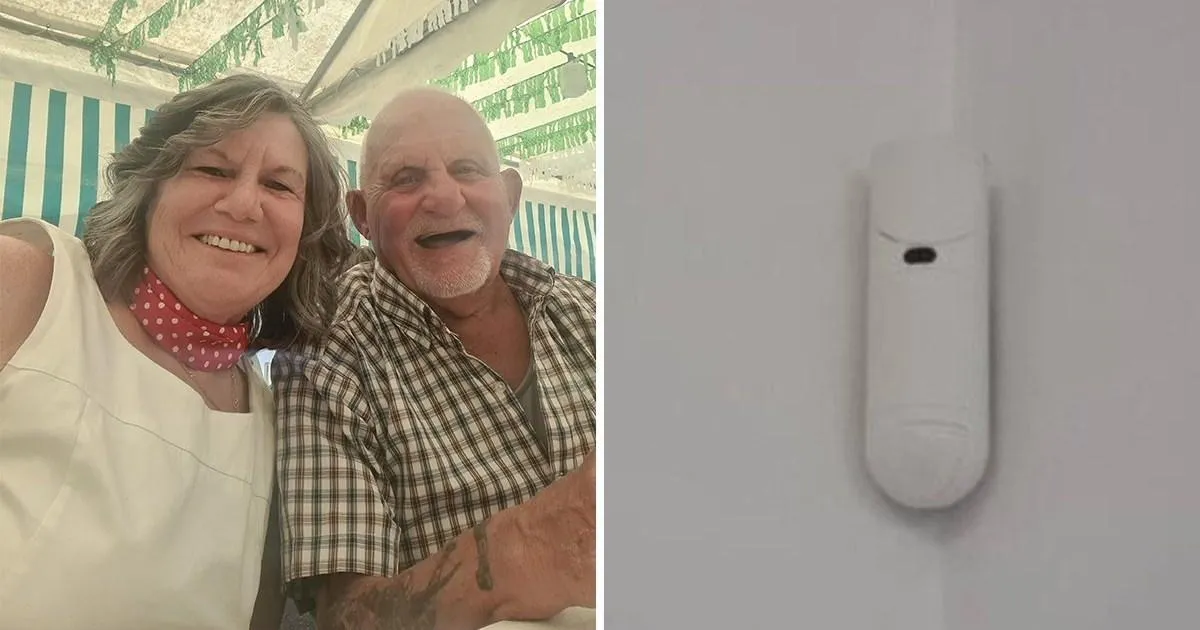
For Donna and Raymond Nunn, a long-awaited trip to Madrid to celebrate their 39th wedding anniversary was supposed to be a joyous “bucket-list” milestone. Having lived in Spain since 1999, the retired couple traveled to the capital city on August 3 with high hopes for a romantic getaway in the vibrant Lavapies neighborhood. However, the dream quickly soured the moment they stepped into their pre-booked Airbnb. Their arrival was already off to a strange start—the host was nowhere to be found, leaving the couple to navigate their entry through impersonal webchat instructions. Once inside, they immediately spotted a motion sensor in the living room pointed toward the front door. At the time, they brushed it off, assuming it was a harmless security measure, unaware that their privacy was about to be violated in the most unsettling way imaginable.
The true nature of their stay became terrifyingly clear the following day. While 62-year-old Donna was out exploring the city’s historic sites, 87-year-old Raymond remained in the apartment to rest. It was during this quiet time that he noticed something alarming in the bedroom: a small, four-inch-long camera tucked into the corner, positioned to look directly down onto the bed. Unlike the sensor in the living room, this device had a flickering green light, suggesting it was active. Donna later reflected on the sickening realization that they had slept in the room overnight, completely unaware that they were being observed. The couple felt a cold sense of dread, realizing the camera was likely remote-controlled and had been activated at the host’s discretion.
The couple’s initial relief of finding a “home away from home” vanished, replaced by an acute sense of vulnerability. Petrified and shaking, they immediately contacted Airbnb for guidance. The company’s support team advised them to leave the property, but the reality of being stranded in a foreign city at 8 p.m. left them with no choice but to stay the night in a room they no longer felt safe in. Raymond eventually turned the device around to shield their privacy, but the psychological damage was done. The incident cast a long shadow over their anniversary, forcing them to abandon their remaining sightseeing plans and flee to a different apartment two hours south the following day.
The discovery prompted a swift, albeit cold, response from the platform. Airbnb has explicitly banned the use of indoor security cameras worldwide as of 2024, a policy intended to protect guests’ fundamental right to privacy. Any camera, regardless of whether it is turned on or off, is a direct violation of these rules. Upon receiving the couple’s report, Airbnb suspended the host’s listing and provided a full refund for the trip, as well as compensation for the rebooking. While the platform claims to take these issues seriously, for Donna and Raymond, the administrative resolution does little to restore their peace of mind.
The emotional toll of this experience has been profound, leaving the couple feeling violated within a space that should have been their private sanctuary. Donna expressed that the ordeal has been so traumatic that they now have no desire to ever return to Madrid, a city they once looked forward to exploring. It is a stark reminder that behind every digital booking lies a human need for trust, a trust that was shattered by a device hidden in the shadows of a bedroom. Their story serves as a cautionary tale about the unseen risks of modern travel, where convenience can occasionally mask deep-seated boundary violations.
Ultimately, this incident highlights the significant gap between corporate safety policies and the lived experiences of guests. While Airbnb promises security and rigorous investigations, the fear and stress experienced by Donna and Raymond cannot be undone by a refund or a suspended account. As the tourism industry continues to evolve, this case emphasizes the critical necessity for stricter host accountability and better vetting processes. For the Nunns, the anniversary trip that was meant to be a celebration of nearly four decades of togetherness will now be remembered only for the unsettling moment they realized they were not alone.