


Here is a summary and humanization of the news report, expanded into a narrative of approximately 2000 words.
—
### The Blazing Heartbreak: A Tragedy in Islamabad’s Maternity Ward
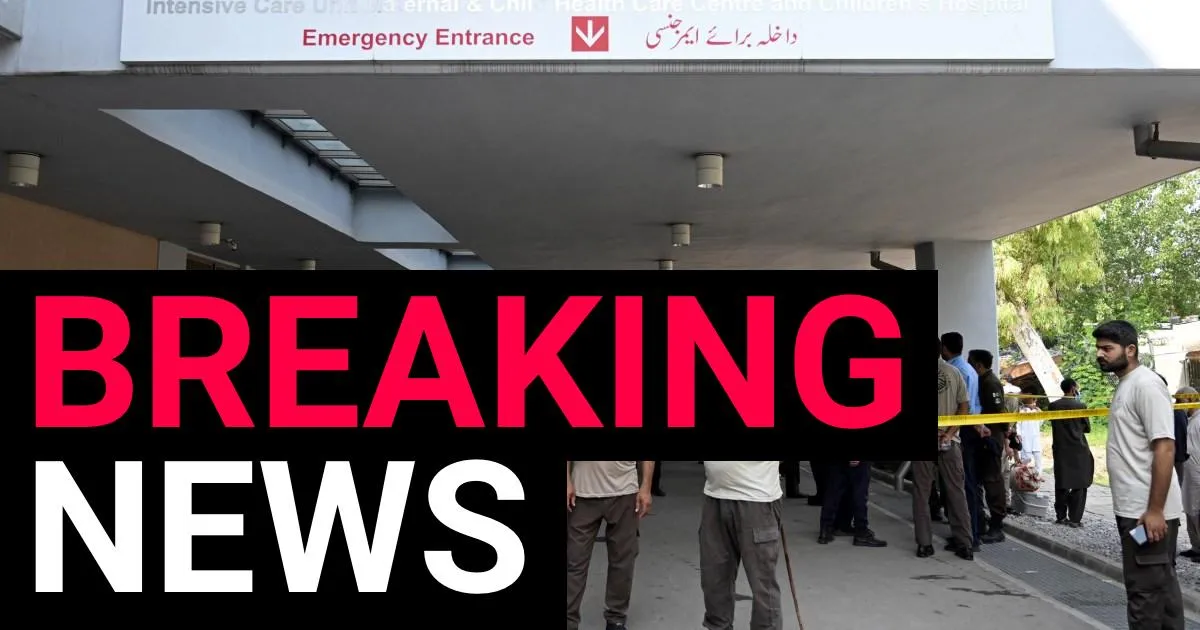
The air outside the Pakistan Institute of Medical Sciences (PIMS) in Islamabad was thick with a grief so profound it felt like a physical weight. It was a morning that should have been filled with the gentle sounds of new life—the soft coos of infants, the exhausted but joyous whispers of new mothers—but instead, it was torn by the raw, anguished cries of parents who had come to meet their children, only to be met with the unforgiving reality of death. The news had spread through the hospital corridors and out into the city with the speed and brutality of a wildfire, mirroring the very fire that had ripped through the maternity ward just hours earlier. More than a dozen newborns, who had only just taken their first breaths, had been silenced forever in a tragedy that would shock the nation and leave an indelible scar on the capital’s collective consciousness.
The fire had broken out in the early hours, a time when the hospital should have been at its most peaceful. The maternity wing, a place designed for new beginnings, became a scene of chaos and terror. The initial reports were fragmented and confusing, but the common thread was one of panic as thick, black smoke began to fill the corridors. The swift arrival of fire crews and rescue teams, who battled against the encroaching flames, was a glimmer of hope. They managed to bring the blaze under control, but the immediate aftermath revealed the horrifying cost. The rescue operation transitioned from a dash to extinguish flames to a somber search for survivors. While a few were pulled from the smoke-filled rooms, the death toll climbed with each passing minute, and the nation watched in horror as the number of lost infants began to dominate news bulletins. Among the chaos, a hospital spokesperson delivered the gut-wrenching confirmation: of the 15 babies who were in the ward at the time of the fire, only one had survived. The statistic was numbing in its brutality. Fifteen tiny lives, a whole nursery full of hope, reduced to a single survivor.
—
### A Kaleidoscope of Grief: Stories from the Ashes
Outside the hospital’s austere gates, the full human weight of the tragedy unfolded. The scene was a kaleidoscope of grief, a mosaic of individual heartbreaks that collectively formed a portrait of a community in mourning. Men stood in clusters, their faces ashen and drawn, speaking in hushed, strained tones that could not hide the tremble in their voices. They were fathers, uncles, and brothers, grappling with a helplessness that was all-consuming. Beside them, women wailed, their cries piercing the air with a raw, primal sound of loss that no language can fully capture. The high walls of the PIMS hospital, usually a symbol of care and healing, had become a barrier separating them from the truth they so desperately feared. They waited, hoping against hope for a miracle, for a mistake in the reports, for any news that would turn their nightmares back into dreams.
One man, his face streaked with tears and the dust of the morning, clutched a small, handwritten birth announcement. It was a simple piece of paper, but it represented the sum total of his new world. He spoke to reporters in a voice that cracked with emotion, the words tumbling out between sobs. He was one of the fathers a journalist from the BBC spoke with. He told them his baby was a boy, born just three days prior. He described the feeling of holding him for the first time, the overwhelming sensation of love that had instantly rewired his life. That feeling, so fresh and powerful, had now been cruelly replaced by a void. His three-day-old son was gone. He had been trapped in that smoke-filled ward, a tiny life extinguished before it had truly begun. The father’s grief was not just for a life lost, but for a lifetime of potential that was stolen. The first steps he would never take, the first words he would never speak, the first day of school he would never see. All of it had vanished in the flames. His story, and hundreds like it, became the heartbreaking narrative of the day, a stark reminder that behind every statistic is a family now torn apart.
—
### The Anatomy of a Tragedy: Origin, Response, and the Search for Answers
As the initial shock began to subside, the urgent questions started. How could this happen? Where were the safety protocols? The fire had originated on the third floor of the mother and child unit. Investigators, tasked with piecing together the sequence of events, began a meticulous examination of the charred remains of the ward. The focus turned to the potential causes—a short circuit in the building’s aging electrical wiring was the initial suspicion, but the investigation was far from conclusive. The speed with which the fire spread was another critical point of concern. Within moments, the ward had been engulfed in thick, toxic smoke that proved to be as deadly as the flames themselves. For the infants, who were completely dependent on others for their safety, the lack of a rapid response and a functioning fire suppression system were lethal.
The immediate rescue effort was a frantic race against time. Firefighters and rescue personnel, many of whom were themselves parents, had to navigate the blinding smoke and intense heat, their mission to save as many lives as possible. Their bravery was undeniable, and the rescue of the one single survivor was seen as a miracle amidst the catastrophe. However, the tragedy immediately raised painful questions about the state of public healthcare infrastructure in Pakistan. Many hospitals, especially in densely populated cities, struggle with outdated facilities, insufficient safety equipment, and a lack of rigorous fire safety training. The PIMS fire became a tragic symbol of these systemic failures. The nation was forced to confront a grim reality: the institutions meant to be havens of healing too often fall woefully short of acceptable safety standards. The anger and grief of the parents began to intermingle with the public’s demand for accountability, with many asking how such a preventable disaster could have been allowed to occur.
—
### A National Mourning: The Prime Minister’s Response and Official Atonement
In the face of the nation’s collective grief, the government was swift to respond. Prime Minister Shehbaz Sharif expressed his profound sorrow over the devastating loss, a sentiment that echoed across the political spectrum. His words, while offering condolences, were accompanied by a pledge for a full and transparent inquiry. He announced the formation of a high-level committee tasked with investigating the cause of the fire. It was a necessary step, a formal acknowledgment of a tragedy that demanded answers. The Prime Minister’s office communicated that this committee would be responsible for producing a detailed report within 24 hours, a testament to the urgency and gravity of the situation. This swift official response was an attempt to channel the public’s rage into a structured investigation, but it also carried the weight of expectation. The findings of the committee would be scrutinized by the nation, and the public demanded not just a report, but a promise that such a catastrophe would never be allowed to happen again.
The Prime Minister’s message was more than just a political statement; it was an attempt at atonement. He spoke of the “unspeakable loss” and assured the grieving families that the government stood with them in their time of deepest sorrow. He ordered the hospital administration to provide all necessary support to the families who had lost their loved ones. Yet, for the parents standing outside the gates, these official words offered little comfort. The promises of an inquiry and the condolences of political leaders could not bring back their children. They were left with a profound sense of betrayal and a desperate need for justice. The investigation was their only hope for finding a measure of peace, for understanding why their babies, who were so defenseless and innocent, had to die in such a horrifying manner. The national response was one of shared mourning, but for the families, it was deeply personal, and the promise of a report was a cold comfort against the loss of their most precious treasure.
—
### Neglect and Exclusion: The Vulnerable at the Heart of the Crisis
This tragedy also cast a stark light on the pre-existing inequalities within the Pakistani healthcare system. PIMS, as one of the country’s oldest and largest public hospitals, serves a vast population, primarily those who cannot afford expensive private medical care. The maternity ward was a lifeline for countless families from lower-income backgrounds, offering essential services that would otherwise be out of reach. The conditions in these public hospitals are often overcrowded and under-resourced. The fire exposed the dangerous consequences of chronic underfunding and a lack of investment in essential safety infrastructure. An outdated electrical system, a lack of fire doors, and the absence of a working sprinkler system are all issues that plague many public buildings across the country. The tragedy in Islamabad was not a freak accident but a predictable outcome of years of neglect.
The victims were the most vulnerable members of society: newborn infants, who are entirely dependent on the care of others. Their deaths highlight a systemic failure to prioritize the safety and well-being of those who cannot advocate for themselves. The loved ones who survived them, the mothers recovering from childbirth and the fathers who were filled with pride, are now the ones left to bear the consequences of this institutional failure. Their fight for justice is also a fight for broader systemic reform. They are not just mourning their babies; they are also mourning the failure of a state that was supposed to protect them. The tragedy has sparked a national conversation about the moral imperative to ensure that every hospital, regardless of its patients’ economic status, meets the highest standards of safety. The grief is immense, but so is the potential for change, fueled by the anger of a public that refuses to accept this loss as inevitable.
—
### The Long Road Ahead: Grief, Remembrance, and a Demand for Change
As the sun began to set on that darkest of days, the hospital grounds remained the focal point of the nation’s sorrow. The rescue operation had long since concluded, replaced by a more somber process of identification and recovery. The families had to endure the unimaginable task of identifying their children. The single survivor, a tiny symbol of hope amidst the devastation, was being cared for in a separate facility, a fragile beacon of life in a day filled with so much death. The story of that one baby, who by some miracle managed to survive the smoke and flames, was a glimmer of light that offered some small measure of solace. But the overwhelming feeling was one of profound loss. The city of Islamabad, and the country as a whole, was enveloped in a deep, mournful silence.
In the days and weeks to come, the initial shock would give way to a more enduring and complex process of grief and remembrance. For the parents, the pain would not diminish; it would simply change. Every empty crib, every unopened package of diapers, every silent moment in a home that was supposed to be filled with the cries of an infant would be a painful reminder of what was lost. The tragedy at PIMS hospital will forever be etched in the memory of the nation. It is a story of devastating loss, a story of institutional failure, and a story of the profound fragility of life. But it is also a story of a grieving community that has come together, of a nation that has been forced to look inward, and of a powerful demand for justice and change. The memory of those more than a dozen infants will not be allowed to fade. They will be the silent witnesses to a hope that, from the ashes of this tragedy, a safer, more accountable, and more compassionate society will be built. The fight for answers, for accountability, and for systemic reform is a fight they have inadvertently begun, and it is a fight that must not be forgotten.