


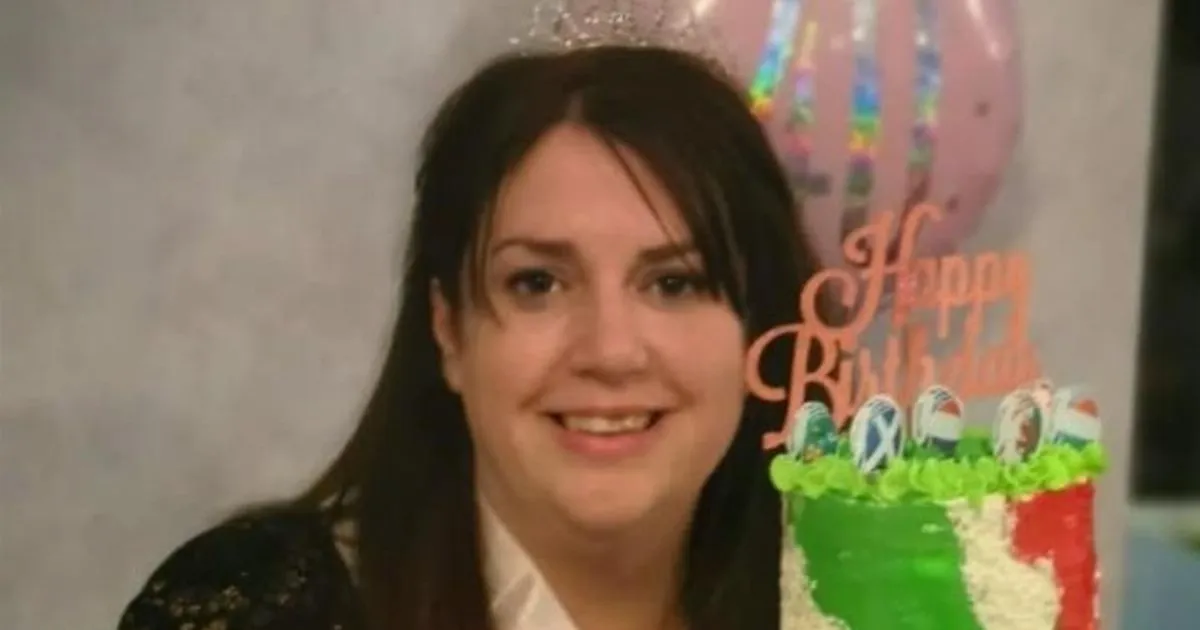
For Kath Main, a 46-year-old rugby club secretary from Wales, life became a nerve-wracking waiting game the moment her dreams of a £12,000,000 lottery windfall were unceremoniously tossed into a trash bin. Kath had dutifully played her usual set of numbers—a personal combination derived from her and her husband Marcus’s birthdays and their ages when they first started playing—for the June 6th draw. When the draw results were announced, the couple realized they had hit the jackpot, but the physical proof of their life-changing win was nowhere to be found. Instead of clutching a golden ticket, Kath was left with the sickening realization that a simple, human error at their local Londis in Abercynon had potentially cost them a fortune.
The heartbreak began when Kath’s mother, Fiona, took the ticket to the shop to be checked. When the machine failed to beep or display a winning message, the shop owner, Karan Kumar, assumed it was a dud and discarded it. It wasn’t until the family saw the winning numbers—8, 10, 26, 30, 35, and 42—printed in the newspaper, accompanied by a notification that the prize had been claimed in the Rhondda Cynon Taf area, that the true scale of the mistake became clear. Mr. Kumar later explained that because the machine failed to register the ticket, he followed standard procedure by binning it, though he admitted he would be thrilled for Kath if she managed to secure the prize despite the mishap.
For Kath, the weeks since have been a cycle of nausea and anxiety. “I feel sick all the time,” she admitted, as she grapples with the uncertainty of a future that should have been secured by her lucky numbers. She had already begun making modest plans, including a trip to New Zealand for the Lions rugby tour, but now those dreams are held in a state of suspended animation. With the store’s lottery terminal currently suspended and the ticket long gone, Kath’s fate now rests entirely in the hands of Allwyn, the operator of the National Lottery, who must conduct a thorough investigation to verify that she is indeed the rightful winner.
The bureaucracy of winning a lottery without a ticket is a grueling ordeal. Allwyn has confirmed that they are one of the few organizations capable of paying out prizes in such circumstances, but it is not a quick process. The company is required to perform a rigorous background check to protect the integrity of the game and ensure the claimant is the genuine owner of the entry. Kath is now staring down a 180-day waiting period, meaning she will not officially be able to claim the funds until December 3rd. Until that date passes and assuming no other conflicting claims arise, the £12,000,000 remains locked away, an unreachable fortune sitting just beyond her grasp.
Kath’s situation serves as a stark reminder of how thin the line is between a life of luxury and a total loss. In a parallel, albeit more frantic, story of luck, an anonymous lottery player in Italy recently faced a similar nightmare. After a shopkeeper incorrectly told him his €1,000,000 ticket was “non-payable”—a phrase the player interpreted as a loss, when in reality it meant the store wasn’t authorized to process such a large sum—the man threw the ticket away. In a frantic bid to retrieve it, he tracked down the waste lorry that had collected the shop’s trash. Two days later, after workers scoured a mountain of refuse, they miraculously recovered the ticket, ending their search with a small, poetic reward of their own: a £50 win on a scratchcard they bought for themselves.
While Kath hopes her story ends with the same relief as the Italian winner, her path is far more formal and solitary. There will be no dumpster diving for the Welsh rugby secretary, only the slow, methodical ticking of the clock as the lottery operators verify her claim. Her story is a testament to the fragility of our “lucky breaks” and the profound impact that a simple, split-second misunderstanding can have on a person’s life. As she waits for December, the world watches on, reminded that while money can change everything, the journey to get it is often paved with more stress and uncertainty than we ever anticipate when we buy that first ticket.