

Here is a humanized and expanded account of the court report, structured into six paragraphs.
—
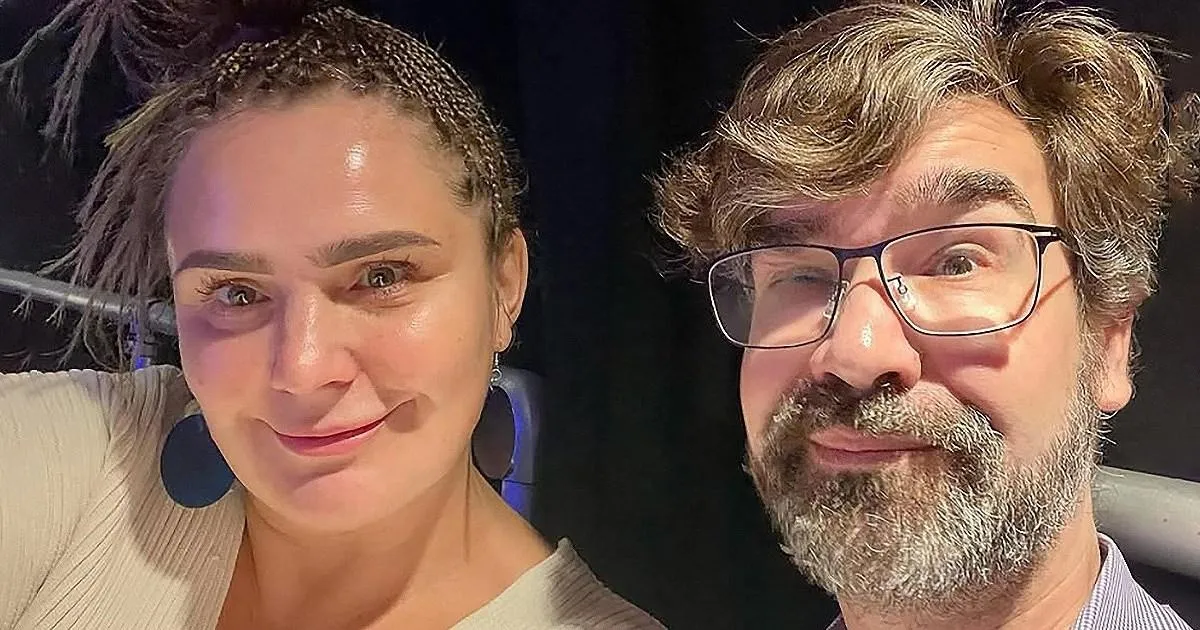
The trial of Joanna Cierpka began this week with a story that is as harrowing as it is heartbreaking, unfolding inside a London courtroom where the line between tragedy and criminality seems painfully thin. Cierpka, a 51-year-old woman originally from Gdynia, Poland, stands accused of the murder of her boyfriend, Henrik Slotsaa, a 52-year-old Danish banker who worked at Citibank’s London office in Canary Wharf. According to prosecutors, the couple’s shared home in Newington Causeway, near Elephant and Castle, became the site of an unthinkable horror: Slotsaa’s partially decomposed body was discovered in their bedroom, where it is alleged to have lain for up to nine days before anyone found him. The discovery was made on March 15, but only because police had been alerted by an email Cierpka had sent to family and friends saying she intended to take her own life. When officers forced their way through the front door, they found a scene of profound disorder and despair—empty wine bottles scattered across the coffee table and kitchen counters—and Cierpka herself holding an eight-inch kitchen knife, attempting to cut her own throat.
The image of that moment is almost impossible to reconcile with the woman described by friends as the “life and soul of the party.” Yet there she was, disarmed by police, bleeding from a deep cut to her elbow, and uttering words that seemed to come from a place of utter self-loathing: “I don’t want to be helped. You know what happened here? He told me I’m a useless sh-t. He told me I should kill myself.” It was a confession not just of an act, but of a broken interior world—a woman who seemed to believe she was worthless, who had apparently internalized the cruelty of a partner’s rejection so completely that she saw no other way out. She was taken to hospital, where she allegedly told a member of staff, “I killed my partner.” The words are stark, but they are also the words of someone who was clearly in the grip of a profound emotional crisis. The prosecution, led by Danny Robinson, KC, does not dispute that Cierpka killed Slotsaa with a kitchen knife. The central question, however, is not whether she did it, but why, and whether her state of mind at the time should reduce her culpability from murder to the lesser offence of manslaughter.
Cierpka has already pleaded guilty to manslaughter, a plea that acknowledges her role in the death while asserting that her mental condition at the moment of the stabbing diminished her responsibility. But the prosecution has rejected this, insisting that the full weight of the law should apply. “She has already pleaded guilty to manslaughter, but the prosecution does not accept that her plea of guilty to manslaughter adequately reflects her responsibility for his death,” Robinson told jurors. “We say she is guilty of the murder of Henrik Slotsaa.” The evidence presented so far is deeply disturbing. Pathologists found 14 separate sharp-force injuries on Slotsaa’s body, including slash and stab wounds to his face, neck, arms, and legs. Even more chilling, there were unusual wounds to the backs of both knees that, in the prosecutor’s words, “may have represented an attempt at dismemberment.” The body was found kneeling on the floor, wearing only underwear, thighs parallel to the end of the bed, in a state of decomposition that made clear he had been dead for some time. Dried, pooled blood surrounded him. These are details that make the case feel almost unbearably gruesome, but they also raise difficult questions about what was happening in that apartment in the days before and after the killing.
To understand how a person reaches such a point, the court has heard the story of a relationship that had been slowly disintegrating under the weight of professional disappointment, personal insecurity, and the poison of infidelity. Cierpka, who had once worked for British American Tobacco, was made redundant from her marketing job—a blow that, according to friends, left her “in a bad way.” She had been vibrant and sociable, but redundancy seemed to strip away her identity and confidence. Meanwhile, Slotsaa, who had been her partner, was growing distant. Around December 2025, he told her he no longer loved her. Then, on her birthday, he delivered what must have felt like a final, devastating blow: he told her he had met someone else at work. It is impossible to overstate how cruel that timing must have felt. On the day she should have been celebrated, she learned she was being replaced. The court heard that in the weeks leading up to the killing, Slotsaa had been “flirting” with a female colleague, a woman named Aimee O’Shaughnessy, who had recently joined Citibank in September and was going through a divorce of her own.
The details of that workplace connection paint a picture of a man who may have been seeking emotional refuge elsewhere, even as his girlfriend at home was falling apart. According to the prosecution, Slotsaa and O’Shaughnessy swapped numbers and began meeting for lunch on several occasions in January 2026. He told her that things were not great at home and that he liked her. She, in turn, told him that her own life was a mess and she did not want to complicate things by starting a relationship. He appeared to accept this, saying he was fine with it, but the messages continued. Over the weekend of March 6 to 8, they were still in contact, with exchanges continuing until March 11. Crucially, the prosecution noted that it is not known with certainty which messages from Slotsaa’s phone were actually sent by him and which were sent by Cierpka. It is very likely, Robinson said, that messages sent after Sunday, March 8 were not sent by Slotsaa at all, because he was probably dead by then. This suggests that Cierpka may have been trying to maintain a semblance of normalcy, perhaps impersonating her dead partner to keep his disappearance from being noticed, or perhaps simply unable to accept that he was gone.
As the trial continues, the court will have to weigh not only the facts of the killing but the mental state of the woman at the centre of it. After her arrest, Cierpka told a psychiatrist that Slotsaa had said he didn’t love her anymore, and that on her birthday he had told her about his feelings for someone else. She has admitted manslaughter, but denied murder, and her defence will likely focus on the idea that she was suffering from a diminished capacity—a mind so overwhelmed by grief, betrayal, insecurity, and perhaps alcohol, that she acted in a state of dissociation or extreme emotional disturbance. The presence of so many empty wine bottles suggests a woman numbing herself to the pain, drowning in both spirits and despair. The image of her trying to kill herself as the police arrived, with her dead boyfriend’s body decomposing in the other room, is not the portrait of a cold-blooded killer. It is the portrait of someone who had reached the absolute end of her tether, who may have wanted to die because living with what she had done—and what had been done to her—was unbearable.
In the end, this is a case that leaves no one unscathed. Henrik Slotsaa is dead, his life cut short in a manner that no one would wish on another human being. His family and friends must mourn him while contending with the ghastly circumstances of his final days. Behind the knee wounds and the sharp-force injuries, there was a man who worked in finance, who liked a woman at his office, who perhaps did not fully understand the depth of the devastation he was leaving in his wake. And Joanna Cierpka sits in a courtroom, accused of murder, having already tried to take her own life, facing the rest of her years in prison or in a psychiatric institution. The justice system must determine whether she is a murderer or a deeply broken woman whose crime was born of mental illness and unbearable emotional pain. What is certain is that no verdict will undo the tragedy. The trial continues, and the jurors must decide where responsibility truly lies—not just for the act of stabbing, but for the slow, agonizing spiral of neglect, cruelty, and abandonment that led a once-vibrant woman to a blood-soaked apartment in Elephant and Castle. Sometimes the most terrifying crimes are not the ones committed by monsters, but by people who have been pushed so far that they no longer recognise themselves. That is the awful, human truth at the heart of this case.