

Every day, millions of people pour through London’s stations and trains, trusting that they will get where they are going safely. Most journeys are ordinary, but occasionally something terrible happens: a threatening stranger, an unwanted touch, a moment of violence that shatters the normal rhythm of a commute. For too many survivors, what follows is not protection but a second injury—a reporting process that feels indifferent, a CCTV system that fails at exactly the moment it is needed, and a case that disappears without explanation. London TravelWatch, the capital’s transport watchdog, found that a deep sense of disinterest from station staff, confusion about how to report incidents, and a lack of confidence that anything will happen are preventing people from coming forward. Victims have told Metro that their cases were dropped because basic forms of evidence, including CCTV, simply were not working. This is not a story about paperwork or red tape; it is a story about people being left to carry their fear alone, with no answer, no justice, and no sense that anyone in authority believes them or cares enough to act. The ripple effects are enormous—victims avoid entire lines, change their routines, and live in a state of constant vigilance. Yet the official response, in too many cases, has been to close the file and move on, leaving survivors to wonder what the point was of ever speaking up.
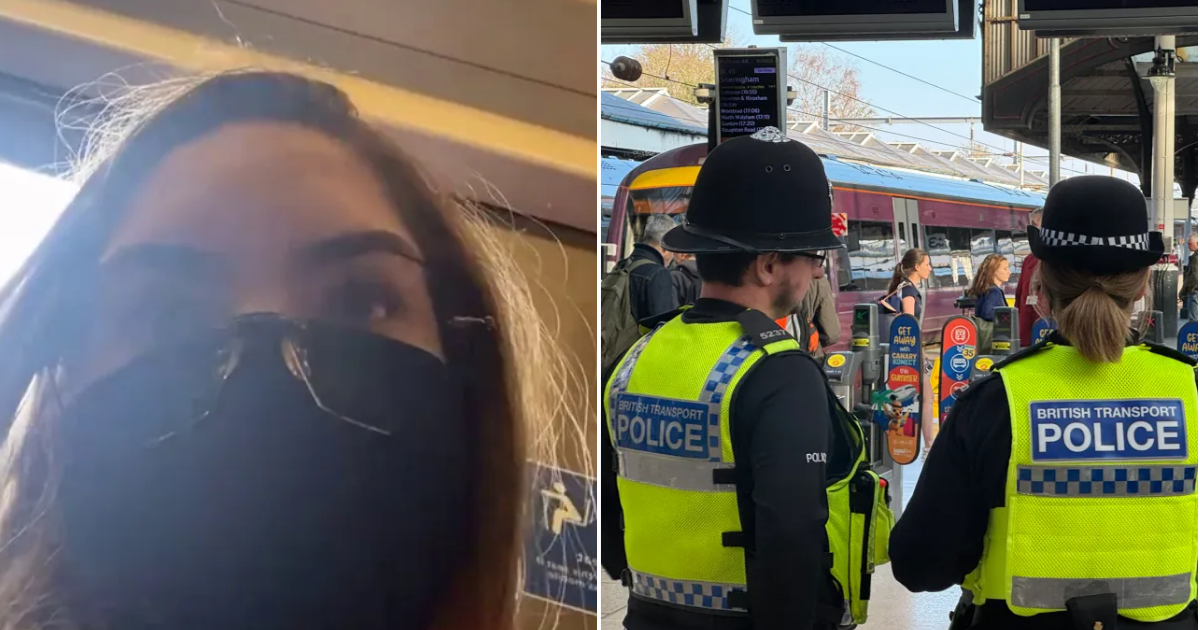
Take Isadora Medeiros, now 24 and a primary school teacher. In 2021, she was travelling on the Elizabeth Line to see a friend when a man asked for her phone number. She declined, and the situation turned ugly with shocking speed. He called her a “f*ing b**,” threatened to rape and kill her, and then slapped her across the face—all in the middle of a carriage, in broad daylight, with other people around. Isadora had the presence of mind to film the man on her phone, capturing part of the confrontation. She reported the incident to British Transport Police, expecting that the evidence would be enough. Instead, she was told that none of the CCTV cameras were working: not at Stratford Station, where the man had got on; not inside the train carriage where the attack happened; not at Ilford Station, where he got off. The case was dropped. “He began shouting at me, saying ‘you think you are so good,’ and then said he would run me over with his car and rape me if he ever saw me again,” she told Metro. “I felt scared, I couldn’t get on the Elizabeth Line for months because I was scared I was going to see this man, and he was going to do something to me.” Her experience is not an isolated anomaly. It is a pattern in which survivors do everything right—report promptly, provide video, identify the location—and still feel the system shrug and turn away.
Another victim, Victoria, was upskirted on the Central Line in March. A man sitting opposite her photographed under her skirt, and when she confronted him, he jumped over the barriers at Debden Station and disappeared. Victoria went to tell station staff what had happened, hoping for help, witness statements, or at least some sense of urgency. Instead, she was met with what she described as complete indifference. “I knocked on the door of the ticket office and a man answered. I told him what happened, and he was completely unbothered. He just told me ‘oh well, looks like you need to text British Transport Police then,’ and shut the door,” she said. The police later closed the case because the man had jumped over the barriers and, once again, there was no CCTV in the carriage she had been on. For Victoria, the violation itself was bad enough, but the response was a second attack on her dignity. It told her that what happened to her did not matter, that her safety was not worth the effort, and that the only support she could expect was a door being shut in her face. The emotional impact of that indifference can last longer than the incident itself. Survivors are left with the message that they are alone, that their word is not enough, and that the institutions meant to protect them will not go out of their way to try.
The scale of the hidden problem is difficult to overstate. London TravelWatch found that only two out of five victims of crime on public transport actually report what happened to them. That means the majority of incidents are never formally recorded, never investigated, and never counted. It is impossible to know the true scale of violence, harassment and theft on the network when so many people stay silent. The reasons are clear: people do not report because they do not trust the system, because they are not sure how to report, because they fear being dismissed, or because they have already seen what happens to friends and strangers who tried. TravelWatch is now urging the creation of a single, streamlined reporting system, arguing that the current arrangement—spread across multiple operators, public authorities and police forces—is confusing for victims at the exact moment they need clarity and support. When a person has just been attacked or humiliated, the last thing they should have to do is work out which body is responsible, which phone number to call, and which form to fill in. A simple, accessible, compassionate process should be a basic right, not a bureaucratic lottery.
There have been official responses, and some acknowledgment of the problem. Siwan Hayward, TfL’s Director of Security, Policing and Enforcement, said the incidents highlighted were “deeply concerning” and that TfL was sorry Victoria and Isadora had experienced this on the network. “We want every victim to feel confident in coming forward and to know they will be listened to and supported. While we recognise there is always more to do to improve victims’ experiences, we are working closely with the police to strengthen reporting, support investigations and bring offenders to justice,” she said. British Transport Police Chief Inspector Cheryl Ling said the force agreed that reporting pathways “should be accessible and straightforward so passengers can report crimes and their concerns as quickly as possible,” and said it continues to work with TfL, the Mayor’s Office and the Metropolitan Police to make the network safer. These words are welcome, but they only go so far. Rail union TSSA General Secretary Maryam Eslamdoust put the challenge more directly: “This is really valuable research from London TravelWatch and it reflects many of our own concerns about the rising tide of violence and abusive behaviour on our railways both in London and across the country. There is much which needs to be done, including more training for those on the front line, but in truth the big things which will make a difference are more staff on the railway and increased budgets, including for British Transport Police.” The implication is clear: without investment, without visible staff, and without working technology, warm statements will not change what happens on the ground.
For Isadora, Victoria and countless others, the damage has already been done. They were not asking for special treatment; they were asking for basic competence—for cameras that work, for staff who look up from the ticket office, for a system that treats a woman who has just been slapped or photographed without consent as someone who deserves action, not a shrug. The failure to provide that is not a minor administrative issue. It actively undermines public safety, because every unreported crime teaches offenders that they can act with impunity, and every dismissed case tells victims that the network is not safe and no one cares enough to make it so. Humanising this issue means remembering that behind every statistic is a person whose life is changed: someone who cannot sleep, someone who panics every time they see a stranger who resembles their attacker, someone who gives up a route they once used without thinking. The courage it takes to report a crime is real, and it deserves to be met with competence, warmth and determination. Instead, too often it is met with a broken camera, a closed door, and a case file that goes nowhere. It is time for London’s transport system to do much better—not only for the survivors who have come forward, but for everyone who will not, because they no longer believe it makes any difference.