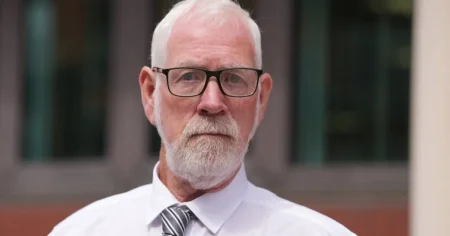



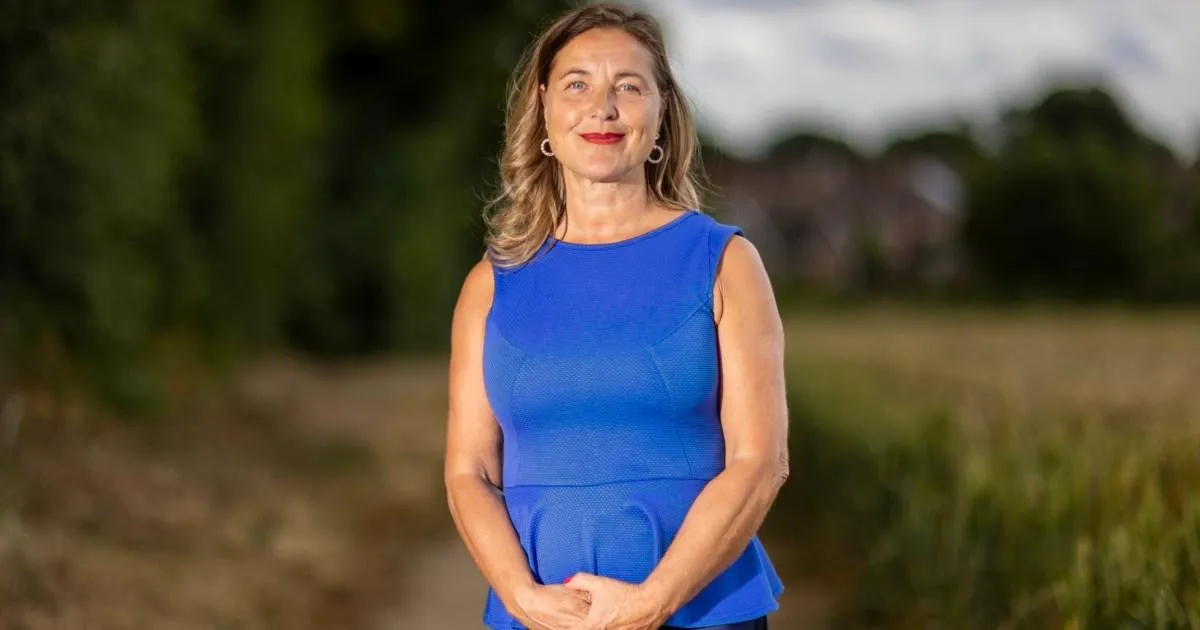
The journey toward justice is often long, grueling, and deeply personal, but for survivors of sexual abuse, the fight doesn’t end when a guilty verdict is finally read in court. Carol Higgins, a mother of two who endured years of horrific abuse at the hands of her father, Elliott Appleyard, knows this reality all too well. After spending 35 years seeking closure for the trauma she suffered between the ages of 13 and 16, Carol successfully secured a conviction in 2019. However, her sense of safety was shattered recently when she received a letter informing her that her father, who had served only a fraction of his 20-year sentence, might be released early. The news triggered a wave of fear and indignation, forcing her to relive the feelings of worthlessness she had worked so hard to overcome.
Carol’s experience was not an isolated incident but a symptom of a broader, systemic tension between prison management and victim advocacy. The government had proposed an early release scheme aimed at alleviating critical overcrowding in prisons, a plan that threatened to put convicted rapists and child abusers back onto the streets prematurely. When survivors like Carol and activist Jade Belgrove caught wind of this, they didn’t remain silent. They channeled their pain into a powerful, collective movement, eventually delivering a petition to 10 Downing Street. They argued that when the justice system prioritizes logistics over the safety and dignity of victims, it erodes the very trust necessary for survivors to come forward, potentially weakening the integrity of the law itself.
The pressure exerted by these courageous survivors proved transformative. Responding to the mounting outcry, Prime Minister Andy Burnham announced a pivotal shift in the government’s policy: rapists and serious child sex offenders would be explicitly excluded from the early release program. For women like Carol, this announcement was not just a political adjustment; it was a profound source of relief. After weeks of living in a state of high anxiety, she was finally able to breathe, knowing that the man who had caused her so much suffering would remain behind bars. For Carol, the victory serves as a poignant reminder that while the system can be indifferent, the voices of survivors—when united—possess the power to demand accountability and protection.
Despite this success, the government faces a precarious balancing act. In his address, Mr. Burnham expressed a genuine desire to exclude even more categories of offenders, yet he cited the harsh reality of a prison system nearing total collapse. He warned that without these measures, the infrastructure of the justice system could fail, which would ultimately pose a greater risk to public safety. This admission highlights a difficult truth: our society is struggling to find room for those who have committed heinous crimes while simultaneously trying to manage a prison population that has outgrown its capacity. It is a sobering reflection on the gaps in our current penal infrastructure that even the leaders tasked with protecting the public feel constrained by these systemic limitations.
The delay of the release scheme until October provides a temporary window to refine these processes, but many experts argue that legal exclusions are only one piece of the puzzle. Claire Waxman, the Victims’ Commissioner for England and Wales, noted that while the recent changes are a welcome acknowledgment of victims’ rights, they do not resolve the deeper issues of poor communication and inadequate support. She emphasized that true safety for the public and for survivors relies on effective risk management, robust supervision, and a trauma-informed approach that respects the vulnerability of those who have been harmed. Without these, even well-intentioned policies risk leaving survivors feeling like secondary players in their own stories of justice.
As the October deadline approaches, the conversation continues to expand, with advocates like Domestic Abuse Commissioner Dame Nicole Jacobs calling for even more stringent protections. The concern remains that without further intervention, domestic abusers who fall outside the current exclusions could still be released prematurely, putting many lives at risk. The path forward remains complicated, caught between the urgent need for prison capacity and the moral imperative to ensure that justice is not just served, but sustained. For survivors like Carol Higgins, the lesson is clear: their fight is not just about the past—it is a relentless, ongoing struggle to ensure that the systems built to protect them actually do their job, keeping the vulnerable safe from those who sought to destroy them.