


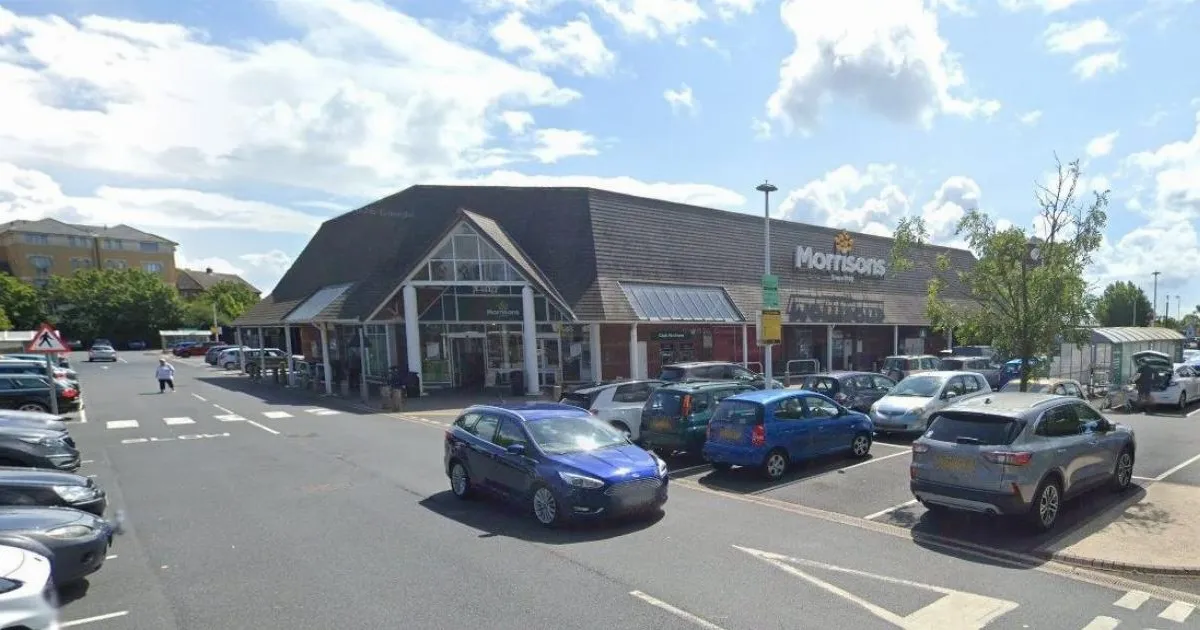
On a map, it is just a car park. A few painted lines, a supermarket entrance, a stretch of tarmac where trolleys rattle and engines idle. But on Friday lunchtime, that ordinary piece of retail ground became the site of a devastating accident that would end a woman’s life and leave a community reeling. Emergency services were called to the Morrisons supermarket on Walpole Road in Gosport, Hampshire, shortly after midday after a grey Kia Soul collided with two pedestrians. It had been an unremarkable Friday morning in the coastal town. Shoppers were doing their weekly shops, staff were stacking shelves, and the cafe would have been filling up with the familiar voices of regulars. Then, in a matter of seconds, normality ruptured. The grey car moved through the car park, a place where vehicles and people are engaged in a constant, sometimes careless dance, and struck two people. The impact stopped the day in its tracks. A woman in her 80s had suffered fatal injuries, and despite the best efforts of those who rushed to her side, she was pronounced dead at the scene. A second shopper, caught up in the same horrible moment, was left with what were described as minor injuries, though the emotional weight of such an ordeal can never be measured in bruises or bandages. The car also collided with several parked and moving vehicles, spreading debris across the tarmac and leaving the car park looking less like a place for shopping and more like the scene of a disaster. Local news outlet The News captured footage of the aftermath, showing a vehicle with a damaged front door surrounded by fragments of the collision. It was one of those images that people struggle to reconcile with their own lives: the familiar Morrisons sign, the trolley bays, the ordinary light of a Friday afternoon, and yet the unmistakable imprint of tragedy. This is the strange and cruel nature of accidents. They do not announce themselves, and they do not choose their location carefully, and they can turn the most unremarkable space into a place marked forever by grief.
For a town like Gosport, the shock was immediate and deeply personal. This is not the kind of community that expects to be the subject of a breaking news story about a fatal road traffic incident. It is a place with a strong sense of history, a proud maritime heritage, and the kind of quiet familiarity that makes people say hello to strangers and look out for their neighbours. The Morrisons on Walpole Road is woven into that daily fabric. It is the kind of supermarket where local pensioners meet for a coffee, where parents swing by after school pickup, where a Friday lunchtime would normally mean the quiet rush of cigarettes, petrol, and last-minute groceries. The precise sequence of events leading to the accident remains unknown. Police have not yet confirmed what caused the grey Kia Soul to collide with the two pedestrians, nor have they said whether the driver, the road, or any other factor played a part in the tragedy. What is known is that the vehicle struck two people, one of whom lost her life, and then continued into other cars, both parked and moving, leaving a trail of damage that told its own story of confusion and force. Witnesses who were nearby have been left with a collage of images: the sound of the impact, the sight of people stopping in their tracks, the sudden arrival of sirens, and the slow dawning of the terrible knowledge that someone had died. Every detail of the scene, from the position of the vehicles to the pattern of the debris, will now be examined by investigators who are trying to reconstruct the seconds before the disaster. But for the people who were there, the memory will not be a forensic diagram. It will be the face of a stranger, the sound of a shout, the sight of a normal day fractured by an event that no one could have predicted.
Within minutes, the supermarket and the surrounding car park had been sealed off by police. Paramedics, ambulance crews and police officers filled the area, and the blue lights flashing against the grey tones of the afternoon were visible from some distance. Local councillor Lesley Meenaghan was among the first to share the news with residents. She posted photographs of the emergency vehicles and the cordoned-off scene on Facebook, alongside a short, sobering message: “Serious Road Traffic Incident. Please avoid the area.” The words were simple, but they carried a weight that every resident understood. The car park, which had been so full of ordinary life only a short time earlier, had become part of a criminal and coronial investigation. Police tape now separated the unaffected world from the place where the tragedy had occurred. Shoppers who had already left the store were held back, their bags full of groceries, their minds suddenly emptied of any thought except one. People standing outside looked at the same Morrisons sign they had seen a hundred times, and it no longer looked familiar. The response to the incident was swift, but the questions it left behind would take much longer to resolve. For those living nearby, the view from their windows was no longer just the local supermarket. It was a reminder that life can change in an instant, and that no amount of planning, shopping lists, or routines can protect anyone from the unpredictability of events. There was no sense of anger yet, only a heavy sadness, and perhaps the quiet recognition that tragedy always seems to strike somewhere close, somewhere human, somewhere ordinary.
At the centre of the official response is a forensic and careful investigation. Police have confirmed that they are reviewing closed-circuit television footage in an effort to understand the exact circumstances of the incident. They have also launched a public appeal, asking anyone who was in the area at the time and who has relevant dash cam footage to come forward. In a busy supermarket car park on a Friday lunchtime, there is a strong chance that someone captured something important without even realising it. Perhaps a driver recorded the grey Kia Soul as they passed it; perhaps a pedestrian filmed the aftermath on their phone; perhaps a nearby shopper saw something that did not seem significant at the time but might now prove crucial to the inquiry. The appeal for witnesses is a standard part of any serious collision investigation, but it also reflects the reality that the truth can be assembled from the tiniest fragments. Officers will want to know the speed at which the vehicle was travelling, the direction it came from, the actions of the pedestrians, and any potential distractions or impairments that may have played a role. They will examine the condition of the vehicle, the layout of the car park, and the statements of everyone who saw even a second of the event. Morrisons, the supermarket at the centre of the tragedy, has so far declined to comment, which is perhaps unsurprising given the legal and corporate complexities that follow such incidents. But the supermarket is not simply an organisation in this story. It is a place where people work and shop, where staff will now have to return to their duties with the knowledge that something terrible happened just outside their doors. In the coming weeks, the police will compile a detailed file, and at some point the coroner will hold an inquest to establish the facts in a formal and public way. The process will be slow, procedural and, in many ways, inadequate to the enormity of what has been lost. A family will be left to wait for answers that no legal mechanism can replace.
Beyond the official details, there is another layer to this story that cannot be captured by police appeals or witness statements. A woman in her 80s died, and behind that phrase is a life that was once young, once full of plans, once carried by a family who loved her. She was someone’s mother, someone’s grandmother, someone’s friend, someone’s neighbour. She might have been a woman who lived independently, who did her own shopping, who ignored the weather and walked to the supermarket because it made her feel free. Or she might have been somebody who cherished those small Friday rituals, meeting a friend for coffee, buying a newspaper, wandering down the aisles just to see what was new. We do not know the details, and that is part of the sadness. In the days to come, tributes will likely be left at the scene, flowers tied to a railing, cards with messages from people who never met her but who feel they must respond to the gravity of what happened. This is what human beings do in the face of sudden death: they reach for meaning, they reach for connection, they reach for each other. The survivor of the collision, the second shopper, now carries a different burden. Their physical injuries may heal quickly, but the psychological imprint of being involved in a fatal accident can stay for a lifetime. They may replay the moment over and over, asking themselves if there was anything they could have done differently, even though the answer is almost certainly no. The driver of the grey Kia Soul also remains part of this shared tragedy. Whatever the cause of the collision, the weight of knowing that a life has ended as a result of your actions is an almost unbearable burden. In a tragedy like this, there are no comfortable roles to inhabit: only those who mourn, those who question, and those who must somehow continue living on the other side of an event that has reordered their world.
For now, Gosport must sit with the aftermath. The car park may reopen, the police tape will eventually be removed, and the supermarket will resume its role as a place of daily convenience. But the memory of what happened on Friday lunchtime will linger in the way people approach that driveway, in the way they glance at the tarmac, in the way they hold their keys a little more tightly in the car park. There will be more news in the days to come: perhaps the release of the woman’s name, perhaps the arrival of flowers, perhaps the quiet statement from her family thanking the emergency services and asking for privacy. There will also be difficult conversations about safety in car parks, about the need for lower speed limits, better visibility, more consideration between drivers and pedestrians. Yet perhaps the most important response to this tragedy is the one that cannot be measured or recorded: the simple act of ordinary people looking after one another. Neighbours may call on elderly relatives more often. Friends may check in on one another. Drivers may slow down a little more, and pedestrians may look up a little longer. It is difficult to derive any lesson from a death that seems so random, so sudden, and so unfair. But the human capacity for compassion is the one thing that remains. The grief will settle somewhere in the town, in the memory of those who saw too much and those who knew the woman well. And in that strange, sorrowful aftermath, the only constant will be the reminder of how fragile life is, and how even ordinary places can hold extraordinary heartbreak.