



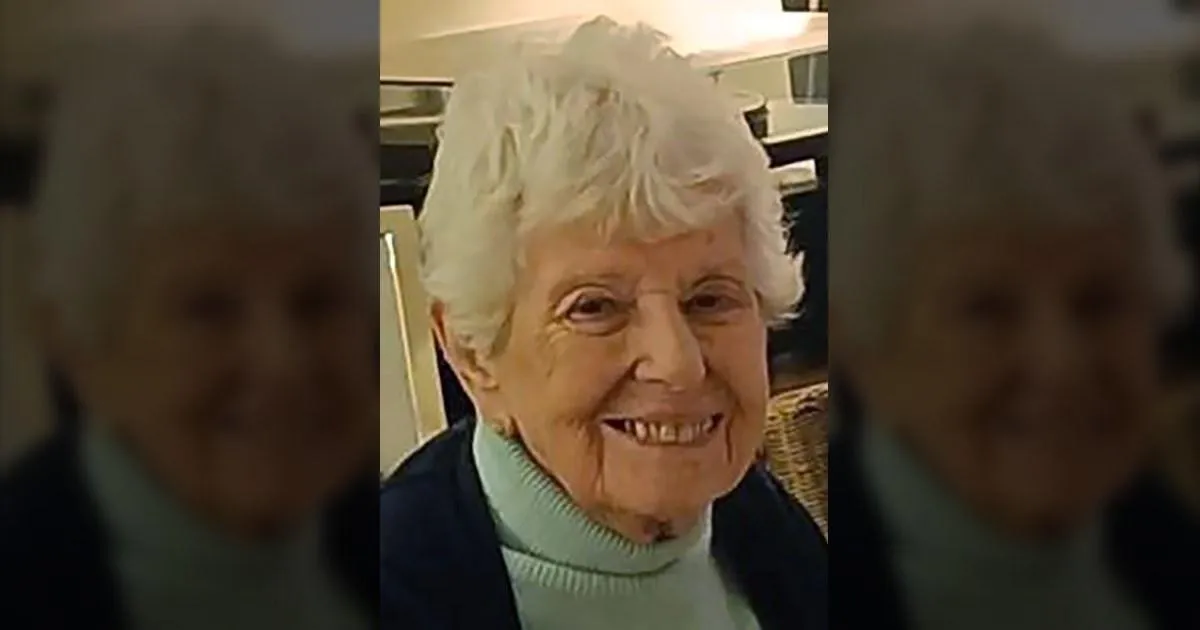
On an ordinary Thursday afternoon, the quiet residential rhythm of Appleford Drive in Abingdon, Oxfordshire, was shattered. At around 2.20pm, police were called to a house on the street and found an 88-year-old woman, named in reports as Jill Grant, unresponsive. She was pronounced dead at the scene. Residents may have been going about their daily routines—making tea, watching television, waiting for a friend—when the first patrol car arrived. What should have been just another afternoon in a town known for its historic abbey and riverside walks became the beginning of a murder investigation. For the neighbours who watched the emergency services arrive, the sight of police tape and blue lights outside a familiar house was surreal. A home that may have held decades of memories—birthdays, quiet evenings, photographs, and routines—suddenly became a crime scene. For an elderly woman, home is often more than a building; it is a place of independence, safety, and memory. The thought that this sanctuary was the place where she died, in circumstances that are now being treated as suspicious, is deeply upsetting. It raises uncomfortable questions about vulnerability, security, and how tragedy can strike without warning. At this stage, the police have not released full details of how she died, and they are not obliged to speculate. What is known is that a life has ended too suddenly, and a family has been thrown into grief. No one expects a loved one to be taken in such a way. The immediate concern, however, is to understand what happened: how could a woman of Jill’s age be found dead in her own home, and how did her death come to involve an arrest for murder? Those are the questions investigators must now answer. And as they do, the community around Appleford Drive can only wait, process what has happened, and try to make sense of something that may not yet have any sense.
Police response was swift. A 36-year-old man from Abingdon was arrested on suspicion of murder and taken into custody, where he remained on Friday. The arrest marks a significant turning point, but in many ways, it is only the beginning. Murder investigations are methodical and painstaking. Detectives must reconstruct the final hours of the victim’s life, piece together movements, examine the scene for forensic evidence, and establish a motive. They will speak to family, friends, and neighbours; they will review CCTV and phone records; they will follow every line of inquiry, no matter how faint. The fact that an arrest has been made does not mean the investigation is over. It means that someone is now being questioned, and that the case is moving through the careful machinery of criminal justice. For the accused, this is the start of legal proceedings that could last months. For the community, it is reassurance that the police are taking the matter seriously. But for the victim’s family, the arrest is not a moment of closure; it is a milestone on a painful road. They are now faced with something unthinkable: losing a loved one, and then having to endure a public process of evidence, court dates, and legal arguments. Every step is a reminder of their loss. Officers are likely providing them with support, but no amount of official sympathy can fill the space left by an elderly mother, grandmother, friend, or neighbour. The days ahead will be difficult for everyone involved, and the police have shown that they understand how much weight rests on their shoulders. This is a time when the community must trust the process, even when the details are slow to emerge. Justice is rarely instant, but the promise of a careful search for truth offers some comfort. Until then, the unanswered questions remain heavy, and the waiting continues.
Detective Chief Inspector Stuart Brangwin, who is leading the investigation, has spoken about the case with a careful mix of compassion and authority. He said that the force’s thoughts “remain with Jill’s family” and asked members of the public to respect their privacy. That plea matters, because when a case like this captures attention, the family often becomes the subject of speculation. They deserve space to grieve without cameras in their faces or questions from strangers. Brangwin also acknowledged the effect the death has had on the local area. “I understand that incidents like this will cause concern in the community but we are investigating the death as a priority and there is an increased police presence in the area,” he said. This is an important admission: even in a place that considers itself safe, violent death can feel close. The increased police presence is meant to be visible reassurance. Officers on the streets, at the scene, and in the neighbourhood are there not only to gather evidence, but also to show residents that the matter is being handled. He then offered the most significant reassurance of all: “At this early stage we do not currently believe there is any threat to the wider public as we have made an arrest and we are not looking for anyone else, at this time.” These are carefully chosen words. They do not promise that everything is resolved; they simply say that, based on the evidence so far, the police believe they have removed the immediate danger. For a community that may be feeling anxious, that is a lifeline. It allows people to walk their streets, send their children to school, and try to return to some semblance of normal life, even as the investigation continues. The remark also indicates how fluid the situation remains; early assurances are based on current evidence, and the police will not hesitate to adjust their response if new information emerges. For now, however, the message is one of containment and commitment.
Abingdon is a place where people expect to live their lives quietly. It is a market town with a strong sense of heritage, and streets like Appleford Drive are built on community. Neighbours know each other by name; children play in gardens; older residents are part of the fabric. When news breaks that an 88-year-old woman has been found dead in her home, the psychological effect is immediate. The feeling of safety, which most people take for granted, is replaced by an unsettling awareness that harm can come to anyone, even to a senior citizen in her own living room. Residents who never met Jill are likely to feel the loss personally. They may imagine their own mothers and grandmothers in the same situation. They may wonder if they should have noticed something, if there were signs, if anyone could have intervened. These thoughts are natural, but they also add to the sorrow. An older person’s death is always a reminder of mortality, but a violent or suspicious death is something else entirely. It feels unnatural. It disrupts the idea that age should bring peace and safety. It forces the mind to confront questions that have no easy answers. As the investigation continues, the community will have to find a way to move forward. Some residents may talk to each other more, checking in on elderly neighbours, offering support. Others may simply need time to feel secure again. The increased police presence will help, but the emotional impact of such a sudden loss can linger. What matters is that no one has to face these feelings alone. A neighbourhood can be a source of strength, and in the wake of this tragedy, it will be important for people to lean on one another. The grieving process is not linear, and for an entire street it may take many weeks to feel safe again.
The police have also issued an appeal for information. They are urging anyone who knows anything about the circumstances surrounding Jill’s death to come forward, no matter how insignificant it may seem. Sometimes the smallest detail, a forgotten detail, can become the piece that changes everything. Someone may have noticed an unfamiliar vehicle in the area on Thursday. They may have seen a person acting strangely, heard raised voices, or remembered a seemingly innocent interaction that now feels different. It is natural to hesitate, to assume that someone else has already called, or that your observation is too vague to matter. But the police are encouraging people not to dismiss their instincts. They would rather be overwhelmed with tips than miss the one clue that helps them understand what happened. To provide information, members of the public can call 101 or make an online report through the Thames Valley Police website. When doing so, they should quote reference number 43260472268. This number is a small detail, but it is symbolic of a wider truth: this is not a statistic, it is a specific life, and every piece of information will be treated seriously in the context of that truth. The appeal is also a reminder that justice is a shared responsibility. While the police have the authority and resources to investigate, communities can play a vital role. The person walking a dog along Appleford Drive in the afternoon, the delivery driver, the person looking out of a window, any of them might hold the answer to a question that is still waiting to be asked. Time can pass, memories can fade, but coming forward now can make a difference. It is also a way of showing care, both for Jill and for her family, who may take some comfort in knowing that the public is willing to help.
In the coming days and weeks, the story will develop. There may be court appearances, further police statements, and perhaps a trial. The public will follow these developments with concern and curiosity, as people always do when tragedy disrupts a quiet town. But behind every official update, there is the deeper reality of loss. An 88-year-old woman has died, and her family must now find a way to live with the pain. They have been asked for privacy, and that request should be honoured. They need to be allowed to remember Jill as she was during her life, not only as the subject of a news article. They need time to grieve in their own way, away from the noise of public attention. The investigation may provide answers, and the legal system may provide accountability, but neither can truly repair the damage that has been done. A house on Appleford Drive is empty in a way that no crime scene investigator can document. A family has lost someone irreplaceable. A community has lost its sense of invulnerability. And yet, even in the middle of this sadness, there is a commitment to finding the truth. The police have made the case a priority. They have made an arrest. They have asked for the public’s help. All of these actions are signals that the death of an 88-year-old woman matters, not because she was famous, but because her life mattered. In the end, that is what justice is about: acknowledging that every life has value, and that every death warrants dignity. As the residents of Appleford Drive slowly return to their routines, they will carry the memory of what happened there. It will change them, maybe in small ways, maybe in larger ones. But it will also remind them to look out for one another, to be grateful for the ordinary days, and to hold the people they love a little closer.