


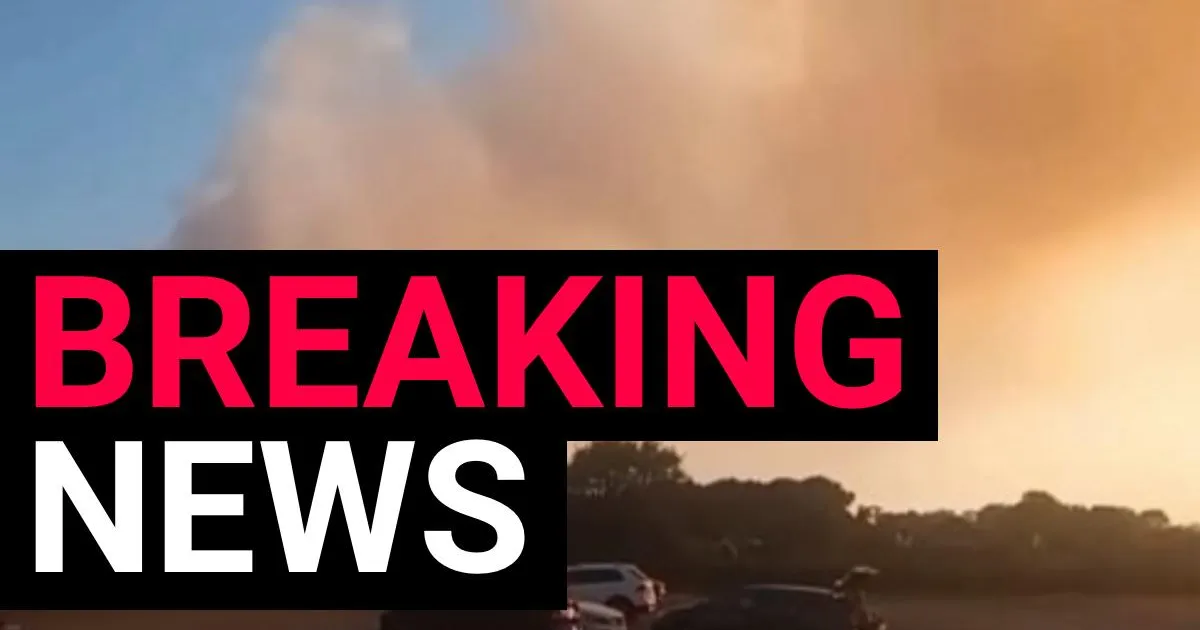
The serenity of the Suffolk coast was shattered this week as a massive wildfire tore through the protected landscape of Dunwich Heath, turning a beautiful natural reserve into a scene of urgent terror. As the blaze took hold, thick, acrid smoke began to billow into the atmosphere, choking the horizon and casting an ominous, sunset-orange glow that robbed the afternoon of its natural light. For the families living in the path of the flames, the situation rapidly shifted from a quiet summer evening to a frantic scramble, as emergency crews worked through the night to safeguard homes and holiday parks. The sheer intensity of the fire, which surged toward local landmarks, served as a grim reminder of how precarious life has become for many in a country currently grappling with an unrelenting, bone-dry climate.
Emerging amidst this chaos was a wave of anxiety regarding the nearby Sizewell B nuclear plant, located just a few miles from the inferno. While officials from the Suffolk County Council were quick to issue assurances that there was “no current risk” to the facility, the proximity of the blaze highlighted the unsettling vulnerability of our critical infrastructure. It is a sign of the times when the threat of wildfire moves from the remote, arid landscapes of Mediterranean Europe to the shores of East Anglia. This particular incident is just one fragment of a much broader, nationwide crisis, as the UK endures its fourth heatwave of the year, transforming vast stretches of the countryside into a literal tinderbox waiting for a single spark.
The scale of this environmental deterioration is difficult to overstate, as 2026 continues to present a reality where the once-lush English landscape is starved of moisture. With half of England officially designated as being in a state of drought, and hosepipe bans now governing the daily lives of 23 million people, the psychological toll of the heat is deepening. Firefighters across the nation are stretched to their absolute physical limits, fighting battles on multiple fronts—from the heathlands of Suffolk to the sprawling, persistent fires in the Cairngorms of Scotland, which have defied suppression efforts for over two weeks. This is no longer an isolated seasonal hazard; it has become a sustained, grueling ordeal that is testing the resourcefulness and endurance of our emergency services.
As we look toward the horizon, the immediate future offers a glimmer of relief, though perhaps not the total salvation many are hoping for. Meteorologists have signaled that temperatures are beginning to trend back toward seasonal averages, potentially offering a momentary reprieve from the blistering amber heat-health alerts that have suffocated London, the East, and the Midlands. However, experts—including Deputy Chief Forecaster Mark Sidaway—have been careful to manage expectations. While rain is forecasted, it is projected to be modest in volume, likely falling well short of what is required to reverse the deep-seated parching of the land. For many in the southern regions, the risk of drought will unfortunately persist even if the clouds finally decide to break.
Stepping back to consider the broader picture, the fires in Suffolk are part of a harrowing pattern playing out across the continent. France, Spain, and Greece have already faced tragic consequences, with hundreds of thousands of people forced to flee their homes and communities. The human cost has also been devastatingly high; we have watched with heavy hearts as firefighters in Greece made the ultimate sacrifice while battling infernos in Crete and the Peloponnese. These losses serve as a sobering international wake-up call, emphasizing that the intensifying climate is a shared struggle that respects no borders. The sight of smoke over Dunwich Heath is a microcosm of a larger, global reality that we are only just beginning to confront.
Ultimately, this sequence of events forces us to rethink our relationship with our environment. The images of scorched earth and evacuated villages are deeply human stories of loss and resilience, reminding us that nature can be as unforgiving as it is beautiful. As we navigate the coming months, the priority must remain the safety of our neighbors and the support of the emergency crews who risk their lives to hold the line against these flames. We are living through a changing climate that demands not only immediate caution during these dry months but also a profound reflection on how we adapt to a future where such extreme conditions may become our new, uncomfortable normal.