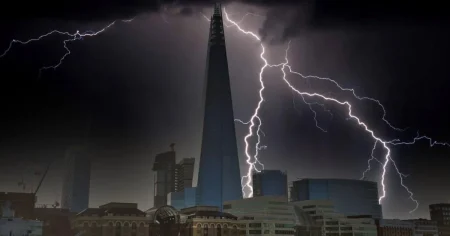


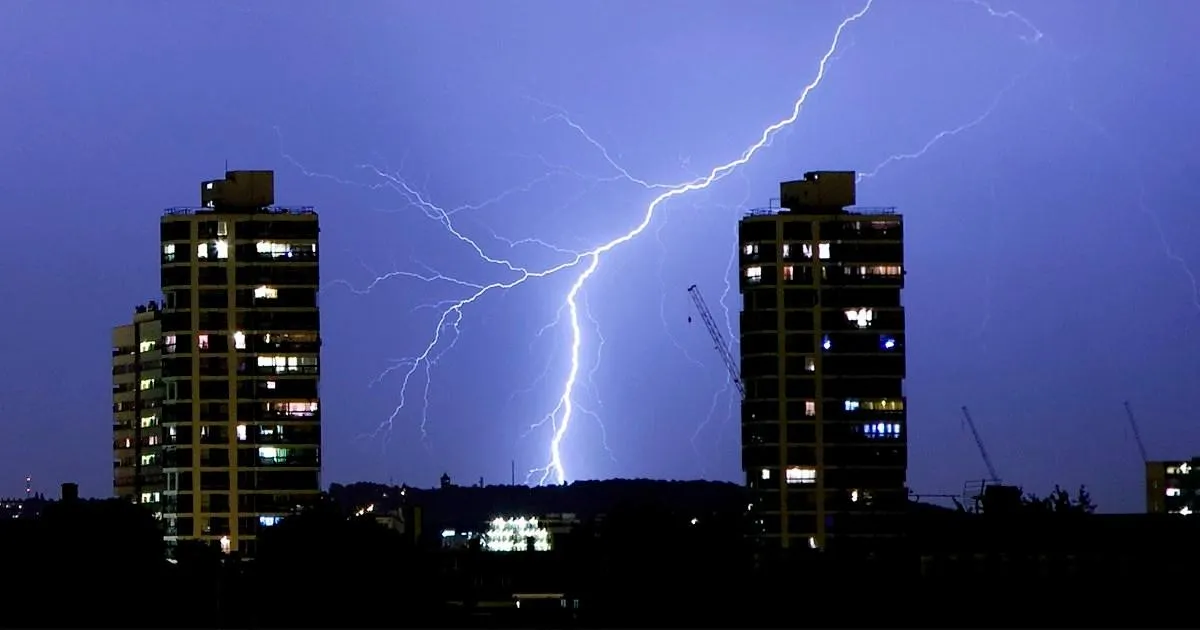
The United Kingdom is currently reeling from a volatile start to a blistering heatwave, as a series of intense, overnight thunderstorms brought an abrupt and chaotic beginning to the summer season. Throughout the last 24 hours, the skies became a theater of extreme atmospheric energy, with an estimated 3,000 lightning strikes illuminating London, while the South West saw an astonishing 27,000 strikes concentrated over the Bristol and Bath areas. For many residents, the night was far from restful; it was a sensory onslaught of thunder and torrential rain that left the country’s infrastructure struggling to cope under the sudden and violent shift in weather.
The physical toll of these storms became starkly apparent in residential neighborhoods, where the raw power of nature resulted in terrifying incidents. In Emersons Green, Bristol, a semi-detached house was set ablaze, reportedly struck by lightning during the height of the storm. Heart-wrenching footage captured the roof of the property engulfed in flames as emergency crews battled to contain the inferno. Meanwhile, in London, the damage was more widespread, with the fire service forced to implement a high-volume call procedure after receiving roughly 400 emergency reports. Assistant Commissioner Pat Goulbourne expressed profound gratitude to the hardworking crews and officers who prioritized life-threatening flooding, reflecting the exhaustion and professionalism of those on the frontline as they navigated a night of unprecedented disruption.
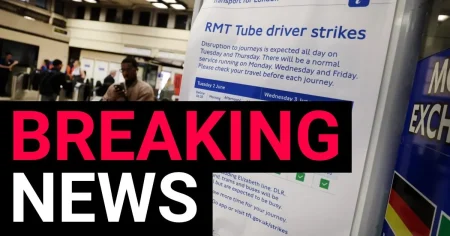
Public transit and travel hubs have borne the brunt of the chaos, creating a ripple effect of frustration for commuters and travelers alike. Bristol Airport was forced to ground all operations when the electrical storm damaged vital air traffic control communication systems. Although the airport has since reopened, the disruption is far from over, as aircraft and crews are hopelessly out of position, leading to ongoing delays and cancellations. Similarly, London’s sprawling transport network is in disarray; the Elizabeth line is suffering from severe service delays due to flooding and points failure, while flash flooding has submerged roads and forced the closure of sections of the London Underground, including stations like Ruislip.
The situation is further complicated by the fact that these storms are merely the heralds of a dangerous, record-breaking heatwave. National Rail has issued stark warnings, advising that travel should be avoided unless absolutely necessary between Wednesday and Thursday, as extreme temperatures threaten to buckle train tracks. This physical vulnerability of our infrastructure—where rails can literally melt or bend—highlights the precarious nature of navigating a country unaccustomed to such climatic extremes. The contrast is palpable: while some lucky heavy sleepers managed to snooze right through the electrical display, the rest of the country is waking up to a sweltering morning of soggy roads, damaged homes, and a travel network that is struggling to find its footing.
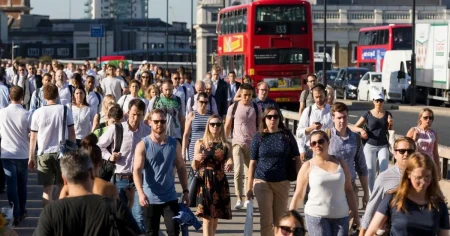
Interestingly, this surge in severe weather has prompted a dramatic shift in how people navigate their cities. As the heat rises and the trains falter, micro-mobility has seen a massive surge, with e-bike and e-scooter usage jumping by over 500% compared to this time last year. Whether it is a rush for the cooling waters of the London Fields Lido or trips ending near Victoria Park, Londoners are clearly voting with their wheels, seeking alternative, breezy ways to move through the city. This uptick in cycling indicates a city trying to reclaim its mobility in the face of flooding and rail failures, even as the mercury prepares to climb toward a staggering 40°C.
As we look toward the remainder of the week, the atmosphere remains tense. The transition from apocalyptic thunderstorms to crushing heat has left the UK in a state of flux, with ongoing concerns about school closures, health risks for the vulnerable, and the long-term implications of such intense weather events. While engineers scramble to fix the complex damage to communication systems and fire crews mop up the final incidents of the night, the prevailing sentiment is one of weary anticipation. The storms may have passed, but the trial by heat has only just begun, serving as a sobering reminder of how quickly our modern routines can be interrupted by the unpredictable force of a changing climate.