


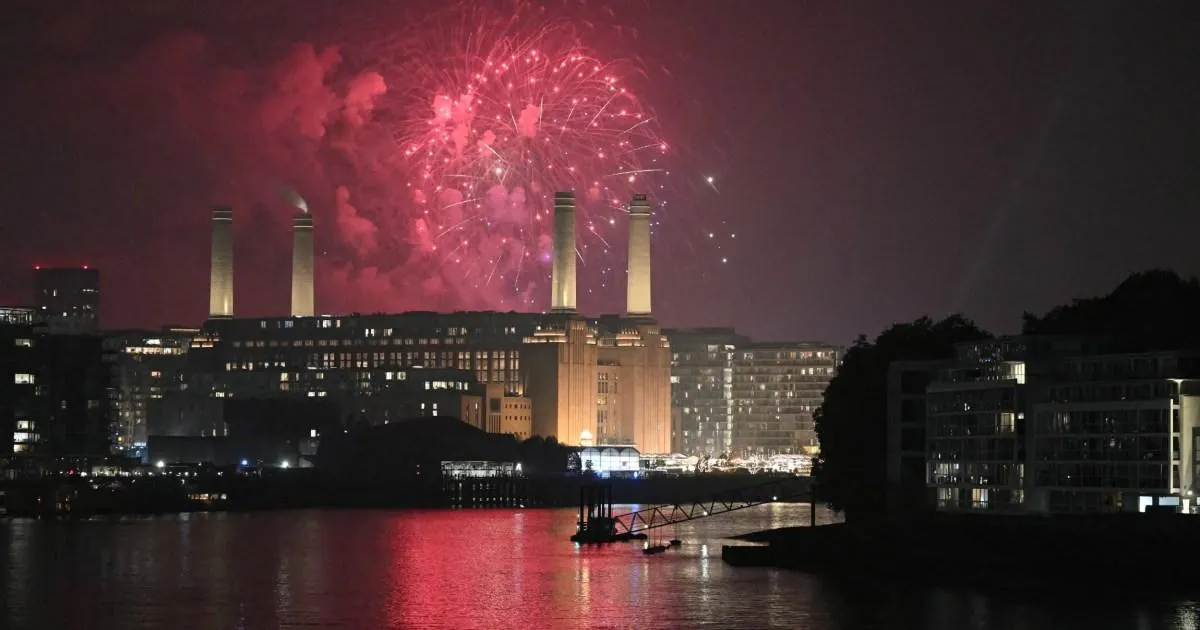
If you’ve stepped outside over the past few days and felt a familiar scratchiness at the back of your throat, or noticed that the winter sunshine has looked a little hazier than it should, you’re not imagining things. The skies above Britain are paying the price for one of the most beloved, chaotic, and gloriously messy traditions we have: Bonfire Night. Fireworks might be beautiful, with their cascading silver willows and thunderous bursts of crimson and gold, but they come with a hidden cost that lingers long after the last spark has faded. Last week’s Bonfire Night celebrations, which saw thousands of professional displays and countless back-garden firework shows light up communities across the country, have triggered a stark environmental consequence. Weather apps and air quality monitors are now flashing red, with some regions facing what has been described as a “code red” pollution alert. The annual commemoration of the failed Gunpowder Plot of 1605, complete with towering bonfires and rockets streaking through autumn skies, has left behind a murky cocktail of airborne nasties, and experts are urging the public to take the situation seriously.
To understand why the aftermath feels so heavy, it helps to look at what actually goes into the smoke you might have walked through on your way to work. Fireworks are not just pretty sparkles; they are carefully engineered chemical concoctions containing fuels, oxidisers, binders, and metal salts, each of which produces a specific colour and effect. When those compounds explode, they release a dense plume of fine particulate matter, heavy metals, and toxic gases directly into the air we breathe. Bonfires, meanwhile, are just as problematic. Pallets, treated wood, garden waste, and all manner of miscellaneous household items often find their way onto the pyre, and burning them releases an even more unpredictable mix of chemical pollutants. Together, the combined output of a nation’s worth of celebrations creates what is essentially a seasonal smog event. This year, the situation was made worse by the weather. The Met Office pointed to light winds and lingering fog, particularly in urban areas and near busy roads, which allowed the pollution to settle and build up instead of being blown away. The result is a thick, lingering haze that isn’t just an eyesore; it’s a genuine respiratory irritant, capable of making eyes water, noses stream, and lungs complain in ways that are especially noticeable for those with underlying conditions.
The official data paints a sobering picture. According to the UK Air Information Resource, run by the Department for Environment, Food and Rural Affairs, several regions have rocketed to the top of the pollution scale. The North West, Merseyside, London, the South East, and Eastern England have all been given the maximum score of 10 out of 10, a designation labelled as “very high.” Just slightly behind them, Yorkshire and Humberside and the East Midlands are sitting at 9 out of 10, while the West Midlands is recording 8 out of 10. On the government’s colour-coded map, these areas are shown in alarming shades of red and purple, the same colour palette reserved for extreme pollution events. Simon Birkett, founder and director of Clean Air London, took to social media to deliver a blunt warning. “Widespread EXTREME AIR POLLUTION across UK,” he wrote. “People have blasted fireworks into the fog for days to create a deadly smog full of toxic metals, smoke and other particles.” His frustration is understandable. This isn’t just an aesthetic problem; it’s a public health issue that has been brewing for decades, and nights like Bonfire Night simply throw it into sharp, hazy relief.
The health implications are not limited to the immediate discomfort of a sore throat or a cough. Dr Matt Swallow, from the charity Asthma + Lung UK, has specifically cautioned that “bonfire smoke, fireworks pollution and chilly air can trigger breathing difficulties.” For the roughly 5.4 million people in the UK who rely on asthma medications, this is not a theoretical concern. The combination of cold air, which can already cause airways to narrow, and the chemical-laden smoke makes for a potentially dangerous mix. Public Health England has long warned that poor air quality represents the largest environmental risk to public health in the UK. It’s a quiet, creeping threat that contributes to chronic cardiovascular and respiratory diseases, lung cancer, and a reduced life expectancy when exposure is sustained over the long term. The immediate spikes seen in the days following Bonfire Night are a stark reminder of that underlying reality. Health experts are advising people, especially those with existing lung or heart conditions, to stand well away from smoke, keep windows closed during peak pollution hours, and always carry their reliever inhalers. Even for healthy individuals, the advice is simple: if the air looks hazy and tastes metallic, it’s probably best to avoid strenuous outdoor exercise, and to give your body time to recover from the respiratory assault that a weekend of bonfires and bangers can inflict.
Interestingly, the impact has not been felt evenly across the country. Over the past 24 hours, Scotland, Wales, and the North East of England have emerged as the only regions to score on the low end of the air pollution scale. This isn’t just luck. These areas benefit from a combination of geography, lower population density, and reduced exposure to transboundary pollution drift, which is the process by which pollution generated in one country or region travels across borders through the air, dumping particles and chemicals on places that might not have produced them in the first place. The prevailing winds sweeping across the Atlantic tend to keep things moving, and with fewer major urban centres and heavy industries packing these areas, there is simply less local pollution to linger around. Meanwhile, the more populous and traffic-heavy regions of England bear the brunt, their atmosphere acting as a sink for everything from brake dust and diesel exhaust to nitrous oxides and the metallic remnants of last week’s fireworks. It’s a reminder that air pollution is not a uniform problem; it is shaped by where we live, how we travel, what we burn, and which way the wind happens to be blowing on any given night.
None of this means we should cancel Bonfire Night forever, or sit inside with the curtains drawn in fear. There is something deeply human about gathering around a fire in the middle of autumn, about looking up in collective awe as explosions of colour dance across the night sky. But it does mean we need to be smarter, kinder, and more conscious of the legacy we leave behind. Communities can choose to attend organised professional displays, which are typically larger but far fewer in number, rather than hosting multiple backyard shows that spread the pollution across every street. We can build bonfires with clean, untreated, dry wood instead of old furniture and plastic-coated rubbish. We can check local air quality forecasts in the days after major celebrations and adjust our routines accordingly, protecting the very young, the elderly, and those with respiratory conditions. And perhaps most importantly, we can push for more research into greener pyrotechnics and lower-emission alternatives. The night sky will still be there, ready to be dazzled, but the air we breathe is the same air we share with every neighbour, every child, and every person taking a morning walk. So let’s keep the awe, keep the warmth of the fire, and keep the sense of community, but let’s also remember to take a deep breath afterward. Because if there’s one thing this week has shown us, it’s that the most beautiful explosions can leave behind the most invisible, and most unwelcome, of souvenirs.