
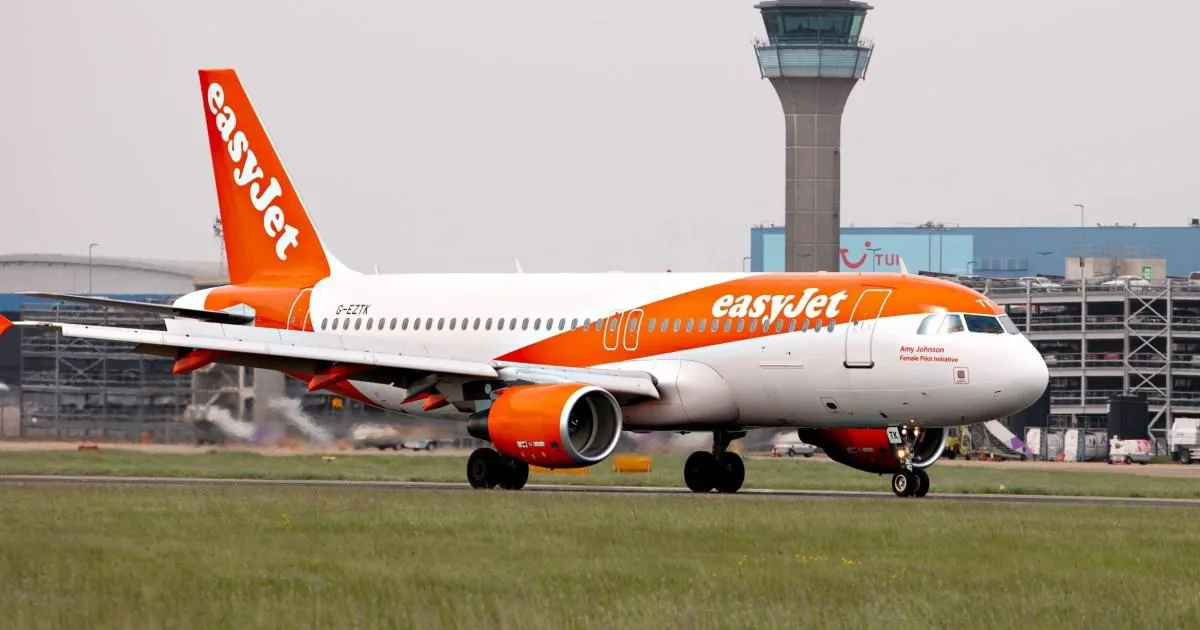
Aviation safety relies on a delicate balance of precision, physics, and rigorous procedure, a reality that came into sharp focus following two concerning incidents involving easyJet flights last summer. According to a recent report from the Air Accidents Investigation Branch (AAIB), two separate commercial flights departed from the wrong runway positions at UK airports. In the first instance, an Airbus A320 carrying 186 people took off from London Luton on June 13, 2025, from a point further down the runway than the crew had originally planned. It was only after completing a round-trip to Málaga that the captain realized the error, noting that the aircraft had cleared the ground with much less runway remaining than anticipated.
These types of runway incursions or misalignments are not merely administrative errors; they are classified by experts as “serious safety occurrences.” Aviation authorities emphasize that while these specific flights arrived at their destinations without injury or damage, the margin for error in aviation is incredibly narrow. If the weather conditions had been less favorable or the mechanical load slightly different, the consequences of departing from the wrong point could have been catastrophic. The fact that the Luton flight cleared the runway at a mere 65 feet—a height that highlights just how little room the pilots actually had—serves as a sobering reminder of why standardized take-off procedures exist.
A second occurrence took place just three weeks later on July 6, 2025, involving an easyJet flight departing Manchester Airport for the Greek island of Kos. Much like the Luton incident, the aircraft took off from an incorrect runway position. While this flight also proceeded to its destination without further incident, the frequency of these errors within such a short window raised eyebrows among industry watchdogs and prompted a deep dive into the airline’s internal protocols. EasyJet has since stated that they have conducted a comprehensive review of their take-off procedures, pledging to sharpen their focus on operational oversight to ensure such mistakes do not become a systemic issue.
Beyond these runway alignment errors, the broader challenges facing modern aviation became evident earlier this year when an easyJet flight from London Southend to Málaga was forced to offload five passengers simply because the plane was too heavy for a safe departure. While the sight of passengers being asked to depart a plane is always jarring, it illustrates the complex, high-stakes physics required to get a heavy jet into the air. In that instance, a combination of unfavorable wind conditions and the physical constraints of Southend’s shorter-than-average runway meant the crew could not safely achieve the necessary lift. It was a classic example of safety regulations overriding the convenience of the passenger.
These events highlight the immense pressures placed on airport infrastructure and crew decision-making. Southend’s runway, measuring roughly 1,856 meters, operates within a much tighter margin than larger hubs like Stansted, which boasts a runway over 3,000 meters long. When variables like wind speed, air temperature, and air density change, the “math” of flying changes instantly. Pilots must constantly recalculate whether their heavy cargo—the passengers, fuel, and baggage—can safely leave the ground within the allotted space. When the margins vanish, the reality of flight physics forces hard choices, proving that even a modern, sophisticated flight is beholden to the laws of nature.
Ultimately, these incidents serve as a vital reminder that air travel is not a routine bus ride, but a complex engineering feat that requires perfection from every member of the crew. EasyJet has maintained that the safety and well-being of their customers remain their highest priority, and they have cooperated fully with investigators to bolster their training standards. For the traveling public, these stories are a bridge between the comfort of the cabin and the invisible, rigorous safety nets that operate behind the scenes. While these “serious occurrences” luckily ended in safe landings, they act as an essential wake-up call that in the skies, there is absolutely no room for complacency.