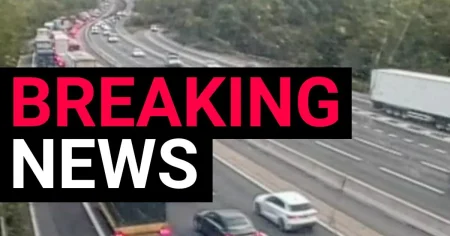

It was just before eleven o’clock on a Sunday morning, the kind of time when the world feels a little slower, when people are easing into the weekend, running errands, heading out to see family, or simply enjoying a quiet drive through Doncaster. White Rose Way, normally a busy route connecting parts of the city, had no warning of what was about to unfold. In a matter of seconds, an ordinary morning was torn apart. A black Mitsubishi L200 pick-up truck reportedly struck four pedestrians who were on the carriageway, then collided with a black Audi and a silver BMW traveling in the opposite direction. The impact was catastrophic. Emergency services rushed to the scene, but for two people, nothing could be done. They died there, out on the road, with the blue lights of ambulances and police cars swirling around them. Four others were seriously injured and taken to hospital, their lives suddenly hanging in the balance, their families left to receive phone calls that no one ever wants to answer. The reality of what happened is still sinking in for everyone involved. What began as an ordinary Sunday became a day that will be etched forever into the memories of witnesses, first responders, and the loved ones of those whose lives changed in an instant.
The details released by South Yorkshire Police paint a grim picture of a multiple-vehicle collision on a main road that many people use every day. The driver of the pick-up truck, a thirty-year-old man, was reportedly behind the wheel of the black Mitsubishi L200 when it struck four pedestrians. The force of that moment was apparently so severe that the vehicle then went on to collide with a black Audi and a silver BMW that were moving in the other direction. It is the kind of chaotic, violent sequence that leaves wreckage scattered across the tarmac and leaves investigators with the painstaking task of reconstructing exactly how it happened. The police have not yet released the identities of the two victims, and officers are working to trace their next of kin. That phrase, “next of kin,” sounds so clinical, but behind it lies the crushing weight of families who will soon be told that someone they love is never coming home. For the four people who were taken to hospital, the immediate physical injuries are serious, though not believed to be life-threatening. But the emotional wounds, the trauma of being struck by a vehicle, of witnessing death and destruction so close, may take much longer to heal. In the aftermath, the road itself became a scene of grief and evidence, with investigators marking positions, photographing skid marks, and piecing together the final moments before disaster struck.
Behind every statistic in a report like this, there are human beings. Two people were walking along or crossing the carriageway when their lives were suddenly cut short. They were not just victims; they were someone’s partner, parent, child, friend. They had plans, dreams, and people who loved them. The news that they have died will ripple outward through their families and communities, leaving a hole that nothing can fill. For the four survivors, the road to recovery is just beginning. They are in hospital, being treated for serious injuries, surrounded by doctors and nurses who are doing everything they can. But even after their wounds heal, there will be memories that do not fade. The sound of screeching tires, the impact, the chaos, the sight of emergency crews fighting to save lives. For their families, the hours spent waiting outside emergency rooms, staring at hospital doors, hoping for any word, will be agonizing. The police have the difficult task of identifying the two people who died and notifying their loved ones. Until that happens, there is a strange and painful limbo, a space where families may sense that something is terribly wrong but do not yet know the full extent of the tragedy. The community in Doncaster, meanwhile, has been left shaken, struggling to comprehend how such a sudden and violent event could happen on a familiar road on a Sunday morning.
The legal aftermath has already begun. The driver of the Mitsubishi, a thirty-year-old man, was arrested at the scene or in connection with the crash on suspicion of two counts of causing death by dangerous driving, two counts of causing serious injury by dangerous driving, and driving while unfit. It is a heavy list of allegations, reflecting the seriousness of the incident and the loss of life involved. He has been released on bail while police continue their investigation, meaning he is free for now but remains under the shadow of potential charges. It is important to remember that an arrest is not a conviction, and the legal process must be allowed to run its course. The investigation will look at every detail: the condition of the driver, the speed of the vehicle, the movements of the pedestrians, the layout of the road, the visibility, and any other factors that may have contributed to the crash. Forensic experts will examine the vehicles, review CCTV footage, and speak to witnesses. It is painstaking work, but it is necessary to bring clarity and, if appropriate, justice for the victims and their families. In the meantime, the driver’s life, too, has been altered forever. Whatever the outcome, he will have to live with the knowledge that he was at the center of a tragedy that killed two people and injured four others. No legal proceeding can undo what happened, and no sentence can bring back the lost lives.
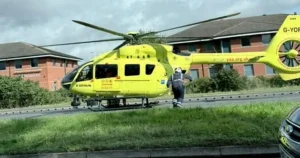
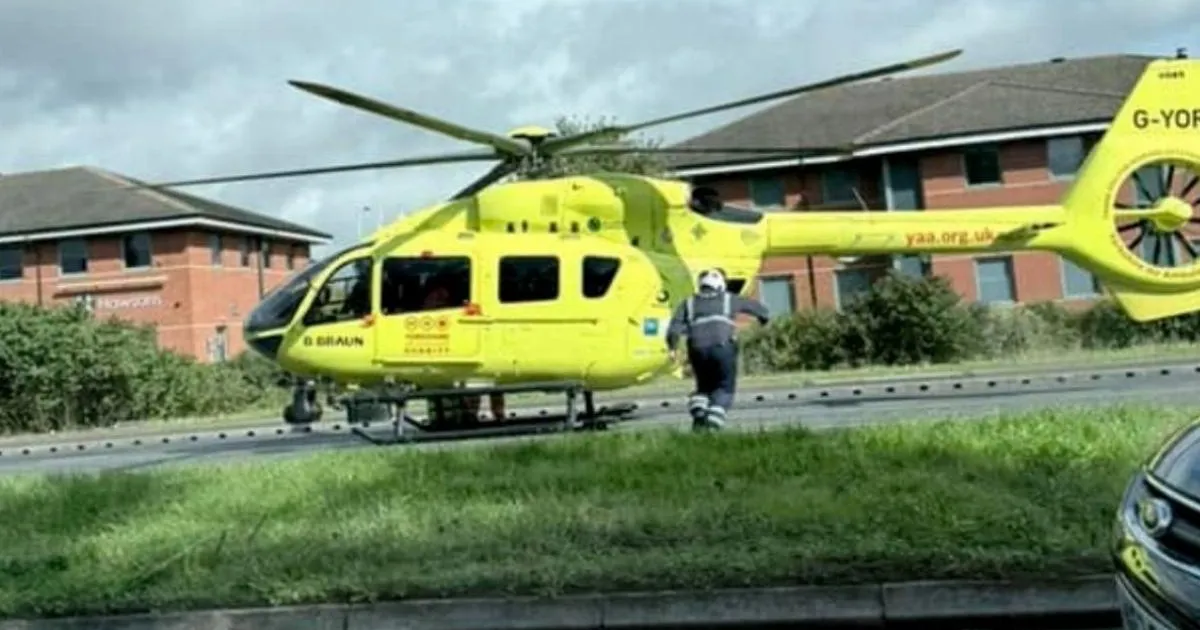
The emergency response to the crash was massive and urgent. An air ambulance landed directly on the busy carriageway, a sight that drew the attention of anyone nearby and signaled the gravity of the situation. The road was closed off, and it remained shut until midnight on Monday, allowing investigators to work through the scene methodically. For drivers, the closure meant diversions and delays, an inconvenience that paled in comparison to the human cost of what had occurred. For the emergency crews, the scene was one of intense pressure and heartbreak. Paramedics, police officers, and firefighters had to act quickly, tending to the injured, doing everything possible to save lives, and then beginning the grim process of documenting what had happened. Air ambulances are often reserved for the most critical cases, and their presence speaks to the severity of the injuries involved. The road, usually filled with the flow of everyday traffic, became a temporary landing zone, a staging ground for a rescue effort, and ultimately a place where two bodies lay beneath the open sky. The closure lasting until the following midnight shows how complex the investigation was, how much evidence needed to be collected, and how careful the authorities were being to ensure that every detail was captured. Behind the police tape, forensic teams worked quietly, their faces set in concentration, while the world outside went on, unaware of the full scope of the tragedy.
Now, South Yorkshire Police are appealing for witnesses and dashcam footage. They want to hear from anyone who saw the Mitsubishi before the crash, anyone who saw the collision itself, and anyone who may have recorded video of the moments leading up to it. In the age of dashboard cameras and smartphone footage, even the smallest piece of evidence can help investigators understand exactly what happened. A motorist who was passing by, a pedestrian on the pavement, a business owner with a security camera, anyone might have seen something that could prove crucial. The appeal is not just about gathering evidence for a potential prosecution; it is about bringing closure to families who are desperate for answers. In the wake of such a sudden and violent event, the need for understanding is immense. The community is grieving, and the road where the crash happened now carries the weight of memory. Every time someone drives past, they may think of the two people who lost their lives there. In the longer term, this tragedy raises broader questions about road safety, about the responsibilities of drivers, about the vulnerability of pedestrians, and about the need to prevent such senseless losses. But for now, the focus is on the victims, their families, the injured, and the pain that has settled over Doncaster. As the investigation continues, the rest of us are reminded of how fragile life is, how quickly everything can change, and how important it is to hold our loved ones close. Two families are preparing to say goodbye. Four people are fighting to recover. And a community is left to make sense of a Sunday morning that should have been peaceful but became something no one will forget.