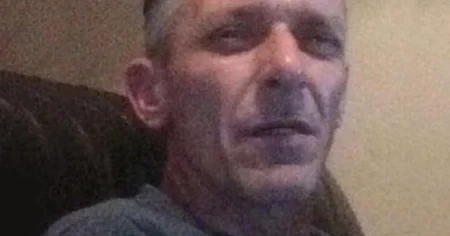

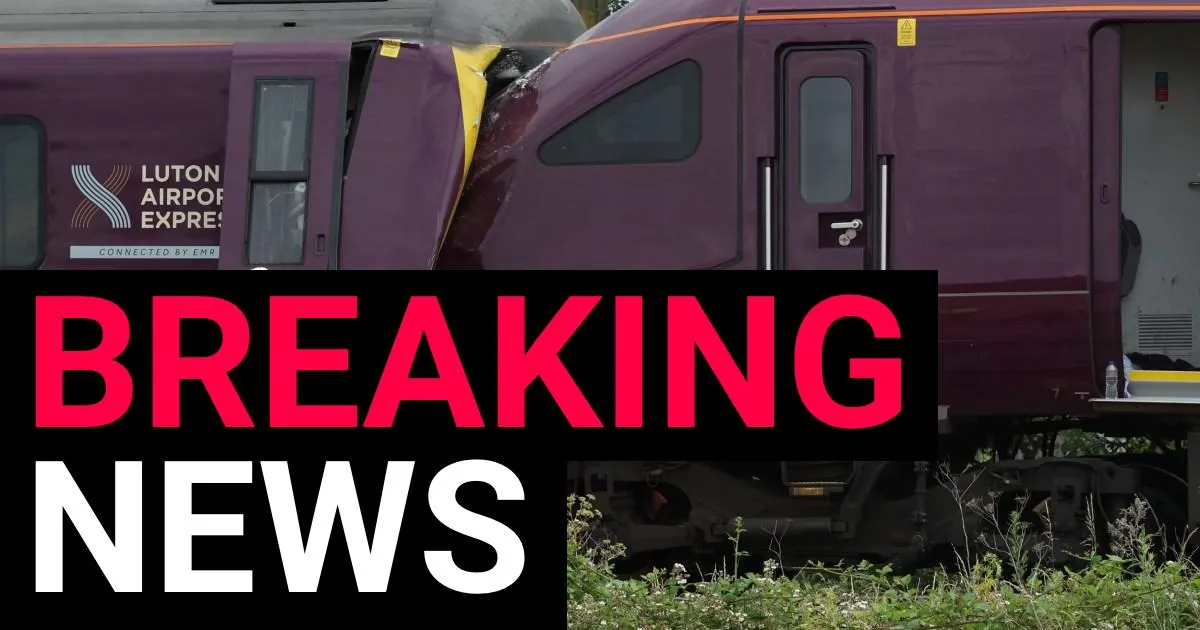
The recent railway tragedy near Bedford, which claimed the life of 60-year-old train driver Shaun Burton, has left a community in shock and investigators searching for answers. On a Friday evening that began as a routine commute, a collision occurred when one train, traveling from Corby, struck the rear of another that had come to a sudden halt due to an early warning system fault. As the only fatality in an event that injured roughly 100 passengers, Mr. Burton’s loss is felt deeply, casting a somber shadow over the entire rail network. While the physical wreckage is being cleared, the emotional toll on the survivors and the families of those affected continues to mount.
The Rail Accident Investigation Branch (RAIB) has issued an interim report highlighting a critical moment in the lead-up to the impact: the train had passed a red danger signal just before the collision. Investigators are currently examining whether the train’s Automatic Warning System (AWS)—designed to trigger an emergency brake unless a driver acknowledges an alert—functioned as expected. Preliminary data shows that while the train was traveling at 76 mph, the brakes were engaged for roughly nine seconds before the crash, slowing the vessel to 49 mph at the point of impact. Determining exactly what Mr. Burton saw or heard in those final moments remains a top priority, as the investigation looks move beyond the technical data to understand the human experience behind the controls.
Beyond the technical investigation, the human reality of the crash is harrowing. For the passengers on board, the evening turned into a nightmare of smoke, screaming, and confusion. Dr. Pete Knapp, a 40-year-old passenger, recounted the terrifying instability of the incident, describing being thrown forward into the seat in front of him before realizing the severity of the carnage. He witnessed fellow passengers suffering from broken bones and profound shock, having to squeeze through narrow gaps in the doors to escape the damaged carriages. His eye-witness testimony serves as a stark reminder that behind every statistic of “injuries” is a person whose life was instantly upended by trauma and pain.
The emergency response was swift, with responders arriving to treat dozens of victims on the scene while transporting the most critically injured to hospital. British Transport Police confirmed that several days later, 53 people remained in medical care, with eight of them fighting for their lives in critical condition. Prime Minister Keir Starmer expressed his deep concern over the incident, extending his gratitude to the first responders who acted heroically in the chaos. For the victims, the coming weeks will involve not just physical recovery from broken limbs and internal injuries, but the long, arduous process of processing the psychological weight of surviving such a violent collision.
Technical experts are also scrutinizing the hardware involved in the crash, noting that the two trains—a newer Class 810 and a two-decade-old Class 360—represented different eras of rail technology. While some initial assessments suggest the collision speed was “relatively slow” in the context of rail accidents, the impact was clearly devastating. Network Rail and other industry officials have pledged their full cooperation with the ongoing investigation, emphasizing that the primary focus is now on uncovering the specific chain of events that led to the stationary train’s unexpected halt and the subsequent failure of the moving train to stop safely in time.
As the investigation enters its next phase, the focus must remain on the individuals whose lives have been permanently altered. Ensuring that such a tragedy never happens again is the ultimate goal, but for the family of Shaun Burton and the hundreds of passengers who narrowly escaped with their lives, the path forward is one of mourning and healing. This incident serves as a sobering reminder of the trust commuters place in the rail system every day. While technology and safety protocols are designed to be impenetrable, this tragedy highlights the fragility of that system and the profound human impact when things go wrong on the tracks.