

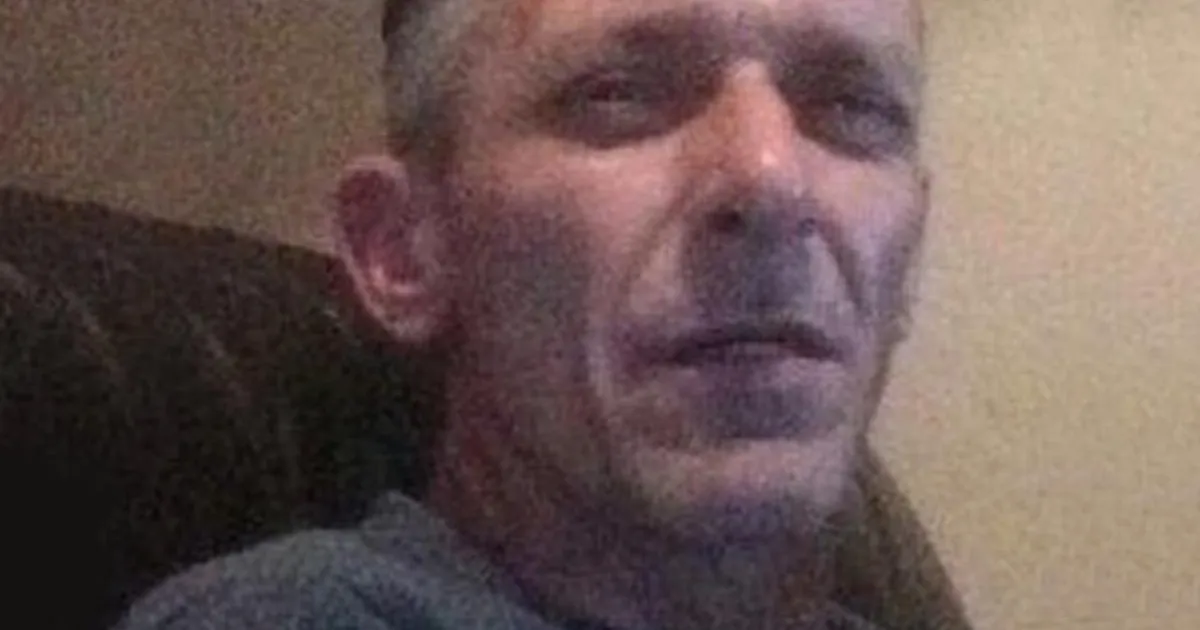
The chilling discovery of Richard Dyson’s remains last summer has peeled back the layers of a dark, six-year mystery that began in the quiet corners of Barnsley. For over half a decade, Mr. Dyson, a 55-year-old man who had been living in a vehicle on his landlord’s property, was essentially a ghost, reported missing in November 2019 and seemingly vanished from existence. It wasn’t until investigators uncovered a concrete-filled barrel on local farmland that the horrifying truth of his final moments began to emerge. The subsequent legal proceedings at Sheffield Crown Court have now begun to piece together a narrative that feels more like a grim work of fiction than a reality of modern British life, shedding light on a life ended in sudden violence and hidden away in a desperate, gruesome attempt at concealment.
The testimony provided by forensic pathologist Dr. Charles Wilson has added a harrowing level of detail to an already devastating case. The court was forced to confront the mechanical brutality inflicted upon Mr. Dyson, as Dr. Wilson detailed how the body had been dismembered with a saw and a knife. The precision required to dismantle a human body—disarticulating joints and slicing through bone—speaks to a calculated effort to dispose of evidence. This wasn’t merely a crime of passion or a singular act of violence; it was a process of systemic destruction. Dr. Wilson’s account of the recovery process, which spanned several days of painstaking, delicate work to extract remains from layers of vegetation and poured concrete, highlights the sheer extent to which the perpetrators went to ensure that Richard Dyson would never be found.
At the heart of the courtroom drama is Christopher Wright, a 73-year-old man described by prosecutors as a “weapons fanatic.” Wright stands accused of murder, a charge he vehemently denies, maintaining his innocence against the weight of the state’s forensic evidence. The prosecution paints a bleak picture of the relationship between Wright and his lodger, suggesting that the underlying motive for the alleged slaying was rooted in betrayal and property. Mr. Dyson had been living in a vehicle parked at Wright’s home, Parkside Cottage, a precarious arrangement that purportedly soured when Wright discovered that his lodger had stolen and sold his beloved firearms. According to the prosecution’s theory, this dispute over weapons acted as the catalyst for the fatal shotgun blast that ultimately claimed Mr. Dyson’s life.
Beyond the specific mechanics of the dismemberment, the physical evidence found during the autopsy provides a haunting timeline of trauma. Dr. Wilson identified shotgun pellets embedded deep within Mr. Dyson’s rib cage, tracing a path of destruction from one side of his torso to the other—a definitive mark of a lethal encounter. Furthermore, the discovery of blunt force trauma to the skull, marked by shattered cheekbones and fractures near the eye socket, introduces a lingering question about whether the victim suffered before he was shot. Because the skull had been buried beneath layers of bricks and concrete, the pathologist could not definitively conclude if these injuries occurred during a struggle before death or were part of the subsequent indignities inflicted on his body after the fact.
The reach of this tragedy extends to a second defendant, Karl Schwalbe, a friend of Wright’s who lived nearby and now finds himself facing charges of perverting the course of justice. Prosecutors argue that the aftermath of the killing required assistance, and that Schwalbe’s involvement helped to facilitate the cover-up that lasted for nearly six years. The trial is effectively an examination of two lives—those of the accused—colliding with the tragic erasure of a third. The charges of preventing a lawful burial and the various firearms offenses attached to the case serve as a grim reminder of how far individuals may go to hide their actions when they believe they can outrun the law, turning a local property in Hoyland into the site of a long-term, hidden burial ground.
As the trial continues in Sheffield, the proceedings serve as a somber reflection on the human capacity for cold-bloodedness and the persistence of justice. For the family and loved ones of Richard Dyson, who spent years not knowing the fate of their relative, the trial provides the painful clarity they were denied for so long. It is a stark reminder that even the most thoroughly concealed crimes—those buried under concrete, hidden away in remote rural fields, and muted by the passage of years—can eventually be brought to light. While Wright and Schwalbe maintain their innocence, the evidence presented in the courtroom paints a picture that is as meticulous in its cruelty as it is devastating, forcing the community to grapple with the reality of a life taken and a truth that was buried, but never truly lost.