



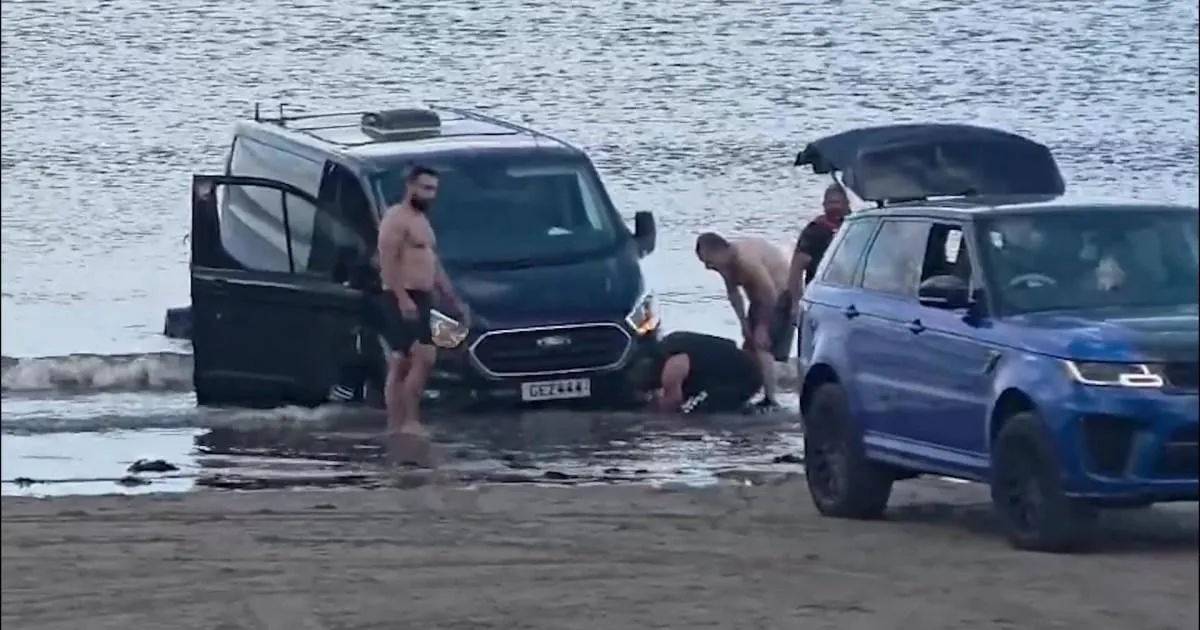
It is often said that common sense is far rarer than we would like to believe, a sentiment perfectly illustrated by a disastrous scene that unfolded on a beach in Scarborough this past weekend. A day trip that began with the intention of helping a friend ended in a spectacle of human stubbornness and sunken luxury, resulting in the total loss of a £120,000 Range Rover SVR. What started as a potentially noble rescue mission quickly devolved into a cautionary tale of hubris, leaving onlookers shaking their heads as the rising North Sea tides slowly claimed two vehicles in a watery graveyard of poor decision-making.
The catastrophe began when a Transit van found itself stranded in the wet sand, a predicament thousands of motorists have faced before. Rather than calling a professional recovery service equipped for beach rescues, the driver of the high-performance Range Rover—a vehicle designed for luxury and style rather than navigating shifting, waterlogged sands—decided to take matters into their own hands. The plan seemed simple enough: hitch the van to the powerful 4×4 and drag it to the safety of the firm ground. However, the beach is a deceptive beast, and the drivers soon discovered that brute horsepower is no match for the unrelenting physics of shifting tides and sinking sediment.
As the situation deteriorated, the onlookers began to gather, sensing that the attempted rescue had turned into a comedy of errors. Reports suggest that the parties involved were surprisingly resistant to intervention, even when locals with genuine knowledge of the terrain tried to offer advice. One eyewitness, Sammy Hellewell, noted that the men were dismissive and even rude to those who suggested safer, more practical methods for retrieving their vehicles. This refusal to listen to local expertise, likely fueled by a misplaced belief in their own capabilities or their expensive equipment, turned a fixable mistake into an expensive nightmare.
The scene grew increasingly absurd as the minutes ticked by. Observers watched in disbelief as the men attempted to dig their vehicles out of the wet, deep sand using nothing more than a small plastic spade—a tool clearly better suited for a toddler’s sandcastle than for extricating a multi-ton SUV. While they fixated on this ineffective labor, they failed to account for the most vital factor: the tide. While they were busy worrying about the initial sand trap, the sea was quietly advancing, turning the solid ground beneath their tires into an inescapable slurry of mud and saltwater.
By the time the reality of their situation set in, it was far too late. The tide advanced with a relentless, mechanical rhythm, eventually swallowing both vehicles until only the antenna of the van remained visible above the churning surf. The sight of a six-figure luxury vehicle being slowly submerged by the North Sea is not just a tragedy for the owner’s bank account, but an indictment of the “I’ve got this” attitude that so often leads to disaster. When the local rescue teams finally arrived to wait for the tide to turn, they were met not with gratitude, but with the grim realization that insurance payouts for such blatant negligence were unlikely to materialize.
Ultimately, the vehicles were hauled from the beach by heavy-duty machinery, serving as a wet, rusted monument to the day’s events. The incident remains a striking reminder that nature rarely humors human arrogance. Whether it was the allure of the Range Rover’s prestige or the misguided desire to save a few pounds on a professional tow, the owners paid a much higher price in the end. As the sand settled and the crowd dissipated, the takeaway was clear: no matter how much you spend on the engine under your hood, it is no substitute for the humility required to know when you are out of your depth.