


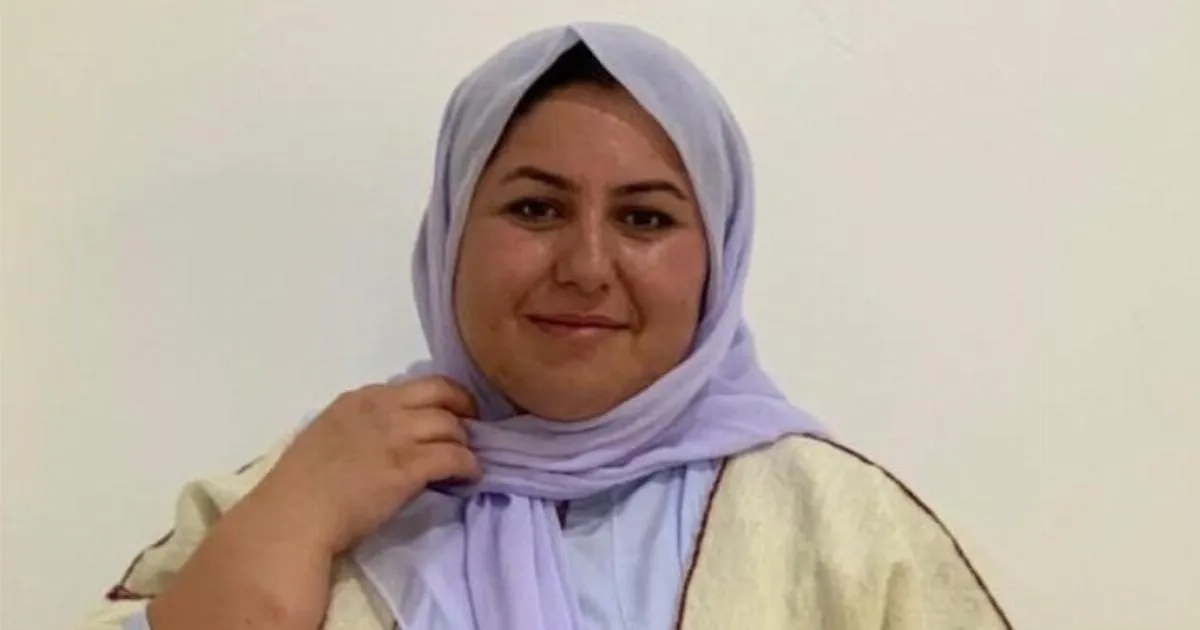
In 2014, the life of 19-year-old Shireen Khudeeda was defined by the simple, hopeful aspirations common to any young woman. Living in Northern Iraq’s village of Hardan, she and her fellow Yazidi neighbors were part of a tight-knit, ancient religious community. That peace was shattered on August 3, when ISIS militants invaded their ancestral lands, branding them “devil-worshippers” and initiating a systematic campaign of eradication. As their village descended into chaos, Shireen’s family attempted a desperate escape toward the safety of the mountains, but they were intercepted at a junction; the men were swiftly separated and executed in mass killings, while Shireen and thousands of others were rounded up and taken into the clutches of the terrorist regime.
For the next three years, Shireen lived through a nightmare that defies language. She was sold, traded, and brutalized as a sex slave at the hands of ISIS fighters in Mosul. She witnessed the cold-blooded murder of men and lived in daily terror, yet she held onto a fragile, youthful optimism. During her captivity, when her fellow captives wept in despair, Shireen comforted them by saying that the world’s great powers, the nations that spoke of human rights and justice, would surely come to save them. She believed that an atrocity of this scale would trigger an immediate international intervention. As it turned out, that rescue never materialized; she eventually achieved a harrowing, successful escape in 2017, but the ideological and physical scars of those years remain a testament to a horrific failure of global security.
The numbers reflecting the Yazidi tragedy are staggering and soul-crushing: over 5,000 people slaughtered, 6,000 enslaved, and roughly 2,700 still missing today. While the United Kingdom, along with the UN and other world powers, has since officially recognized the massacre as a genocide, survivors like Shireen view these declarations as little more than empty, symbolic gestures. For the survivors, the genocide is not a closed chapter in a history book; it is a present reality defined by the absence of justice. They watch in anguish as many of the perpetrators who committed these war crimes walk free, sometimes even residing within the very Western countries that promised to uphold the UN Genocide Convention of 1948.
The frustration surrounding this lack of accountability has finally ignited a push for a formal reckoning. Twelve years after the initial onslaught, a new, community-led Truth Commission—chaired by renowned human rights lawyer Baroness Helena Kennedy KC—has been established. This project, which involves survivors and legal experts, aims to hold international governments, including the UK, accountable for their “inaction” during and after the genocide. The commission will gather testimony from over 30 survivor-experts, presenting a landmark report to Parliament in 2027. It serves as a necessary confrontation with the failures of the international community, demanding that justice be treated as more than just a political talking point.
The legal hurdles to achieving justice are admittedly formidable, involving the complex collection of evidence from a war zone, the securing of testimonies, and the establishment of proper jurisdiction. Yet, advocates argue that the UK and other Western nations have prioritized terrorism prosecution over genocide prosecution, ignoring the specific, targeted nature of the crimes against the Yazidis. While the Metropolitan Police and the Crown Prosecution Service have begun investigating some international crimes, the Truth Commission is calling for a much broader strategy. They are pushing for diplomatic pressure on Iraq to create a legal framework for local prosecutions and urging the West to fulfill its mandate to not only “prevent” but “punish” genocidal acts.
Now 31, Shireen continues her work as an advocate for her people, driven by the belief that true justice requires a total examination of how the world allowed this to happen. She echoes the feelings of her community when she asserts that a government’s sympathy is worthless without tangible accountability. For the Yazidi people, “never again” is not just a slogan—it is a broken promise that they are still fighting to mend. Through this Truth Commission, survivors are finally seizing the stage, demanding that legitimate investment be made into their recovery and that the architects of their horror are finally forced to face the consequences of their actions in a court of law.