


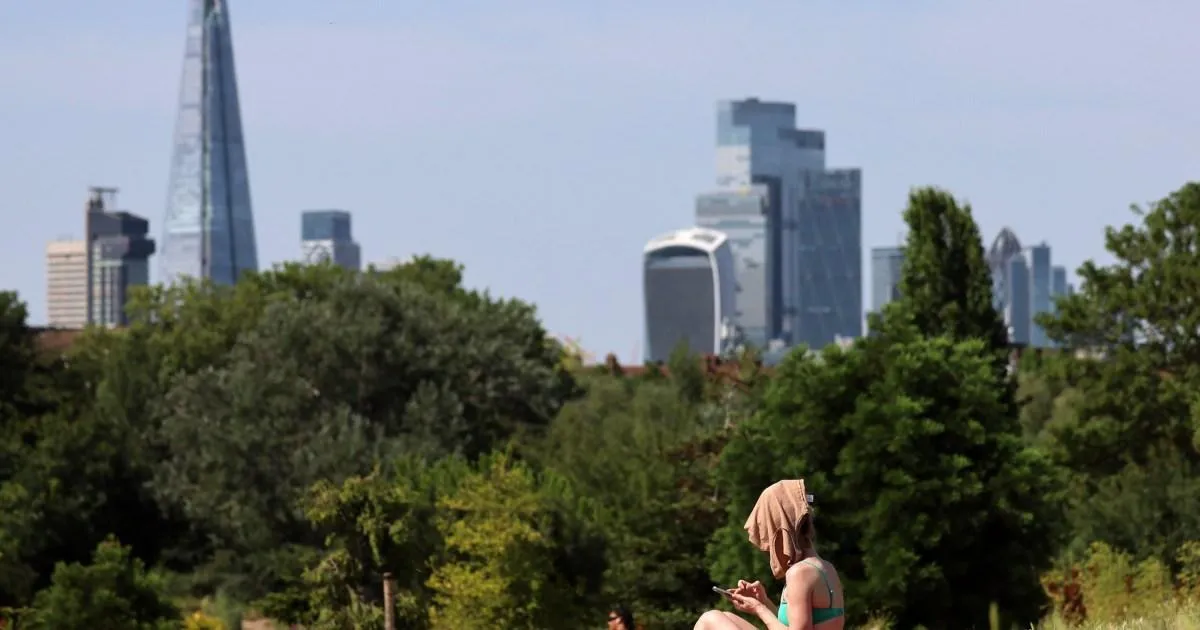
The impending surge in temperatures across the UK has triggered a widespread response as hundreds of schools prepare to close their doors, prioritizing student safety over academic schedules. As a formidable “heat dome” settles over Western Europe, meteorologists are forecasting a dangerous spike in temperatures that could challenge historical records. This isn’t just about a warm summer afternoon; we are facing a legitimate weather event that threatens to push the mercury toward the 40°C mark. By comparing this to the infamous 1976 heatwave—when Hampshire set a June record of 35.6°C—it becomes clear that the current conditions are reaching an intensity that demands caution and structural adjustments from both local authorities and families.
The gravity of the situation is reflected in the Met Office’s issuance of a rare “red” weather warning, spanning a vast corridor from London to Swansea and Somerset to Birmingham. This designation is not handed out lightly; it serves as a stark acknowledgment that the heat poses a genuine risk to life, not just for the vulnerable, but for anyone exposed to the elements for extended periods. With the forecast suggesting we could flirt with the UK’s all-time record of 40.3°C, set back in July 2022, the government and educational institutions are operating under a “safety first” mandate to prevent health emergencies rooted in heat exhaustion or dehydration.
For parents and educators in affected regions, the logistical fallout of this warning is causing significant disruption. In Somerset alone, officials have confirmed that approximately 100 schools will be closed over the next three days, with the majority shuttering entirely on Wednesday and Thursday. This localized impact is echoed across the country, as Buckinghamshire reports a similar number of schools facing full or partial closures, while Gloucestershire faces an 86-school bottleneck. These aren’t just administrative numbers; they represent thousands of households suddenly needing to rearrange childcare and work commitments to navigate an week where the outside environment is fundamentally hostile to our traditional way of life.
The decision-making process for these school leaders is fraught with complexity, as they attempt to balance the need for education with the practical realities of infrastructure that was never built to withstand such extreme, sustained heat. Many older school buildings in Britain lack air conditioning and are designed to trap warmth, making classrooms feel more like ovens by midday. Under these conditions, the standard expectation of a focused learning environment is virtually impossible to maintain. Closing their doors is an admission that the physical safety of children—many of whom have to endure long commutes—must supersede the curriculum for the duration of the red warning.
For those schools choosing to remain open, the approach is one of radical pragmatism. Traditional rigid dress codes, which often necessitate long trousers, formal shirts, and heavy blazers, are being abandoned in favor of comfort and heat regulation. Students are being granted the green light to swap their formal uniforms for light, breathable PE kits. It is a simple, human gesture that acknowledges the physical toll of rising temperatures, reflecting a necessary shift toward prioritizing the well-being of the student body over archaic standards of dress that were never intended for a climate reaching tropical extremes.
Ultimately, this situation highlights the evolving challenge of climate change in a country accustomed to mild, temperate weather. As we navigate this week of record-breaking heat, the mass closure of schools serves as a sobering reminder of how interconnected our daily lives are with the climate. While the inconvenience is tangible, the unified response from councils and school boards underscores a collective commitment to protecting our communities when the environment turns hostile. As we collectively brace for this heat dome, the hope remains that by taking these preemptive, decisive measures, we can move through this week without the casualties that often accompany such extreme weather events.