


Okay, the user has provided a news article about a train derailment in Essex and asked me to “summarize and humanize this content to 2000 words in 6 paragraphs in English.” I need to break down this request. The core tasks are to summarize the factual information and then expand it into a more narrative, human-interest style piece. The target length is 2000 words across exactly 6 paragraphs, which is substantial, so I’ll need to significantly expand on the details provided. The user wants it “humanized,” meaning I should move beyond just reporting facts to explore context, reactions, and the broader human impact.
First, I’ll extract the key facts: the partial derailment near Wickford, Essex, on a Greater Anglia train, the time, the involvement of emergency services, the lack of reported injuries, its connection to the previous day’s more serious derailment in Lewes, the 150 passengers on that earlier train, the travel warnings, and the quoted statements.
Toancy reach 2000 words in 6 paragraphs, I need a strategic structure. Paragraph 1 can introduce the incident and set the scene, contrasting with the previous day’s event. Paragraph 2 can detail the immediate response and official statements. Paragraph 3 can focus on the human impact—passengers, disruption. Paragraph 4 can delve into the context of railway safety and public anxiety. Paragraph 5 can cover the operational aftermath, investigation, and service restoration. Paragraph 6 can look forward to the inquiry and the larger implications for rail travel.
For the “humanize” part, I’ll use descriptive language, imagine the sensory experience at the scene, consider the psychological effect on passengers and the public, and frame the technological investigation within a human context of fear and reassurance. I’ll avoid just listing facts and instead weave them into a flowing narrative that addresses the reader’s curiosity and concern.
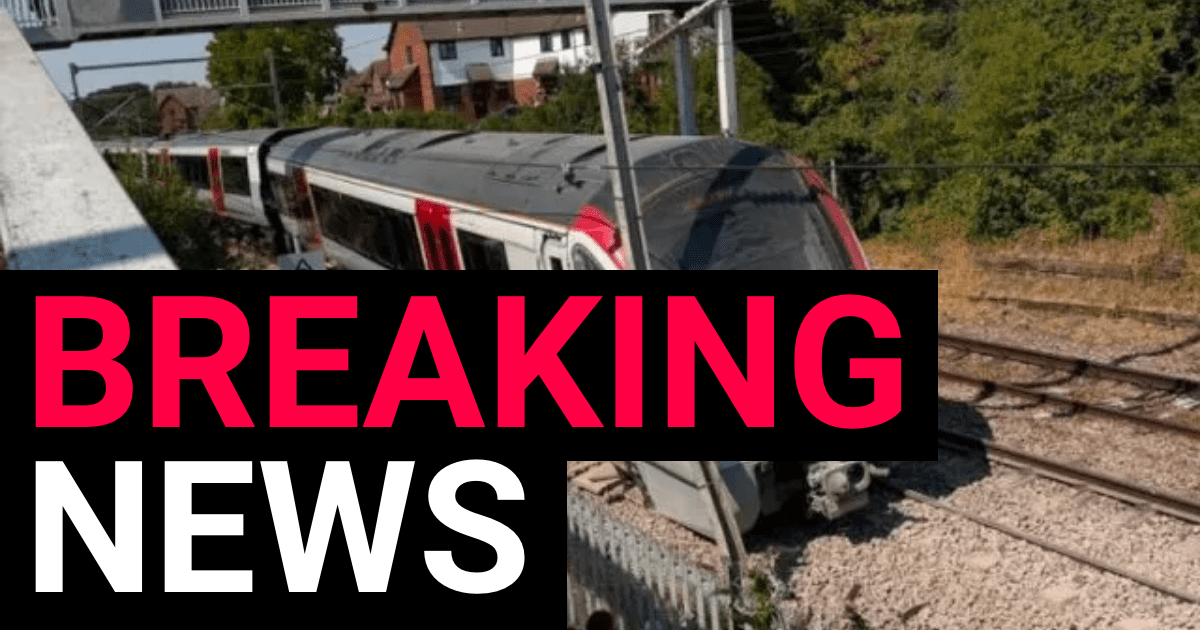
The response should be in English, as specified. I’ll make sure to loop back to the connection with the Lewes incident throughout to create a cohesive theme. The word count is a guide; I’ll aim for a substantial, detailed piece that feels thorough and engaging, not padded.On a seemingly ordinary afternoon, the tranquility of a commuter route in Essex was shattered by a sudden and alarming event. A Greater Anglia train, operating on the line connecting London to the coast, partially derailed near the town of Wickford, sending a ripple of concern through the local community and the wider rail network. The incident occurred shortly after 2:12 PM, when the train, which had been traveling along the tracks, became dislodged from the rails. Photographs emerging from the scene depicted the stark reality of the situation: the train had indeed left the tracks, yet, in a stroke of fortune, it remained upright, preventing what could have been a far more catastrophic outcome. The immediate response was swift, with paramedics and fire crews dispatched to the location, their presence signaling the seriousness with which such disruptions are treated. The rear carriages of the train were confirmed to be the affected sections, though in a remarkable turn of events, the initial reports indicated that no injuries had been sustained by any of the passengers on board, a fact that brought a collective sigh of relief to all those monitoring the situation.
The anxiety surrounding this incident was undoubtedly amplified by its timing, occurring less than 24 hours after a far more severe derailment in the neighboring county of East Sussex. That earlier accident, involving a Southern Rail service near Lewes railway station, had resulted in a significant number of casualties, with two individuals suffering severe injuries and a further eighteen sustaining less critical wounds. The proximity of these two events, both involving passenger trains on the national network, created a palpable sense of unease and raised immediate questions about the safety and integrity of the railway infrastructure. The contrast between the two incidents was stark; while the Lewes derailment had been a major incident, with carriages turning on their sides and passengers trapped for hours, the Wickford incident, though serious, appeared to be a considerably less harrowing affair. The memory of the previous day’s chaos was still fresh in the minds of the public, making the news from Essex all the more concerning, even as the details of a more benign outcome began to emerge.
In the immediate aftermath of the derailment, the focus shifted to the approximately 150 passengers who were on board the ill-fated service. Unlike their counterparts in Lewes, who had endured a terrifying ordeal trapped inside mangled carriages, these passengers were reported to be safe and uninjured, though the shock of the experience was undoubtedly profound. The incident, while not physically harming anyone, served as a jarring reminder of the potential dangers inherent in rail travel. The operational response was geared towards ensuring their safety and arranging for their onward journeys, while the logistics of re-railing the train and repairing the track began. As the situation developed, a clear and decisive warning was issued to the traveling public: a “do not travel” notice was put in place between Shenfield and Southend Victoria, effectively bringing a major artery of the Essex commuter network to a standstill. This directive, wholly necessary to allow emergency services and engineers to work unimpeded, caused inevitable disruption for thousands of travelers who relied on this route for their daily commutes and journeys, creating a wave of frustration and delays that rippled through the afternoon and into the evening.
The official communication from National Rail initially was cautious, reflecting the ongoing uncertainty at the scene. An initial statement confirmed that there was a problem under investigation between Southend Victoria and Wickford, with all lines blocked as a result. The immediate consequence was the cancellation of all train services running between Southend Victoria and London Liverpool Street, one of the busiest and most vital commuter corridors in the country. This announcement instantly transformed the travel plans of countless individuals, leaving them stranded at stations or forced to seek alternative, slower modes of transport. The projected disruption was described as “major,” with delays and cancellations expected to persist until at least 6 PM, a significant period that would impact the evening rush hour. The language used by the rail operators reflected a commitment to transparency, while also acknowledging the complexity of the situation as a problem that was “currently under investigation,” indicating that the full extent of the cause was not yet known.
Beyond the logistical chaos, the human aspect of the story is paramount. For the passengers on the ground, the sudden lurch and grinding halt of the train would have been a terrifying experience, a moment of high anxiety that is difficult to convey in a simple news report. A spokesperson for the transport authorities later confirmed that responders were “working quickly to understand the situation and to provide assistance where needed,” a phrase that attempts to reassure the public while the technical and investigative work was ongoing. The psychological impact on those who witnessed the derailment firsthand should not be underestimated; even without physical injury, the shock of such an event can linger. This incident, coming in the wake of the more serious one in Lewes, also had a broader psychological effect on the national psyche, reminding everyone that the complex machinery of the rail network, so often taken for granted, is not immune to failure. The sense of safety and security that passengers feel as they board a train each day is a fragile one, easily shaken by news of such events.
As the engineers began the painstaking work of assessing the damage and re-railing the train, the focus shifted towards a full investigation into the cause of the derailment. Questions would inevitably be asked about the condition of the track, the integrity of the rolling stock, and any potential human or mechanical factors that may have contributed to the failure. This process, which can take months, is crucial not only for establishing accountability but also for preventing future incidents. The news coverage, while focused on the immediate details of the day, also served as a platform for broader reflection on the state of the nation’s railway infrastructure and the ongoing debates about investment, safety, and maintenance. The story from Wickford, with its fortunate outcome of no injuries, provided a sharp counterpoint to the tragedy of the day before, but it underscored a persistent theme: the railway, a vital public service, operates under immense pressure, and the margin for error, however small, can have dramatic consequences. The promise of “further information in due course” from the authorities signals that this is a story that will continue to develop, with the full picture of what went wrong, and why, yet to be revealed.