


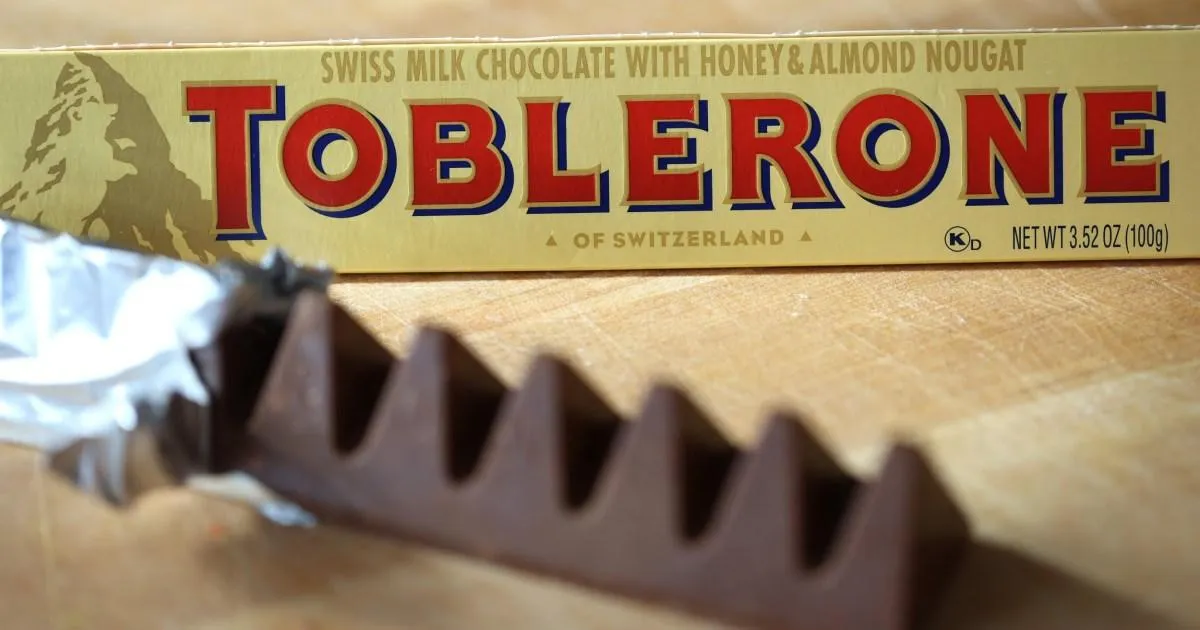
There are certain product shapes that feel almost like public property—so familiar, so deeply woven into the culture that you can’t imagine them belonging to anyone. Toblerone’s triangular peaks, inspired by the Matterhorn mountain in the Swiss Alps, are one of those shapes. For over a century, those distinctive chocolate segments have been a symbol of Swiss precision, alpine beauty, and a certain kind of indulgent travel-souvenir nostalgia. But now that iconic silhouette is at the center of a legal storm, and the unlikely defendant is not a rival multinational, but a small, award-winning vegan chocolate company in Sussex. Catherine’s Originals, founded by Catherine Dodd in 2021, has been accused by Toblerone’s owner, Mondelez International, of copying the famous bar’s shape with its own best-selling product, the O’bar. The accusation has sent shockwaves through the small business community, because it feels like a classic David-and-Goliath story: a passionate entrepreneur who built something from nothing, suddenly facing the full weight of one of the world’s largest snack companies. For anyone who has ever poured their heart into a small venture, the news is both frightening and infuriating. It’s the kind of letter that makes your stomach drop—the kind that makes you wonder whether all those late nights, all that careful crafting, and all that love you poured into your product could be wiped out by a legal team with unlimited resources. And yet, Catherine Dodd is not backing down.
To understand why this case feels so personal, you have to understand what Catherine’s Originals actually is. This is not a faceless corporation trying to cash in on a famous brand. It’s a business born from passion, founded by a teenager in the village of Walberton, and built on the belief that plant-based chocolate should be just as delicious, just as exciting, and just as beautifully designed as anything from the big players. Catherine Dodd started the company in 2021, and in a remarkably short time, it has grown into an award-winning plant-based chocolate brand, with a loyal following of self-described “Choco Lovers” who appreciate the care and creativity that goes into every bar. The O’bar is the heart of the range—the product that, as the company’s own website puts it, “started it all.” It comes in a variety of flavors, from rich dark chocolate to creamy milk, from cool mint to cinnamon swirl, and it has become a best-seller. The shape is distinctive: curved, semi-oval humps that are a far cry from Toblerone’s sharp, angular triangles. Catherine has always said the “O” in O’bar stands for “Originals,” and the rounded, chunky design reflects that identity—it’s meant to feel approachable, playful, and unique, not like an imitation of a Swiss classic. There’s something almost cozy about the O’bar, with its gentle curves and generous proportions, and it’s easy to imagine the care that goes into each batch. But the price point tells a story too: a 200g O’bar retails for £9.20, with more adventurous flavors climbing past £10, while a Toblerone can be bought for as little as £2.50. This is not a cheap knockoff trying to ride on the coattails of a global giant. It’s a premium, artisanal product made by a small team that clearly believes in quality over mass production. And that makes the accusation of “passing off” feel particularly galling to those who have followed Catherine’s journey.
The legal battle began when Mondelez International, the American multinational that owns Toblerone and also markets Cadbury, filed papers at London’s High Court. The claim is that Catherine’s Originals has been “passing off” her bars as replicas of Toblerones—essentially, that the shape of the O’bar is so similar that it could confuse consumers into thinking they were buying something connected to the famous Swiss brand. Mondelez has been characteristically firm in its response, with a spokesperson saying: “The iconic Toblerone shape is one of the most recognised and distinctive product designs in the UK and across the world, and has been a hallmark of the brand since 1929. We have a responsibility to protect our trademarks and intellectual property, which we take seriously. We have attempted to resolve this matter constructively and directly with Catherine’s Originals over several months but unfortunately have been unable to reach an agreement.” On paper, that sounds reasonable—companies have a duty to protect their trademarks, and Toblerone’s shape is undeniably iconic. But for Catherine, the accusation has been deeply upsetting. In her own response, she admitted that the dispute has been “fairly frightening for a small business we’ve put so much care and hard work into building.” She has denied any affiliation with Toblerone or Mondelez, and she has made it clear that she will not be intimidated. “We stand firmly behind the product and identity we’ve created,” she said. “We strongly disagree with the claim concerning O’bar and are working with our legal team to defend our position.” Her legal adviser, Stephen Lowry of Brandsmiths, echoed that sentiment, telling The Guardian: “Our client disagrees with the claim and considers O’bar to have its own distinctive design and identity. We look forward to addressing the matter through the appropriate legal process.” It’s a brave stance, but also a precarious one. For a small business, even the cost of defending a lawsuit can be crippling, regardless of whether the case has merit. The fear of being wiped out by legal fees is real, and it’s a fear that many small business owners will recognize all too well.
That fear is exactly why Catherine has decided to fight back in a way that feels both practical and deeply human. On her website, she has launched what she calls the “Battle Bundle”—a special product offering designed specifically to raise money for her legal defense. In a message to her customers, she explained the thinking behind it with remarkable honesty. “Usually, when we put together a bundle, we offer a little discount. But this one is different. This is the Battle Bundle,” she wrote. “We haven’t discounted the contents of this bundle like we normally do, because every penny genuinely counts right now. Instead, 15% of the £50 purchase price—£7.50 from every bundle—will go directly into our legal fighting pot to help us defend O’bar.” She went on to say: “Legal costs could wipe Catherine’s Originals out, so we have been brainstorming ways to fight, and this was one.” And then, in a line that has clearly struck a chord with her supporters, she concluded: “This bundle is for those extra-keen Choco Lovers, those who don’t like a bully, who’ve been asking how to stand with us and help protect the O’bar.” The response has been overwhelmingly supportive. Customers have rallied around the brand, buying the Battle Bundle not just for the chocolate, but for the cause. There’s something genuinely moving about this kind of community solidarity—the idea that people who simply love good chocolate can come together to help a small business stand up to a multinational giant. It’s a reminder that behind every product, there are real people with real dreams, and that when those dreams are threatened, the support of a loyal community can make all the difference. The Battle Bundle is more than just a fundraising mechanism; it’s a statement of defiance, a way of saying that small businesses have a right to exist, to innovate, and to carve out their own identity without being crushed by corporate giants.
This is not the first time Mondelez has charged into chocolate warfare, and the history adds an interesting layer of irony to the current dispute. In 2017, the company took on Poundland, the UK discount retailer, over its lookalike Twin Peaks bar. The allegations were serious enough that the launch of Twin Peaks was delayed by three months, and the dispute ultimately resulted in a settlement and an agreement to redesign the bar and alter its packaging. It was a classic example of a big company using its legal muscle to protect its turf, and it sent a clear message to would-be competitors: mess with Toblerone at your own risk. But the tables were turned in 2023, when Toblerone itself was forced to change a major part of its identity under strict Swiss laws. After the brand’s owner shifted part of its manufacturing process to Slovakia, the Matterhorn mountain could no longer be used on the packaging, because the product was not exclusively and 100% produced in Switzerland. The realistic mountain profile was modified to a generic mountain peak, a change that was both practical and symbolic. It was a reminder that even the most iconic brands are not above the law, and that sometimes the very rules designed to protect national heritage can force a giant to adapt. There is a certain poetic justice in seeing Toblerone, a brand that has been so aggressive in defending its own shape, having to give up a part of its visual identity because of regulations. It also highlights the complexity of trademark law, where the line between inspiration and infringement can be blurry, and where the same company can be both a fierce protector of its intellectual property and a reluctant subject of legal constraints.
In the end, this is about more than just chocolate. It’s about the balance of power in the modern economy, and the way that trademark law can be used both to protect genuine innovation and to stifle competition. Catherine Dodd’s defiant response has resonated far beyond the small world of vegan confectionery, because it speaks to a broader anxiety that many people feel: the fear that big corporations can simply outspend and outlast the little guys, no matter how original or heartfelt their work may be. But Catherine’s story is also one of hope. She has refused to be bullied, she has rallied her community, and she has turned a legal threat into an opportunity to strengthen the bond between her brand and her customers. Whether the courts ultimately agree with her remains to be seen, but in a very real sense, she has already won something important: the respect and admiration of people who believe in the power of small businesses to make a difference. As she herself said, “Being a smaller business does not mean being afraid to stand up for what we’ve created.” That is a sentiment that will ring true for entrepreneurs everywhere, and it is a reminder that the most valuable thing any business can build is not just a product, but a community. So the next time you unwrap a bar of chocolate, whether it’s a Toblerone or an O’bar, take a moment to think about the story behind it—the people, the passion, and the sometimes bitter battles that shape the sweet things in life.