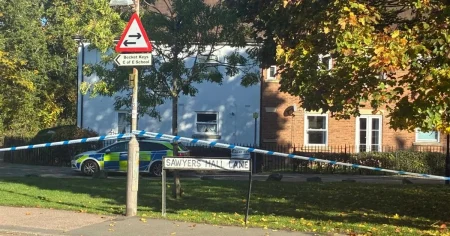
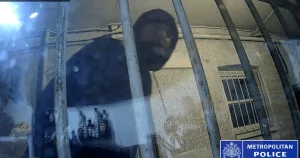

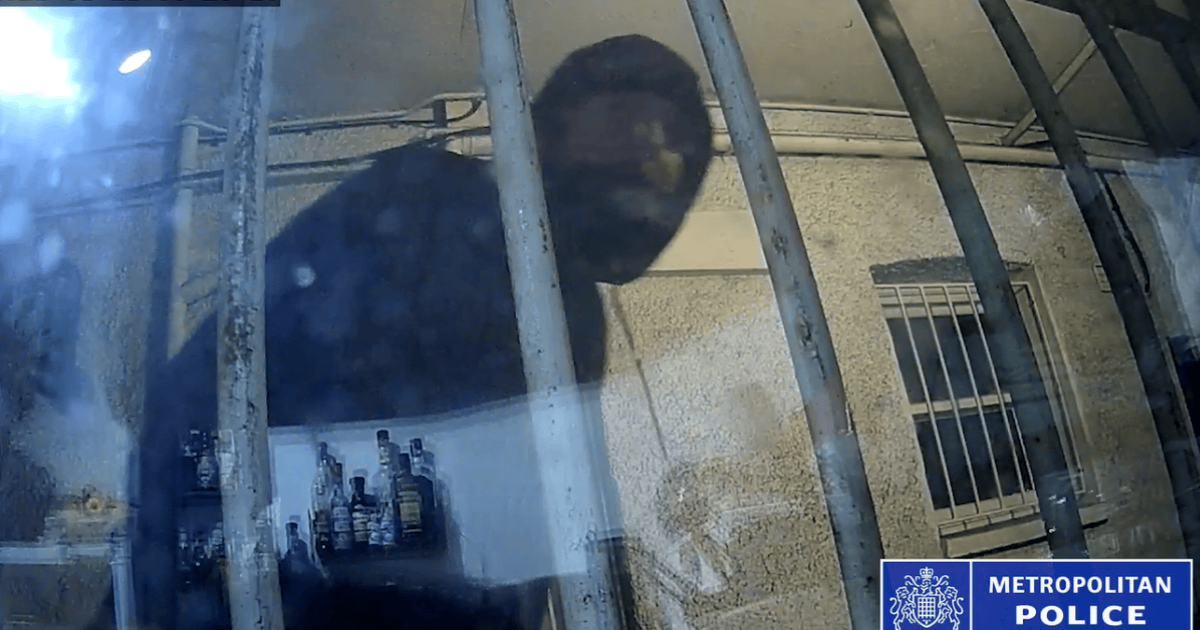
There is a particular kind of horror in the realisation that the place where you should feel safest has not been private at all. For women in the quiet residential streets of Islington, north London, that horror became real in the darkest hours of the night, when they were asleep, getting ready for bed, or simply moving through their own homes unaware that a stranger was outside, hidden in the shadows, holding a camera up to their windows. Anthony Durkan, a 35-year-old man whose quiet, unremarkable presence gave no clue to the compulsion he was acting on, spent more than six years engaging in what detectives would later describe as a calculated and deeply intrusive campaign of voyeurism. Between January 2020 and March 2026, he prowled the borough under cover of darkness, dressed entirely in black and wearing a balaclava, approaching houses and flats with a single purpose: to film women through their windows without their knowledge or consent. His crimes were not spontaneous or reckless; they were methodical, repeated, and chillingly deliberate. When he was finally caught, the evidence on his phone revealed a hidden world of images and videos, a private archive of violation that police are still working to understand. For the women who have come forward, and for those who may not yet even know they were victims, the emotional toll is immense. It is the knowledge that a stranger saw them in their most vulnerable, unguarded moments, and that those images may still exist somewhere, a lasting stain on a life they thought was safe.
The chain of events that ended Durkan’s offending began not with a dramatic breakthrough, but with the bravery of two women who reported being filmed through their windows. Their complaints were taken seriously by the Metropolitan Police, who responded not with dismissal but with action. Dedicated patrols were set up in the area, with officers working undercover in unmarked cars, watching the streets late into the night in the hope of catching the perpetrator in the act. It was a proactive and determined response, and it paid off sooner than anyone could have expected. On the very first night of patrols, officers spotted a figure moving through the darkness, a man dressed head to toe in black with a balaclava covering his face. They watched as he approached an address, lifted a camera, and began doing exactly what the reports described. Within moments, Durkan was under arrest. It was a rare and satisfying case of police work stopping a predator in his tracks before he could add more victims to his list. But the arrest was only the beginning of a much larger and more disturbing investigation. When detectives examined Durkan’s mobile phone, they discovered a hidden gallery, carefully organised and stored away, containing hundreds of images and videos of women. Some of these were immediately recognisable as evidence of voyeurism, but others pointed to a much longer history of offending that stretched back years. The discovery prompted investigators to revisit historic crime reports from the area, cases in which women had reported being watched or filmed but where no suspect had ever been identified. One by one, the pieces began to fall into place, linking Durkan to offences that had gone unsolved for more than half a decade.
What emerged from the investigation was a portrait of sustained, predatory behaviour that had gone unnoticed for far too long. Durkan was eventually charged with 26 counts of voyeurism, all of which he admitted in court. The figures alone are staggering: police found 99 images and 162 videos on his devices, and they are still trying to determine how many different women appear in them. Some of the footage dates back to January 2020, meaning Durkan had been filming women for more than six years before he was caught. The fact that he was arrested during a proactive police operation, rather than because of a single witness coming forward, only highlights how difficult it can be to stop this kind of offending. His victims were not chosen because they knew him or because they had crossed him; they were simply women living in homes that happened to be near his route, women who believed they were safe behind locked doors and drawn curtains. The psychological impact on those who have been told they were filmed is profound. It is a violation that goes beyond the physical, an invasion of the most private moments of daily life. The sanctuary of home, the one place where people let their guard down, had been turned into a stage. Detectives have said that many victims had no idea they were being watched, and for those women the news may come as a devastating shock, forcing them to revisit years of ordinary nights with a new and horrible awareness that a stranger may have been outside their window, watching.
At Snaresbrook Crown Court, Durkan was sentenced to four years in prison for his crimes. For those who have been affected, the sentence may feel painfully short compared with the years of fear and anxiety his actions have caused. There is no way to measure the damage done by such a sustained campaign of voyeurism, no way to calculate the nights of sleeplessness, the reluctance to open curtains, the creeping paranoia that follows the knowledge that a stranger has seen you without your consent. Detective Chief Inspector Gemma Alger, whose team led the investigation, spoke directly to the heart of the matter in a public statement. She described Durkan’s offending as a calculated and deeply intrusive campaign, targeting women in what should have been the safety and privacy of their own homes. She also acknowledged the courage of the victims who came forward, making clear that their willingness to report what had happened was essential to the investigation. Without them, Durkan might still be out there, adding to his collection of stolen images. Alger’s words were a reminder that behind every statistic, every charge, every court appearance, there are real women whose lives have been changed by a crime that is often dismissed as less serious than it is. Voyeurism is not a victimless offence. It is an act of aggression, a way of asserting power over someone without their knowledge, and it leaves deep psychological scars that may never fully heal.
The case is not over, even with Durkan behind bars. Police have made it clear that the book is still open, and they are urging anyone who believes they may have been affected to come forward. Officers are particularly keen to hear from women in Islington and the wider north London area who noticed anything unusual around their homes between January 2020 and March 2026, especially late at night or in the early hours of the morning. It is a call that requires a great deal of courage, because many of the women who may respond will not know what they are walking into. They may have dismissed a shadow in the street as a trick of the light, or chalked up an inexplicable feeling of being watched to their own imagination. To find out now that their instincts were right, that they were indeed being filmed, is a deeply unsettling realisation. But the police are also offering something important: the chance to be heard, to be believed, and to be part of a process that has already taken a dangerous offender off the streets. For every woman who comes forward, there is the possibility of closure, of understanding what happened, and of helping to ensure that Durkan can never do this again. The investigation team has stressed that Durkan’s arrest and conviction have undoubtedly prevented further harm, and there is comfort in that knowledge, even if it does little to undo the harm already done.
Durkan’s case is not an isolated anomaly. It is part of a wider and deeply troubling pattern of violence and abuse against women that has become impossible to ignore. Across the country, women are subjected to harassment, intimidation, and invasion in their own homes, on the streets, and in their daily lives. The sentence handed down to Durkan is a small step toward accountability, but it is not a solution. In November 2024, Metro launched the This Is Not Right campaign, in partnership with Women’s Aid, to shine a light on the scale of this national emergency and to demand change. The campaign is built on the understanding that every act of voyeurism, every unsolicited approach, every moment of fear, is part of a continuum of violence against women that must be challenged at every level. Durkan’s crimes were about control and violation, about treating women’s bodies and private lives as objects to be captured and consumed. The fact that he was able to do this for six years before being caught is not just a failure of one man’s morality; it is a reminder of how much more needs to be done to protect women and to create a culture where this kind of behaviour is unthinkable. For now, Durkan is in prison, and the women he filmed are left to piece together their lives. Their courage in coming forward has helped to stop him, and their voices deserve to be heard. The rest of society owes them more than sympathy. It owes them action. It owes them a world where a woman can close her curtains at night and truly believe that no one is watching from the dark.