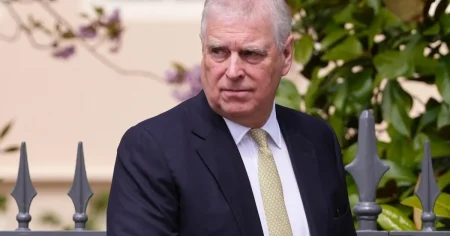

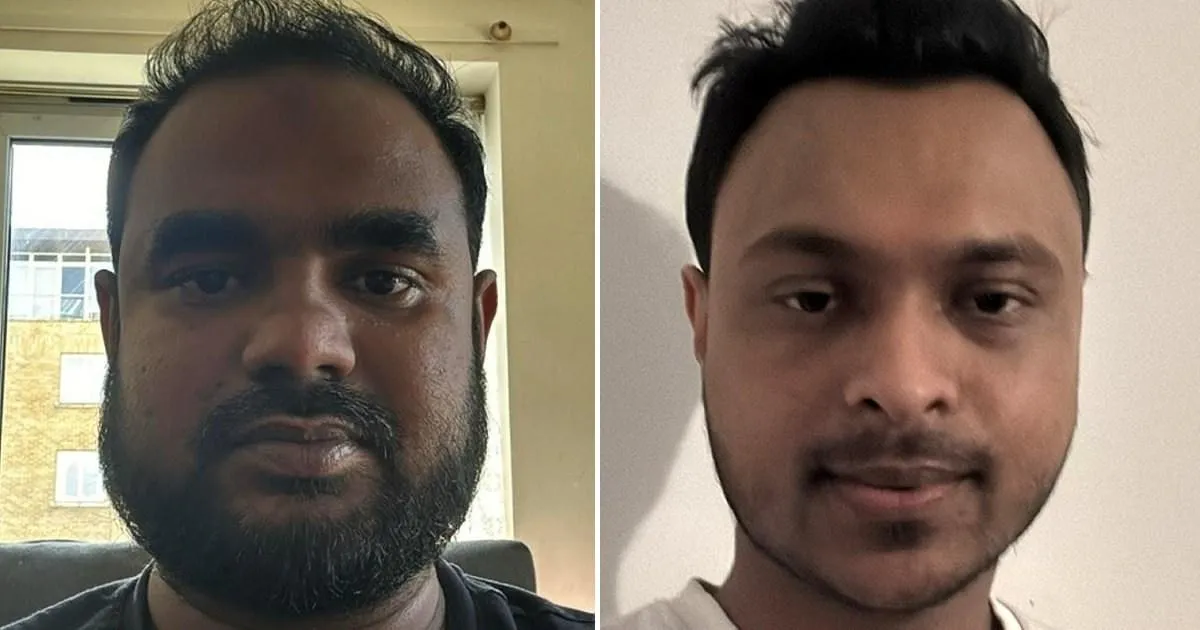
The brief caption tells us only the barest facts: a man named Jaigirdar, a connection to Tower Hamlets, a journey to Bangladesh that investigators believe he undertook, and a photograph provided by the Metropolitan Police. Yet behind this clinical line of text lies the beginning of a story that is far more complex, involving identity, community, geography, and the tangled threads of an ongoing investigation. Jaigirdar is more than a name on a screen; it represents a life with roots, relationships, and a history that stretches across continents. The mention of Tower Hamlets grounds him firmly in one of London’s most vibrant and densely populated boroughs, a place known for its deep South Asian heritage, its bustling markets, and its tight-knit communities. That this detail is included at all signals to readers that his presence there is significant—either as a familiar figure or as someone whose movements are now a matter of public interest. The photograph itself, captured by the Met Police, is a stark reminder that this is not a travelogue or a lifestyle feature; it is a piece of news involving law enforcement, and the image serves as a formal, almost impersonal marker of a person now central to a narrative unfolding in real time.
To understand the weight of the Tower Hamlets connection, one must appreciate what the borough represents. Situated in the East End of London, Tower Hamlets has long been a gateway for immigrants, particularly from the Indian subcontinent. It is a place where the sounds of Sylheti and Bengali blend with English, where curry houses line Brick Lane, and where generations of families have built lives while maintaining strong ties to their ancestral homeland. For someone like Jaigirdar, having links to this area suggests a network of friends, relatives, and acquaintances—people who might know his habits, his history, or his reasons for leaving. The police’s decision to highlight this connection is deliberate; it appeals to the public for information while also narrowing the focus of their inquiry. But the human side of this is that Tower Hamlets is not just a statistical category; it is a living community of hundreds of thousands of people. If Jaigirdar is known there, then his absence or his present circumstances will be felt by those who know him personally. There are families, shops, mosques, and community centres that might hold the key to understanding his story, and each of those spaces is filled with ordinary people going about their lives, perhaps unaware that they may be connected to a developing investigation.
The second element of the caption—that Jaigirdar is believed to have travelled to Bangladesh—opens a doorway to another world entirely. Bangladesh, a nation of over 160 million people, is a land of lush river deltas, bustling cities like Dhaka and Chattogram, and a rich cultural heritage that dates back millennia. For many British South Asians, travel to Bangladesh is not an extraordinary event; it is a return to roots, a pilgrimage to see elderly parents, a chance to participate in weddings or religious festivals, or an opportunity to visit land owned by the family for generations. It is also, for some, a journey taken in times of crisis—seeking refuge, settling affairs, or fleeing circumstances that have become untenable. The word “believed” in the caption is crucial; it signals that this is not yet a confirmed fact but rather a theory based on evidence the authorities have gathered—maybe phone records, bank transactions, witness statements, or even a passport stamp that appeared in a database. For Jaigirdar himself, the journey to Bangladesh may have been entirely innocent, a personal matter with no relation to the reasons why the police are now interested in him. But in the context of a news caption, that journey becomes a significant data point, a geographical clue that investigators and journalists alike are treating as a possible indicator of intent, flight, or a premeditated plan.
The human element here is easy to lose when we focus only on the mechanics of an investigation. Jaigirdar is a human being with a face—that solemn, expressionless photograph provided by the Met—but also with a life that existed long before he came to the attention of the press. He may be a father, a son, a brother, a friend. He may have a favourite tea stall in Whitechapel, a preferred mosque for Friday prayers, or a cousin who still lives in a village near Sylhet. The news caption reduces him to a few identifying markers, but the reality is that he carries within him the sum of his experiences: the dreams he had as a young man, the choices he made in moments of weakness or strength, the relationships he nurtured or neglected. If the police are searching for him, there is likely a family somewhere feeling a mixture of confusion, shame, fear, or grief. They may be cooperating with authorities, or they may be sheltering him, or they may genuinely not know where he is. Each of these possibilities carries its own emotional weight, and the public nature of this caption means that his loved ones are now confronted with the reality that his face, name, and movements are being broadcast to millions of readers who will form their own judgments without knowing the full story.
From a journalistic and investigative standpoint, the caption functions as a public appeal. The photograph is not just illustrative; it is a tool. Law enforcement agencies release such images with the explicit hope that someone will recognise the person and come forward with information. The mention of Tower Hamlets and Bangladesh serves to encourage people in those communities, both at home and abroad, to ask themselves whether they have seen Jaigirdar, heard from him, or noticed anything unusual in the days leading up to his departure. This is how real investigations often gain traction—not through dramatic breakthroughs, but through a hundred small pieces of information trickling in from members of the public. The caption is therefore a summons, a quiet request for collective help. But it is also a press release, a statement to the world that the authorities consider this matter serious enough to warrant public attention. Behind the sentences lies hours of police work, analysis of evidence, and the careful weighing of what to disclose and what to withhold. The choice to mention Bangladesh, for instance, could be a strategic move to signal that they are actively looking abroad, which may in turn pressure Jaigirdar to respond or someone who harbours him to reconsider.
Ultimately, what is missing from this caption is the most important part: the full story. We do not know why the police are looking for Jaigirdar, what crime he is suspected of, or what circumstances led to the issuing of this photograph. The caption is a fragment, a single tile in a mosaic that is still being assembled. The human impulse, when we read such a caption, is to fill in the gaps with our own assumptions—perhaps he is a fugitive, a missing person, a witness, or a suspect in a case we already know about from other headlines. But the honest answer is that we do not know. The most human way to respond is not with judgment but with curiosity and compassion: curiosity about what led a man with ties to a vibrant London community to journey halfway around the world, and compassion for all the people—including Jaigirdar himself—whose lives are now tangled in this unfinished chapter. A caption like this one is a reminder that behind every police photograph and every geographic reference is a human story marked by complexity, contradiction, and unpredictability. The investigation may eventually yield answers, but for now, the sum of what we know is heartbreakingly thin: a name, a place, a journey, and a picture. The rest is silence—and it is that silence, the unanswered questions, that gives the caption its quiet power, compelling us to pay attention and to wonder what the next paragraph of this story will reveal.