
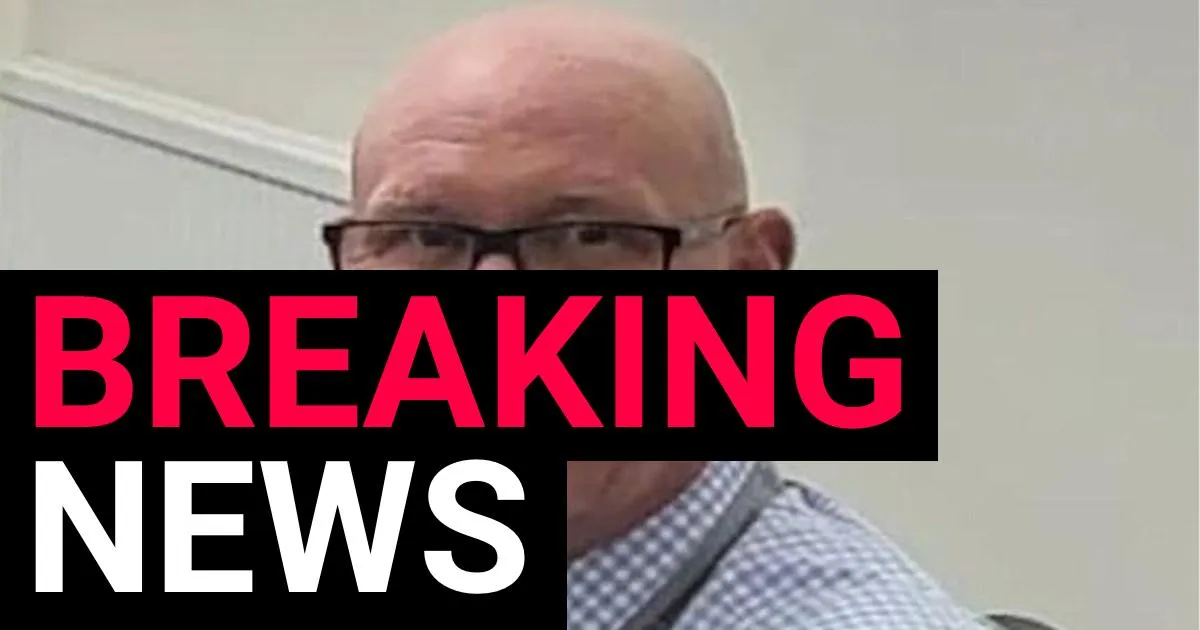
On a bright April afternoon, Michael Mullins finished another day at Stretford Grammar School in Manchester and did what he had done on countless ordinary days before: he got on his bicycle and began the ride home. He was 56 years old, a headteacher, a married father of two, a man who had spent his working life shaping young minds and who was, by all accounts, devoted to his family. The journey from school to home should have been uneventful, a chance to clear his head after a day of lessons and meetings, to feel the spring air and perhaps think about dinner, about his children, about the small rhythms of a life built around service and love. Instead, on that same road, at that same moment, Simon Richardson was behind the wheel of a large Volvo XC90. What happened next was not an accident in the ordinary sense. It was a sequence of choices, each more horrifying than the last, that ended with Mr Mullins trapped beneath the vehicle, dragged for more than a mile, and left dying on a grass verge in Lymm, Cheshire. The blood trail stretched behind the car like a terrible ribbon, marking the distance between an ordinary commute and an unimaginable death. On the day the verdict was delivered, Richardson was found guilty of murder. The courtroom heard how he had driven through give-way markers at a junction in Altrincham, Greater Manchester, collided with the cyclist, and then, instead of stopping, instead of helping, instead of doing the only humane thing available to him, put his foot down and fled at more than sixty miles per hour, with Mr Mullins still underneath. The image is almost too awful to hold in the mind: a headteacher, beloved by his community, clinging to life under a moving vehicle, while the man driving it chose escape over mercy.
To understand the full weight of the crime, one has to trace the journey the Volvo took after the first impact. The collision happened on Paddock Lane in Warburton, near Altrincham, after Richardson drove straight through give-way markers and into the path of the cyclist. Mr Mullins fell onto the bonnet and windscreen, and then, in a sickening instant, was drawn beneath the car. His body became entangled in the suspension of the 4×4, leaving him inches below the driver’s feet. Prosecutors argued that Richardson knew he was there. His front-seat passenger and cousin, Gabrielle Debotte, gave evidence for the prosecution and told the trial that both heard moaning from outside as Richardson drove away from the scene. She said Richardson went on to say: “He’s under the car.” Those three words are chilling because they prove awareness. They prove that the driver understood, at least in part, what had happened. And yet he did not stop. Phil Barnes KC, prosecuting, painted a devastating picture of a man who, for a split second after the collision, may have considered doing the right thing—getting out, taking ownership of what he had just done, and helping the man he had just run down. But that moment passed. Richardson did not get out. He did not do the right thing. He chose to drive away, and the obvious reason, the prosecution argued, was that he wanted to escape the consequences. The moaning continued. The body remained trapped under the car. And the Volvo kept moving, leaving a trail of blood along the road, a trail that would later lead a motorcyclist to the dying headteacher. It is difficult to imagine the terror of those final moments. Mr Mullins was not killed instantly; he was carried along beneath a two-ton vehicle, aware perhaps of the road rushing past, of the heat of the engine, of the impossibility of being heard. And above him, the man responsible made the conscious decision to keep going.
Richardson did not simply drive aimlessly. According to the prosecution, he drove to a secluded farm track on Wet Gate Lane in Lymm, about 1.3 miles from the scene of the collision, in what was described as an attempt to dislodge the trapped cyclist. Mr Barnes said Mr Mullins was “the single, solid piece of evidence of what he was driving away from”—a human being caught in the machinery, a witness to the crime, a life that had to be shed before Richardson could hope to escape. On that quiet farm track, Richardson twice tried to pull Mr Mullins out. It is not clear what those attempts looked like, but they were not enough. Perhaps he panicked. Perhaps he realized that freeing the man would mean facing what he had done. Whatever the case, he returned to the car and then, in a final act of brutality, veered sharply and deliberately from side to side before mounting a grass verge. The movement was designed to dislodge the body. It worked, but not cleanly: Mr Mullins was finally released, only to be driven over as Richardson reversed and drove away. He left him there—alone, barely breathing, gravely injured—on a grass verge in the Cheshire countryside. It was a motorcyclist, following the trail of blood from Paddock Lane, who discovered him. The rider found Mr Mullins alone, still alive but fading, and raised the alarm. Emergency services arrived quickly, but there was nothing they could do. Mr Mullins, from Northwich, Cheshire, died from multiple injuries. He was a man who had spent his day in a school, surrounded by teenagers and teachers, in a building full of life and laughter and learning. He ended his life on a roadside, abandoned, with no one to hold his hand except strangers who happened to follow the evidence of his suffering. The image of that motorcyclist riding along a trail of blood is one that will stay with anyone who hears this story. It speaks to the randomness of cruelty and the fragility of life. A man who had every reason to stop, every reason to help, instead treated another human being as an obstacle to be removed.
Michael Mullins was more than the name in a court report. He was the headteacher of Stretford Grammar School, a role that carries enormous responsibility and, for those who do it well, enormous love. He was a married father of two, described by his family as devoted. In the public gallery at Manchester’s Minshull Street Crown Court, his relatives sat through the evidence, listening to the details of his final moments, and when the guilty verdict was returned, they wept. The family later released a statement that was simple and devastating: “He was devoted to his family and our lives will never be the same. A gap has been left in our hearts and within his role as a headteacher of Stretford Grammar School.” Those words capture two losses at once: the private loss of a husband and father, and the public loss of an educator who mattered to a whole community. A school is a living organism; a headteacher is its heartbeat. The grief at Stretford Grammar must have been profound, as students and staff tried to process the violent death of a man who had guided them, challenged them, and cared for them. The judge, Mrs Justice Brunner, acknowledged the weight of the case when she discharged the jurors from jury service for ten years. “This was, I know, an upsetting case,” she told them, “and there was evidence which you may have found distressing.” It was a rare and human moment in a trial that had been filled with inhumanity. The jurors had been asked to look at photographs, hear testimony, and piece together the final minutes of a man’s life. They had listened to the sound of moaning described in court. They had considered the actions of a driver who seemed to have abandoned every moral instinct. And they had reached the only conclusion the evidence allowed: murder. But the verdict, while just, does not heal. It cannot bring back the man who cycled home that afternoon. It cannot erase the image of his body under the car. It cannot fill the gap his family described. It can only name the crime and hold the person responsible to account.
Simon Richardson, of no fixed address, denied murder throughout the trial. His defense was that he did not realize Mr Mullins was underneath his car, and that he did not get out in a bid to free him. It was a claim that the jury rejected after considering all the evidence, including the testimony of his own cousin, who heard the moaning and heard Richardson acknowledge that the man was under the car. The verdict of guilty to murder was accompanied by a separate finding of guilty to dangerous driving on April 21, the day after the killing, when Richardson was involved in a police pursuit before being arrested. That second charge paints a fuller picture of a man who, when confronted with authority, chose again to run. The pursuit ended with Richardson in custody, and now he faces a life sentence. The judge will set the minimum term he must serve before he can even be considered for parole, and the family will have to sit through that hearing as well, waiting to learn how many years must pass before the man who killed their loved one might walk free. There is no version of this story in which Richardson emerges as anything other than the author of his own downfall. He had a choice at the moment of impact. He had a choice when he heard the moaning. He had a choice when he drove to the farm track. He had a choice when he veered from side to side. At every juncture, he chose himself over the life of another person. The law calls that murder. Human beings call it something even deeper: a failure of basic compassion, a refusal to see another person as human. In the courtroom, Richardson showed little of the remorse that might have made the verdict feel less necessary. He forced his victims’ family to endure a trial, to hear the details, to relive the horror. He forced the jurors to carry the weight of the evidence. And he forced the community to ask how such a thing could happen on a quiet road on an ordinary afternoon.
Now, as Richardson awaits his life sentence, the focus shifts to the people left behind. Michael Mullins’s family will never stop grieving. His colleagues and students will remember him as a headteacher who shaped their lives. The community of Stretford Grammar School will carry the memory of a man who was taken too soon, in a manner too cruel to comprehend. The verdict cannot undo any of it, but it does something important: it tells the family that the system saw the truth, that the jury believed the prosecution’s account, that Richardson’s actions were recognized for what they were—not an accident, not a mistake, but murder. There is a kind of justice in that, however cold it may feel. The judge’s decision to discharge the jurors for ten years was a small acknowledgment of what they had endured. The family’s statement, read after the verdict, was a reminder that behind every criminal case is a human story. Michael Mullins was a man who devoted his life to education. He spent his days with young people, helping them grow into adults, encouraging them to be kind, to work hard, to make good choices. It is a cruel irony that his own life was ended by someone who made every wrong choice available to him. In the days and years to come, the people who knew Michael Mullins will remember him not as the victim of a horrific crime, but as the man he was: a devoted father, a respected headteacher, a person who mattered. The road where he was killed will not be the same. The school where he worked will not be the same. The family he left behind will never be the same. But his name, and the story of his life, will endure. And perhaps that is the only consolation available: that the man who tried to dispose of him like an object failed. Michael Mullins cannot be erased. He is remembered. He is mourned. And he is loved.