



It was meant to be a simple, peaceful end to a summer evening. Alex Grant, 34, and his partner had spent the day swimming at Hampstead Heath, enjoying the warmth and the quiet freedom that London usually offers. However, as they walked home through Camden, hand in hand, that sense of security was violently shattered. They were intercepted by two men, Mariuzs Smietana and Dariusz Wawrzenczyk, who turned a calm stroll into a harrowing ordeal. The men began hurling homophobic slurs, and the situation quickly escalated when Smietana, who had been caught on CCTV stealing fruit from a nearby shop just moments earlier, began throwing the stolen produce at the couple.
The intensity of the assault grew as the two attackers pursued the couple, shouting vitriol in both English and Polish. The aggressors yelled hateful epithets, specifically targeting the men for their sexual orientation. It was a terrifying display of senseless prejudice that left the couple scrambling for safety. Desperate to escape the abuse, Alex and his partner ducked into a nearby pub and dialed 999. The police arrived shortly thereafter, eventually locating and arresting Smietana and Wawrzenczyk, but the damage to the couple’s peace of mind had already been done.
In the aftermath, the emotional toll on the victims became starkly apparent. In his victim impact statement, Alex Grant described a profound loss of normalcy. The attack left him restless, unable to sleep, and plagued by a persistent sense of anxiety that replaced what had been a beautiful summer night. The assault didn’t just last for a few minutes on the street; it extended into a long, difficult recovery period. For Alex, the simple joy of being himself in public had been transformed into a source of constant, nagging distress.
The impact was even more personal for Alex’s partner, who had moved to the UK from Turkey specifically to escape discrimination and live his life with the freedom he felt denied elsewhere. Speaking from behind a privacy curtain in court, he articulated the crushing weight of this new reality: the loss of the ability to exist without fear. He explained that now, every time they leave the house, his mind is instantly occupied with safety calculations—planning routes, checking surroundings, and wondering if it is truly safe to walk together in public. He lamented that a routine walk with the person he loves had become a calculated risk rather than a natural expression of affection.
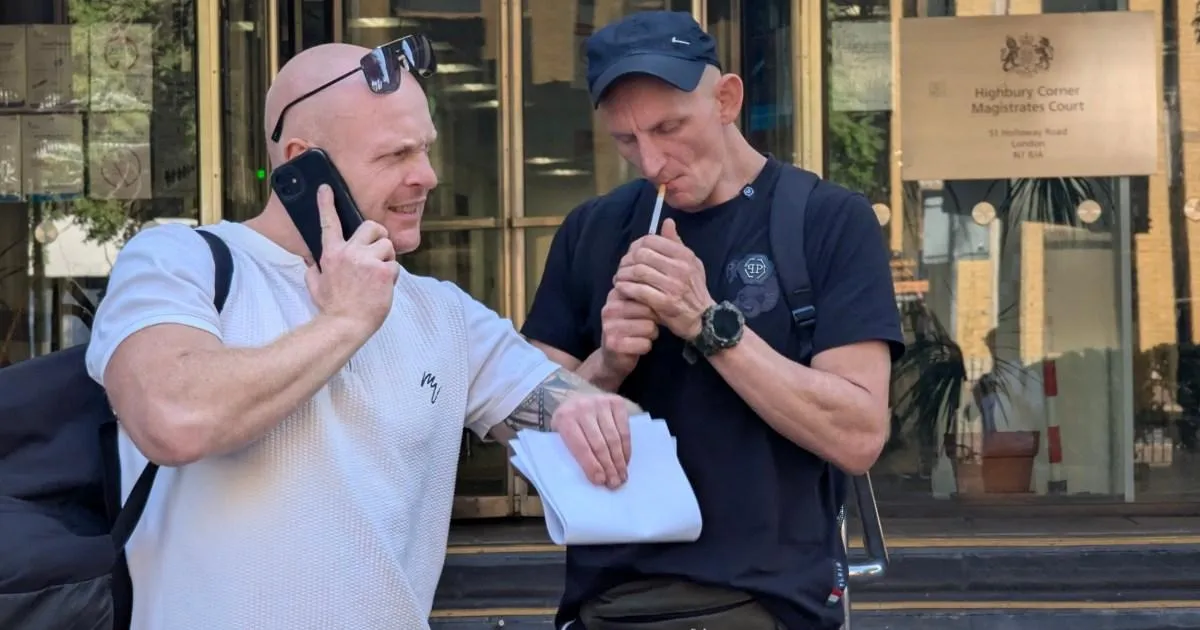
During the trial at Highbury Corner Magistrates’ Court, the two defendants, Smietana and Wawrzenczyk, denied the charges of assault by beating despite the evidence. The court heard about their histories—Smietana had a prior caution for shoplifting, and Wawrzenczyk had been previously involved in an assault on an emergency worker. While the defense pointed to Smietana’s personal struggles with alcohol and family tragedies, the judge noted a glaring absence of remorse. District Judge Vanessa Lloyd acknowledged the severity of the incident, remarking that no financial penalty could ever truly compensate the victims for the trauma they had been forced to endure.
Ultimately, the court sentenced Smietana and Wawrzenczyk to 180 hours of unpaid work and 15 days of rehabilitation activities, alongside a fine of £439 each. While the legal proceedings have reached a conclusion, the victims remain left with the heavy emotional burden of the encounter. This case serves as a somber reminder that for many in the LGBTQ+ community, the right to live openly and without fear remains a fragile reality. The story of Alex and his partner is not just about a street encounter; it is a human testament to the courage required to continue living authentically in the wake of senseless, unprovoked hate.