



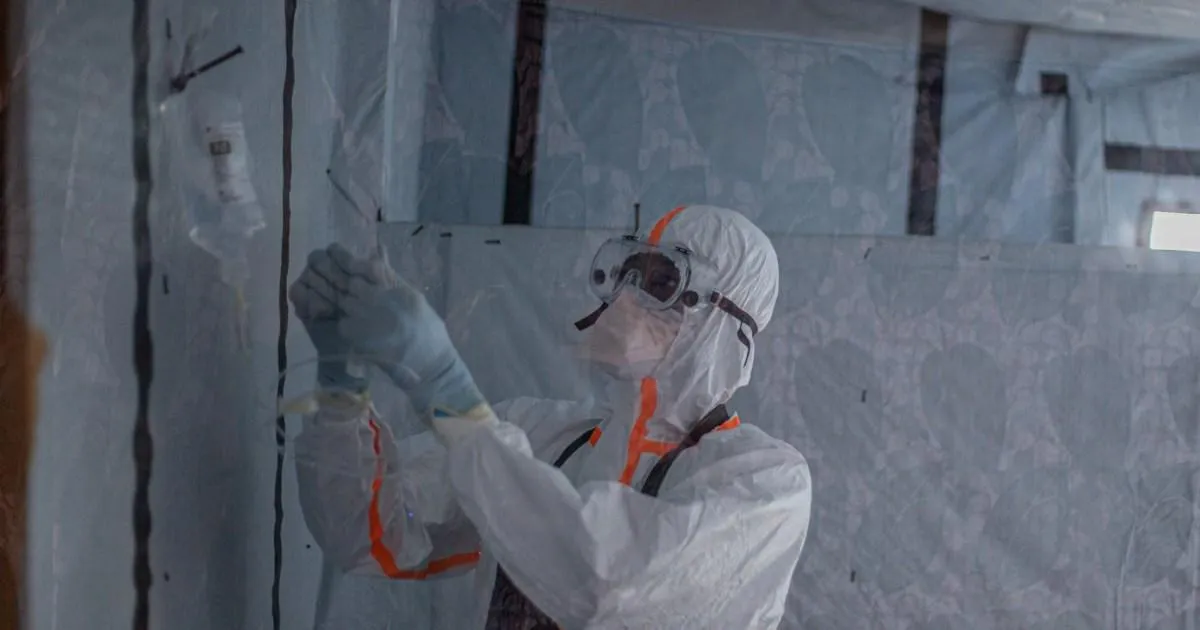
A British humanitarian worker is currently under medical observation in a London hospital after being potentially exposed to the Ebola virus while working in the Democratic Republic of the Congo. The individual, who is a UK resident, was brought back to the country on a private, chartered flight as a purely precautionary measure. According to the UK Health Security Agency, the worker is currently asymptomatic and remains in good spirits. Officials have been quick to emphasize that there is no cause for public alarm, noting that the risk to the general population remains extremely low and that the move was made simply to ensure the highest standard of monitoring and clinical oversight.
The backdrop to this situation is a troubling and rapidly accelerating Ebola outbreak in the Democratic Republic of the Congo, which the World Health Organization officially declared a public health emergency last month. The crisis has reached a scale rarely seen, with over 900 lives lost and thousands of cases reported. This particular epidemic has been labeled the fastest-growing in history, with the virus’s long incubation period—lasting anywhere from two to three weeks—making containment efforts incredibly complex and resource-intensive on the ground. While there is progress being made in patient recovery rates in the region, the international community remains on high alert as the virus shows its capacity to cross borders, with a handful of cases previously identified in countries like Uganda and France.
For the United Kingdom, the arrival of someone potentially infected with such a high-stakes illness naturally brings back memories of past brushes with global health crises. It has been nearly a decade since the last recorded cases of Ebola in the UK, which involved three health workers who returned from humanitarian efforts in Africa. Such events always spark a moment of collective anxiety, evidenced by a recent incident in Glasgow where a hospital wing was temporarily isolated amid fears of a potential case. In that instance, the patient—who had recently returned from an affected region—ultimately tested negative, serving as a reminder that robust screening protocols and high-level medical caution are working exactly as intended to keep the public safe.
Reflecting on history, the narrative of Ebola in the UK often centers on the courage of those who risk their lives to treat the vulnerable. The 2014 diagnosis of a Scottish nurse, who fell ill after working in the “Red Zone” in Sierra Leone, remains a poignant example of the professional and personal sacrifices made by frontline workers. Her story, like the case of the French doctor who also contracted the virus during a humanitarian mission last year, underscores the immense challenges involved in providing aid in unstable environments. These stories remind us that while the clinical risk to the public is low, the reality for the individuals on the front lines is one of constant, quiet bravery in the face of an unforgiving disease.
The current situation is further complicated by the emergence of a specific, particularly challenging strain of the virus known as Bundibugyo. Unlike other variants, this rare strain lacks a widely available vaccine or a standardized treatment protocol, creating a significant hurdle for scientists and international health bodies. The struggle to contain this specific iteration of the virus has even led to reports that some of the traditional “first lines of defense” in the region have been stretched to their breaking point. This shift highlights the unpredictable nature of viral evolution and the relentless pressure it places on already overburdened global healthcare infrastructures, turning what could be a contained problem into a broader international concern.
Ultimately, while the headlines may feel unsettling, it is important to contextualize this latest arrival within the framework of modern, highly prepared healthcare systems. Public health authorities are currently conducting thorough contact tracing as a matter of standard protocol, ensuring that no stone is left unturned. Although the world continues to grapple with the tragedy of the outbreak in the Congo, the UK’s approach remains one of calm, evidence-based management. By prioritizing the safety of the individual through early assessment and maintaining transparent communication with the public, authorities are upholding the critical balance between proactive caution and the avoidance of unnecessary panic.