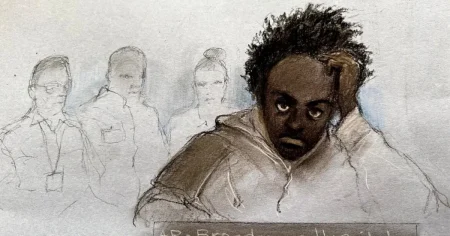



The horrific tragedy that struck Southport on July 29, 2024, remains a deep, unhealed wound for a community that lost three precious young girls—Alice da Silva Aguiar, Bebe King, and Elsie Dot Stancombe—in a senseless act of violence at a dance class. The perpetrator, 19-year-old Axel Rudakubana, is currently serving a life sentence for these murders and the attempted murder of several others. However, rather than fading into the background of his incarceration, he has recently made headlines once again, not for remorse, but for fresh allegations of violence committed from behind bars.
It has been confirmed that Rudakubana is facing new charges related to the assault of prison staff during his time at Belmarsh. The allegations are harrowing; prosecutors claim that in May of last year, he deliberately heated water in his cell’s kettle to boiling point before throwing it over a prison officer. This incident is just one of several, as he now faces multiple charges including assaulting emergency workers and the unauthorized possession of a weapon within the prison. These acts have drawn swift condemnation, particularly from those tasked with overseeing his detention.
The timing of these new charges has caused significant distress, falling just days before the somber two-year anniversary of the Southport attack. For the families of the victims, this news feels less like a coincidence and more like a cruel, calculated attempt to keep the trauma alive. Chris Walker, a lawyer representing the bereaved families, spoke candidly about the situation, expressing a profound fear that Rudakubana is establishing a pattern. He warned that the perpetrator seems intent on “retraumatizing” the families from his cell, turning every anniversary of his crimes into a new spectacle of aggression.
Since the attacks, Rudakubana has been moved from prison to Broadmoor Hospital, a high-security psychiatric facility known for housing the UK’s most notorious offenders. This transfer occurred under the Mental Health Act, which mandates that officials follow clinical advice when an offender’s mental state requires specialized care that a standard prison cannot provide. While the facility is designed for treatment rather than punishment, the move has sparked public frustration, with critics suggesting that the system is being manipulated to afford the killer a more comfortable environment than the general prison population.
The legal and clinical reality is complex. Under current laws, the Justice Secretary is effectively bound by the assessments of medical professionals. If clinicians deem a prisoner a danger due to severe mental disorders, they must be transferred to a secure hospital where they are treated as patients. The system does include provisions for a swift return to prison should this treatment prove successful or unnecessary, but for the victims’ families, the legal nuances offer little comfort. They are forced to watch as the person who stole their children’s futures continues to make demands on the state’s resources and attention.
Ultimately, these developments serve as a painful reminder that the Southport tragedy is far from closed. Earlier this year, a public inquiry concluded that the massacre could have been prevented had parents and agencies intervened sooner, adding a layer of systemic failure to the overwhelming grief. As Rudakubana prepares to appear via video-link at Westminster Magistrates’ Court this September, the public remains unsettled. The community of Southport continues to mourn in silence, seeking peace, while the man responsible for their greatest nightmare continues to dominate the headlines, forcing a scarred nation to revisit the horrors of that summer day over and over again.