



Fear and Confusion on a London Street: A Community on Edge
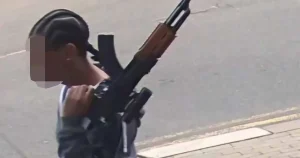
The afternoon sun cast long shadows across Edgwarebury Lane on that Wednesday afternoon, transforming an ordinary shopping trip into a moment of sheer terror for residents and visitors alike. What began as a typical midweek errand run quickly descended into chaos when a man was spotted walking through this bustling north London street clutching what appeared to be an assault rifle. The sight sent shockwaves through the community, prompting panicked shoppers to scramble for cover and triggering an immediate response from armed police units. The CCTV footage that later emerged showed a figure moving with unsettling confidence through the streets of Edgware, his weapon visible for all to see, as if carrying such an object through a busy commercial area was the most natural thing in the world. The timing could not have been more troubling, coming at a moment when Jewish communities across London were already feeling particularly vulnerable and on edge.
The incident unfolded at approximately 3:50 in the afternoon on Edgwarebury Lane, a street that holds deep significance for the local Jewish population. This is not merely another London thoroughfare; it is home to numerous Jewish-owned businesses, including a kosher supermarket and the well-known Grodz bakery, establishments that form the heart of this tight-knit community. The choice of location was not lost on those who witnessed the event unfold, nor on the police officers who would later launch an investigation into what transpired that afternoon. While authorities would eventually conclude that the weapon was likely fake, the fear it instilled in those who saw it was very real indeed, a stark reminder of how quickly perceived threats can disrupt the rhythms of daily life in modern urban environments where security concerns have become increasingly prominent.
Witnesses described a scene of confusion and dread that unfolded in a matter of moments but left lasting psychological impressions on those who experienced it. Lucasz, a shop worker who was present during the incident, recounted the eerie normalcy of the man’s behavior even as he carried what appeared to be a military-grade weapon through the crowded street. The suspect moved with purpose but without haste, his confident stride suggesting either a complete disregard for the panic he was causing or a calculated decision to intimidate those around him. In addition to the rifle, the man reportedly carried what appeared to be a magazine for bullets, adding to the authenticity of his threatening appearance. While some observers noted that the gun might have been made of plastic, the uncertainty itself was terrifying, and no one was willing to approach closely enough to determine whether the threat was genuine or merely a cruel prank with potentially devastating consequences.
The psychological impact on the community cannot be overstated, particularly given the context of rising concerns about security at Jewish institutions across Europe. Another witness captured the collective anxiety of the moment, noting that people immediately sought cover upon spotting the armed figure, recognizing that the distinction between a real weapon and a convincing replica becomes meaningless when faced with the possibility of actual violence. The proximity of a synagogue and the concentration of Jewish businesses in the area heightened these concerns, with witnesses explicitly acknowledging that members of the community were already on high alert due to ongoing security worries. The brazenness of the display, coming in broad daylight on a busy commercial street, compounded the sense of violation, transforming a familiar shopping district into a scene of potential tragedy in the blink of an eye.
The police response was swift and substantial, with officers descending on the area within approximately fifteen minutes of the initial sighting. Armed officers, standard patrol units, and even drone technology were deployed in a coordinated effort to locate the suspect and ensure the safety of the public. The Metropolitan Police’s statement reflected both the seriousness with which they treated the report and their growing confidence that the weapon was not genuine, noting that eyewitness descriptions mentioned a broken handle and toy-like noises emanating from the item. Nevertheless, the precautionary measures taken were extensive, including the temporary lockdown of nearby schools and synagogues, a decision that underscored the potential severity of the situation even as it disrupted the afternoon routines of countless families and community members. The lockdowns, while brief, served as a stark reminder of the new normal in which such precautions have become necessary considerations, particularly for institutions serving Jewish communities.
As of the latest reports, no arrests had been made, and the search for the individual responsible continued even as community members began to process what they had experienced. The Metropolitan Police appealed for information, encouraging anyone with knowledge of the incident to come forward either directly or through anonymous channels such as Crimestoppers. For those who witnessed the event, the aftermath has been marked by a mixture of relief that no violence occurred and lingering unease about what motivated such a reckless and intimidating display. The incident has also reignited conversations about community security, the challenges of distinguishing genuine threats from attention-seeking behavior, and the psychological toll that such events exact on communities already grappling with complex security concerns. In the days following the incident, residents of Edgware have found themselves reflecting on the fragility of their sense of safety, even as they express gratitude that this particular incident ended without tragedy. The image of a man striding confidently through their streets with what appeared to be a weapon will likely remain etched in their memories for some time, a vivid reminder of the delicate balance between vigilance and normalcy that defines contemporary urban life for many communities.