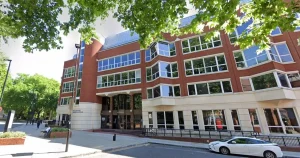

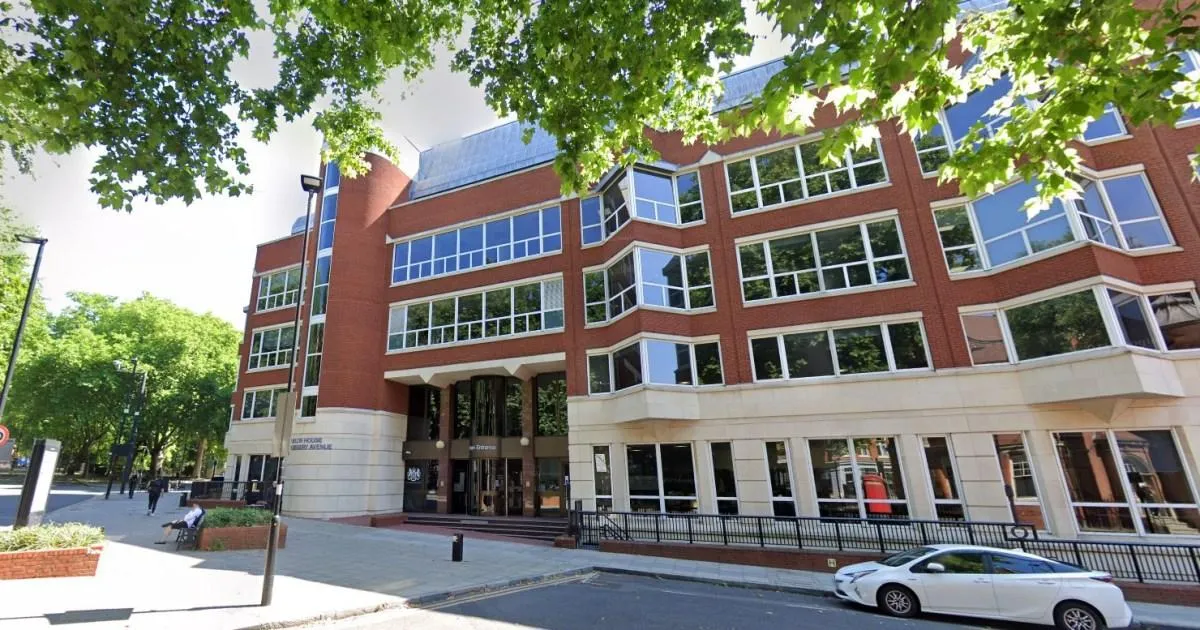
It is hard to imagine a more self-defeating gesture in front of a judge than the one made by a man who is asking the British courts to protect him from harm. He is an Albanian national in his thirties, a convicted burglar with an extraordinary immigration record, and he has spent the last several years locked in a legal battle with the Home Office over his right to remain in the United Kingdom. He has already been deported from the country four times, and four times he has found his way back, slipping through the gaps of a system that was supposed to have closed its doors to him. Now he is fighting a fifth removal order, and his argument is a serious one: he says he will be in real danger if he is forced to return to Albania. It was on the strength of that argument that a judge granted him anonymity, shielding his identity from public view because the court accepted that his asylum claim raised genuine concerns about his safety. That is the kind of protection that is supposed to allow someone to give evidence without fear of reprisal, without worrying that the people who want to hurt him might discover where he is and what he has said. But then the man did something that made a mockery of the entire arrangement. He posted a video of himself on social media, filmed at Taylor House Immigration Tribunal Centre in central London, sitting in the waiting area as casually as if he had stopped by to collect a form. The captions named the tribunal, and the footage gave away everything that anonymity was meant to conceal: his face, his location, and his involvement in the immigration proceedings. It was an apparent violation of the rules that prohibit filming and photography on court premises, and it raised a question that Home Office lawyers were quick to seize upon. How frightened can a man really be if he is willing to broadcast his whereabouts to anyone who cares to look?
The anonymity order in this case was not something the man took for granted. Judge Ravinder Bagral had granted it after hearing that the case rested on an asylum claim for protection, meaning the court had accepted in principle that there were reasons why his name should not be made public. Anonymity orders are not issued lightly. They are reserved for situations where revealing a person’s identity could expose them to serious danger, and they are usually treated with the utmost seriousness by everyone involved. The man’s own behaviour, however, suggested that he did not fully understand the value of what he had been given. The video he uploaded was bad enough, but it was not an isolated lapse. Home Office lawyers pointed out that he had also regularly posted photographs of himself driving luxury cars and enjoying drinks in nightclubs, images that painted a very different picture from the frightened, hunted man he claimed to be. Here was someone who seemed to be living a life of visible comfort, surrounded by the trappings of money and leisure, while simultaneously telling a court that he was in fear of his life. The contrast was difficult to ignore, and it made his request for anonymity feel less like a genuine need and more like an attempt to have it both ways. He wanted the court’s protection, but he was not willing to give up the freedom to show off his life on the internet. It was a strange and rather revealing contradiction, and it did not go unnoticed by the tribunal.
The Home Office’s case was presented by Khadeeja Khan, a lawyer who did not mince words when it came to describing the man’s history. She told the court that he had committed a series of serious crimes while in the United Kingdom, including burglary, and that he had repeatedly defied immigration rules. This was not a story of a man who had made one mistake in his youth and spent the rest of his life trying to put it behind him. It was a story of persistent offending and a sustained refusal to accept the authority of British law. The man had been removed from the country four times, and yet he had kept returning, often without any indication that he intended to change his ways. From the Home Office’s perspective, he was exactly the kind of person the deportation system was designed to tackle: someone who treated immigration control as an inconvenience rather than a legal obligation, and who had no hesitation in breaking the law when it suited him. His asylum claim, in that context, looked less like a genuine plea for protection and more like a last-ditch effort to avoid the consequences of his own actions. Ms Khan’s submissions were blunt, and they were intended to remind the court that whatever fears the man might have about returning to Albania, he had shown an alarming disregard for the country that was being asked to shelter him. There was also the matter of his personal ties to the UK: he had an estranged partner and a child in the country, which meant that any decision to remove him would have real human consequences beyond the man himself. But even that, the Home Office suggested, did not outweigh the simple fact that he had been deported four times and had no lawful right to remain.
The man’s own account of his life told a much more troubled and complicated story than the Home Office’s version of events. He said he had first come to the United Kingdom when he was just thirteen years old, too young to make any real decisions about where he wanted to be or how he wanted to live. At some point after his arrival, he had become involved with a gang, and when he tried to leave that gang behind, his troubles truly began. He claimed that the gang turned its attention on him and his family, and that the threats were serious enough to follow him across borders. Every time he was deported back to Albania, he said, the gang was able to track him down. On one occasion, a gang member had allegedly held a knife to his neck, a threat so explicit that it left no doubt about the danger he was in. But the gang had not found him in the United Kingdom, and that was the crux of his argument. He felt safer in Britain because the people who wanted to harm him did not seem to have the same reach there. He also described a family tragedy that deepened his fears: two years ago, his uncle had been shot, after the family became involved in a blood feud. He did not report the shooting to the Albanian authorities because he said they were corrupt and could not be trusted to provide protection or justice. It was a grim and unsettling narrative, one that painted a picture of a young man who had been caught up in cycles of violence and intimidation from an early age, and who had come to believe that the only place he could ever be safe was in a country that was trying to send him away.
Khadeeja Khan was not persuaded, and she pressed the man on the obvious contradictions in his story. She asked him directly why, if he was so frightened of being found by the people who had threatened him with knives and driven him out of his own country, he would choose to post videos of himself on social media. Why would he advertise his presence at an immigration tribunal, of all places, when he knew his case was about his safety and his identity? Why would he upload photographs of himself enjoying expensive cars and nights out in nightclubs, making it easy for anyone to see exactly what he was doing and where he was doing it? The man accepted that his clips could be viewed anywhere, by anyone, but he did not seem to have a compelling answer to the basic question at the centre of the exchange. If he really was being hunted, why would he make himself so easy to find? The Home Office lawyer’s point was simple. A person who genuinely feared for his life would be careful. A person who truly believed that a gang was tracking him would not be posting videos of his daily movements. A person who said he had been forced to flee Albania because his enemies had followed him there would think twice before announcing to the world that he was back in Britain and attending court. Instead, this man seemed to do the opposite. He seemed to want attention, or at least to be untroubled by the risk that attention would bring. That single detail called into question the credibility of his entire claim. It was the kind of inconsistency that makes a judge pause, because it suggests that the fear being described in court is not the fear that governs the person’s real life.
The case is, in many ways, a perfect illustration of the messy, contradictory reality that sits at the heart of modern asylum battles. It would be easy to reduce the man to a cynical manipulator, someone who has learned to use the language of vulnerability to stay in a country where he wants to live, and there is plenty of evidence to support that view. It would be equally easy to see him as a victim of circumstance, someone who was pulled into gangs and violence as a child and never given a real chance to escape, and there is also evidence for that. The truth is probably somewhere in between, hidden in the gaps of a story that keeps changing shape depending on who is telling it. What remains clear is that the man has made an extraordinary mess of his own case. He begged a judge for anonymity and then gave away his identity. He claimed to be terrified of being found and then made himself impossible to miss. He asked the British state to believe that his life would be in danger if he went home, and then undermined that request with a stream of social media posts showing a person who looked anything but frightened. The tribunal now has to decide whether to believe him, whether to accept that his fears are genuine despite his reckless behaviour, or whether to conclude that his actions speak louder than his words. If he is deported for a fifth time, he will have to go back to the country he says he fears, carrying with him the knowledge that he may have been his own worst enemy. If he is allowed to stay, he will have done so against the background of a case full of contradictions, a case in which the man who asked for protection seemed determined, in the strangest possible way, to protect himself right out of it.