


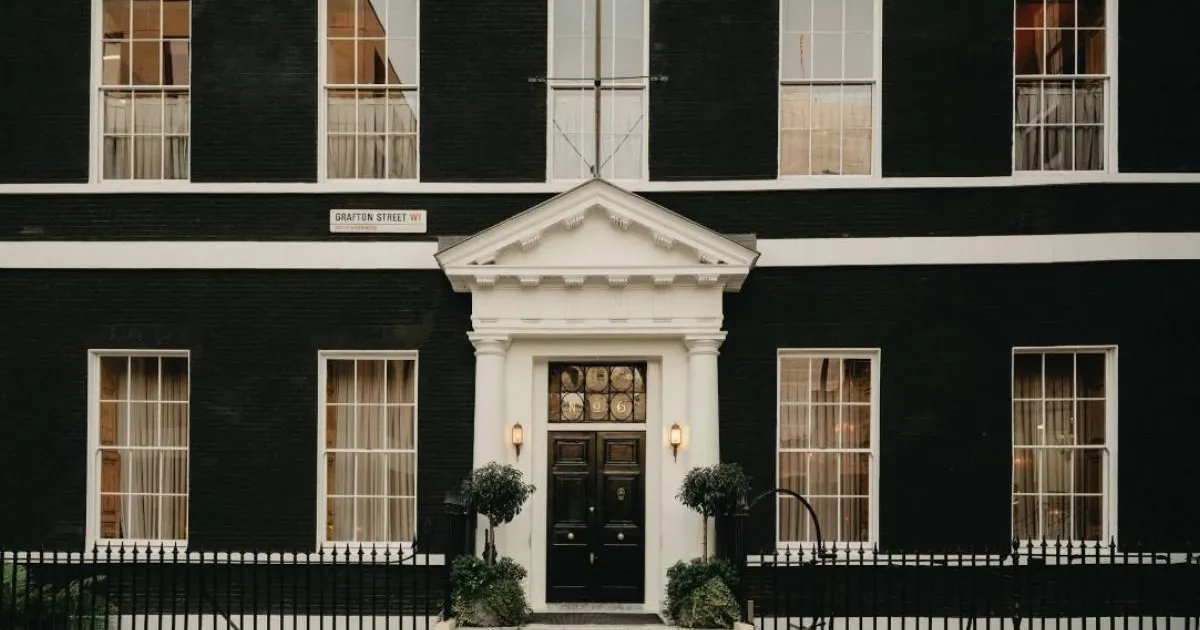
In the hushed, private corridors of Mayfair, where wealth meets discretion and membership is a coveted badge of belonging, an uncomfortable silence has settled. Maison Estelle, an exclusive private members’ club tucked inside a handsome 18th-century Georgian townhouse, has been forced to close its doors following what the Metropolitan Police have described as a “serious crime and disorder” incident. The club, known not only for its opulent interiors but also for the famous faces that drift through its rooms, now sits shuttered, its future hanging in the balance. Officers were called to the venue on September 19, and what they witnessed prompted an urgent application to Westminster Council to review the club’s licence, along with the suspension of its alcohol licence just days later. For those inside the world of high-end members’ clubs, the news feels less like a distant headline and more like a tremor in the earth beneath their feet. Because Maison Estelle is not just another bar. It is a place where royalty, both hereditary and Hollywood, gathers; where a glass of champagne can be shared between a rockstar and a Formula One champion; where the doors open only for those who have been anointed by an existing member. And now, that golden door has swung shut, at least for the time being, leaving everyone from staff to millionaire members asking the same bewildered question: what could have possibly gone so wrong?
The events that led to this dramatic closure began to take shape after police reported serious disorder at the club. In a formal application to the local authority, the Metropolitan Police laid out their concerns, stating that there was evidence Maison Estelle had failed to comply with multiple licensing conditions. Such applications are not made lightly, and the weight of them cannot be overstated. For a venue that trades so heavily on exclusivity and control, the suggestion that it had let things slip in a way that allowed crime and disorder to take hold is deeply damaging. The police’s words were measured, careful, and legalistic, but the meaning was unmistakable: this was not simply a colourful misunderstanding or a neighbour’s noise complaint. The application called for an urgent review of the club’s licence, and on Thursday, during a private hearing that was shielded from public view because of an ongoing criminal investigation, councillors made the decision to suspend the club’s alcohol licence with immediate effect. That means no bar service, no late-night pours, no carefully mixed cocktails for the glittering crowd. A full hearing will now take place within 28 days, where the club’s fate will be decided more thoroughly. Until then, the club is in a strange, grey limbo, its rooms standing empty, its staff uncertain, and its members left to wonder whether what has been built over years of carefully curated reputation can survive a single night in September.
To understand why this closure has caused such a stir, you have to understand the world Maison Estelle entered into. Housed in a beautifully preserved Georgian townhouse, the club was designed to feel less like a place you go and more like a kind of secret handshake. It has welcomed celebrity guests who need no introduction: Liam Gallagher, whose rockstar swagger has defined an era; Lewis Hamilton, whose name is synonymous with speed and success; and both Princesses Beatrice and Eugenie, women whose every public appearance is scrutinised and adored in equal measure. This is a club, after all, where membership is not merely a matter of money. True, it costs a substantial sum just to walk through the door, with annual membership set at £4,250 on top of a £2,250 joining fee. But paying the fee is only the beginning. Prospective members need a referral from an existing affiliate, an endorsement that functions as a sort of key, a testament to the fact that you belong not just socially but socially vetted. The club describes itself as a “new school” establishment, a place without the “stuffy” rules that might put people off. It says it attracts people with “plenty to say and nothing to prove.” And for a certain kind of person, that is the point. It is a place where you can be seen without seeming to try, where the velvet rope is more about curating an atmosphere than excluding anyone in particular. Yet there is an inherent tension in that promise: when you gather people whose identities are built on being impressive, and you make them feel untouchable, the rules can start to feel optional. And when the rules become optional, bad things can happen.
The club has responded with a statement that tries to strike a careful balance between cooperation and accountability. A spokesperson confirmed that Maison Estelle had closed for a few weeks while investigations are carried out after receiving information from the Metropolitan Police and following what they described as a “serious public safety matter outside the premises.” That last phrase is important, because it complicates the narrative. It suggests that whatever happened was not necessarily a consequence of the club’s own culture, but rather an external event that unfolded near its doorstep. Still, the spokesperson was quick to emphasise that the safety of staff, members, and their guests “will always come first,” and that the club is working closely with Westminster City Council and the police to review its licence conditions and procedures. It is a carefully worded response, designed to express concern without admitting fault, to show a willingness to cooperate without conceding that anything the club itself did was wrong. And perhaps that is fair. We do not yet know the full details of what occurred. The word “alleged” hangs over all of this, a legal shield protecting everyone from presumption. But in the court of public opinion, the damage has already been done. The club will survive or it won’t, but the particular alchemy that made it feel magical, the sense of entering a space where the usual rules of the world are suspended, has been cracked. Once you have had to close your doors because the police believe a serious crime has taken place, it is hard to pretend that you are above it all.
Maison Estelle is not, unfortunately, alone in this unfortunate spotlight. It is part of a worrying pattern that has emerged across Mayfair’s more exclusive nightlife scene over the past year. Just a few weeks earlier, another upscale venue, The Mistress of Mayfair, was forced to close after a man had his throat slashed in a knife attack following an altercation in its basement restaurant. That was the restaurant’s second major incident in twelve months, and the subsequent investigation did not reflect well on the establishment. It found that The Mistress had failed to comply with several licence conditions, including not properly checking all guests’ identification and failing to keep accurate records of incidents. That the attack took place in a basement, in a venue that trades on glamour and intimacy, makes the warning all the more stark. When violence erupts in places designed to feel protected, the fallout ripples far beyond the immediate victims. It raises questions about what else is going on behind those unmarked doors, whether the people running these venues are truly equipped to manage the pressures that come with serving alcohol to the powerful, the wealthy, and the famous, and whether the glamour is worth the risk. For the surrounding community, the concern is not just about occasional scuffles. It is about trust. Mayfair is one of the most expensive residential areas in the world, and the people who live there do not want to feel that their streets have become a battleground for egos. Clubs like Maison Estelle and The Mistress of Mayfair may be private, but their actions have public consequences.
As the investigation into Maison Estelle continues behind closed doors, the mood across the city’s nightlife community is uneasy. There is a sense that this could be a turning point, a moment when the tide begins to turn against the old way of doing things. For decades, the private members’ club has operated on a kind of gentlemen’s agreement, a nod and a wink that if you have the money and the connections, everything else can be sorted out. But the law does not care about referrals or joining fees. It does not care whether you have entertained royalty or gone platinum. And increasingly, the authorities are sending a message that no venue, no matter how exclusive, is above scrutiny. The police have insisted that the private hearing was held behind closed doors because of the ongoing criminal investigation, meaning that there may be more details lurking in the shadows that have yet to surface. If charges are brought, or if the investigation expands, the story could take yet another turn. For now, all anyone can do is wait. The club’s members, many of them accustomed to getting what they want when they want it, are having to accept that some things cannot be fixed with a phone call or a bottle of vintage champagne. The staff, who have worked hard to create a space where guests feel special, face an uncertain few weeks. And the people of London, who see only the headlines and the shiny facades, are left to wonder what really goes on in those quiet squares after midnight.
In the end, this is more than the story of one club’s misfortune. It is a story about the relationship between privilege and accountability, between the fantasy of a space where you can let your guard down and the reality that no one is ever truly safe from the consequences of their actions. Maison Estelle will face its full hearing soon, and whatever happens, the case will serve as a reminder that even the most beautiful rooms in the city can cast very long shadows. For the members, there may be a difficult reckoning with what this club meant to them and whether they want to belong to a world that has proven itself so fragile. For the police and the council, it is a chance to show that their promises of tougher oversight are not just words. And for the rest of us, it is an invitation to look beyond the velvet rope and ask the questions that need asking: not just who is allowed in, but what is being protected, what is being hidden, and at what point does the cost of belonging become too high to pay. The doors of Maison Estelle are closed for now, but the conversation has only just begun.