

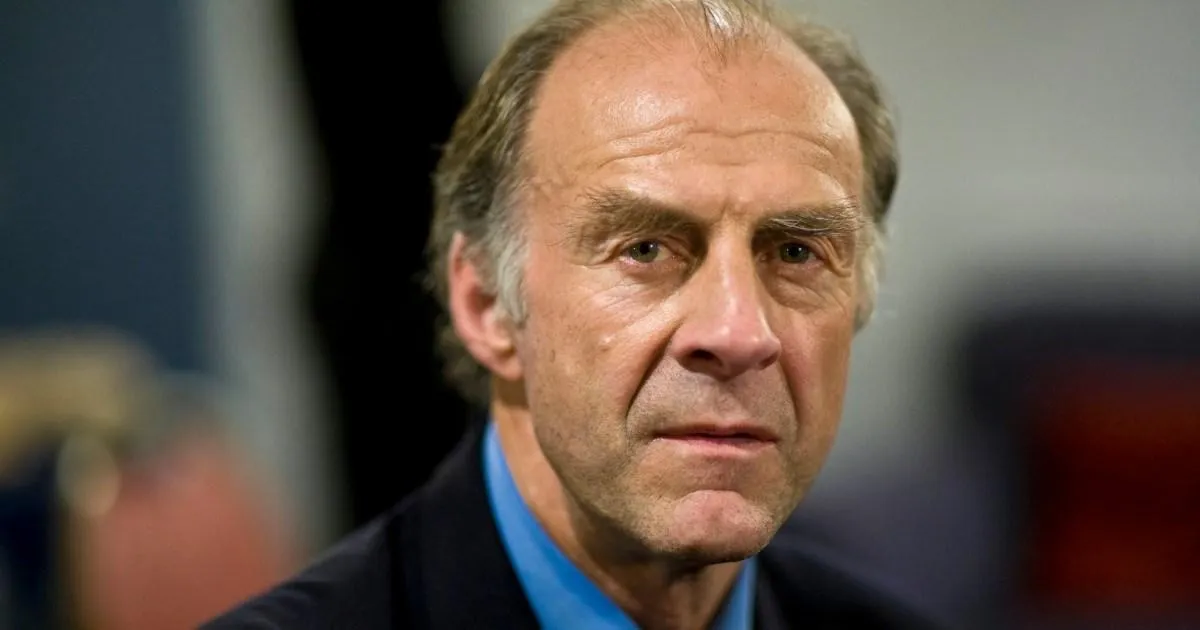
Sir Ranulph Fiennes has spent a lifetime doing things that most people cannot even imagine. He has crossed Antarctica on foot, reached both the North and South Poles, climbed Mount Everest, and discovered lost cities buried in the Arabian desert. He has survived frostbite, heart attacks, and the kind of physical suffering that would have broken almost anyone else. But the man who has been called the world’s greatest living explorer is now at the centre of a very different kind of story, one that has nothing to do with adventure and everything to do with vulnerability. At 82, Sir Ranulph has not been seen in public for two years. According to reports, he has been moved between care homes in Cheshire and Wales under false names, with only his wife and daughter knowing exactly where he is. His family and friends are deeply alarmed. They are calling for the Office of the Public Guardian, the government agency responsible for overseeing legal guardians, to investigate the role of his wife, Louise Millington-Cotes, who acts as his legal guardian. The concern is not just about secrecy. A care home in Wales reportedly raised the alarm that Sir Ranulph was being “unlawfully deprived of his liberty” and that proper protocols were not being followed. This is not a story about a celebrity being kept out of the spotlight. It is a story about a vulnerable man, a fractured family, and a system that may have failed him.
At the heart of the family’s distress is a painful estrangement. Alexander Millington-Cotes, Louise’s son from a previous relationship, is estranged from his mother. He has tried to pass information about his stepfather’s care to the Office of the Public Guardian’s safeguarding team, but he says he has heard nothing in response. His words carry the weight of a man watching from the outside, desperate to protect someone he cares about. “Of course the OPG should investigate – we would love them to investigate,” he told the Telegraph. The fact that a family member has to go to such lengths to raise concerns suggests a breakdown not only in family relationships but in the safeguarding mechanisms meant to protect elderly people. The care home’s reported warning is especially significant. If a professional care setting believed Sir Ranulph was being unlawfully deprived of his liberty, that is not a minor complaint. It is a legal and ethical red flag. Deprivation of Liberty Safeguards exist precisely to prevent this kind of situation, and if they were ignored, then the system has failed at multiple levels. For Alexander, and for others who care about Sir Ranulph, the silence from the authorities is almost as painful as the allegations themselves. Imagine trying to do the right thing, trying to protect someone you love, and being met with nothing but silence. That is the reality for a family that has already been torn apart by grief, suspicion, and the painful distance that comes when a loved one is hidden away.
John Simpson, the veteran BBC correspondent and a friend of Sir Ranulph, has added his voice to the growing chorus of concern. In a post on X, Simpson wrote: “Horrified to hear what’s happened to my good friend Ran Fiennes. I’d like to tell the relevant authorities everything I know about the way he’s been treated. He’s the world’s bravest man, and he’s vulnerable. We must know what’s happening to him.” Simpson’s words are striking because they come from someone who has reported from the world’s most dangerous places and who knows what courage looks like. To hear him describe Fiennes as vulnerable is a reminder that even the strongest among us can become fragile. The image of the world’s bravest man being hidden away, unable to be seen by friends, is profoundly sad. Simpson’s offer to share what he knows with authorities is a plea for transparency. It also reflects a broader anxiety: if this can happen to Sir Ranulph Fiennes, what might be happening to other elderly people whose stories never make the news? Arabella McIntyre-Brown, the sister of Sir Ranulph’s first wife Ginny, also said reports of his physical state were “very worrying” and added her name to those calling for an inquiry. The public has a right to know, and his friends have a right to see him. The man who spent his life exploring the most remote places on Earth has now become unreachable to the people who love him most.
The specific concerns raised by those close to Sir Ranulph are deeply troubling. Reports have emerged about a “do not resuscitate” document and medicines prescribed in the name of Louise Millington-Cotes. These are not small details. A DNR order is a serious medical decision, and it must be made with the full knowledge and consent of the person concerned, or at least with proper legal authority. Medicines prescribed in a guardian’s name for the person under guardianship also raise questions about transparency and accountability. Then there is the reported effort to conceal Sir Ranulph’s identity. He is said to have been made to wear a hat, sunglasses and gloves even when going for walks, to prevent anyone recognising his face or his frostbitten fingers. For a man whose hands were damaged by frostbite during his expeditions, being forced to hide them may feel like an erasure of his life story. Those fingers are not just a physical reminder of suffering; they are a badge of honour, proof of what he endured. To hide them suggests a level of control that goes far beyond protecting privacy. It suggests secrecy, and secrecy in care settings is dangerous. The cumulative picture is one of isolation, control and a man whose own voice has been silenced. It is hard to think of a more cruel irony: a man who spent his life pushing the limits of human endurance, who thrived on freedom and open spaces, now reportedly confined to care homes under a false name, unable to be recognised even by the people who pass him on the street.
To understand the situation, it helps to remember the man behind the headlines. Sir Ranulph married Louise Millington-Cotes, a former horse trainer 23 years his junior, in 2005, after a failed attempt to climb Mount Everest. They had been together for years before that, and she has been a significant presence in his life. The marriage was not without its own history; Alexander is Louise’s son from a previous relationship, and the family dynamics are clearly complicated. But none of that diminishes the seriousness of the current allegations. Louise has not commented on the reports, and it is important to remember that she has not been publicly accused of a crime. The calls for an investigation are not a verdict; they are a demand for due process. Yet the fact that Sir Ranulph’s exact whereabouts are known only to his wife and daughter, and that friends and family members have been kept in the dark, is deeply concerning. Even in the best of circumstances, caring for an elderly person with complex needs can be isolating. But when that person is a public figure, and when those who love him are denied even the basic knowledge of where he is, the situation becomes untenable. The silence around Sir Ranulph is not protecting him; it is erasing him. His life has been one of extraordinary achievement, and he deserves to be remembered for what he did, not hidden away as if he no longer matters.
The Office of the Public Guardian exists to protect people who may not be able to protect themselves. It oversees the actions of legal guardians and deputies, and it has the power to investigate concerns. The family’s call for an investigation is not an attack on Louise Millington-Cotes; it is a request for accountability. It is a request that the system do its job. Sir Ranulph Fiennes has spent his life pushing the limits of human endurance, crossing Antarctica, climbing Everest, finding lost cities. He has survived things that would have killed most people. But no one survives the slow erosion of dignity without help. The people who love him are not asking for miracles. They are asking to know where he is, how he is being treated, and whether he is safe. They are asking that the law be followed, that protocols be respected, and that a man who has given so much to the world be allowed to live his final years with the respect he deserves. The OPG must investigate, not because the allegations are proven, but because they are serious enough to demand an answer. As John Simpson said, we must know what is happening to him. For Sir Ranulph Fiennes, for his family, and for all of us who believe that no one should be hidden away, the truth cannot come soon enough.