


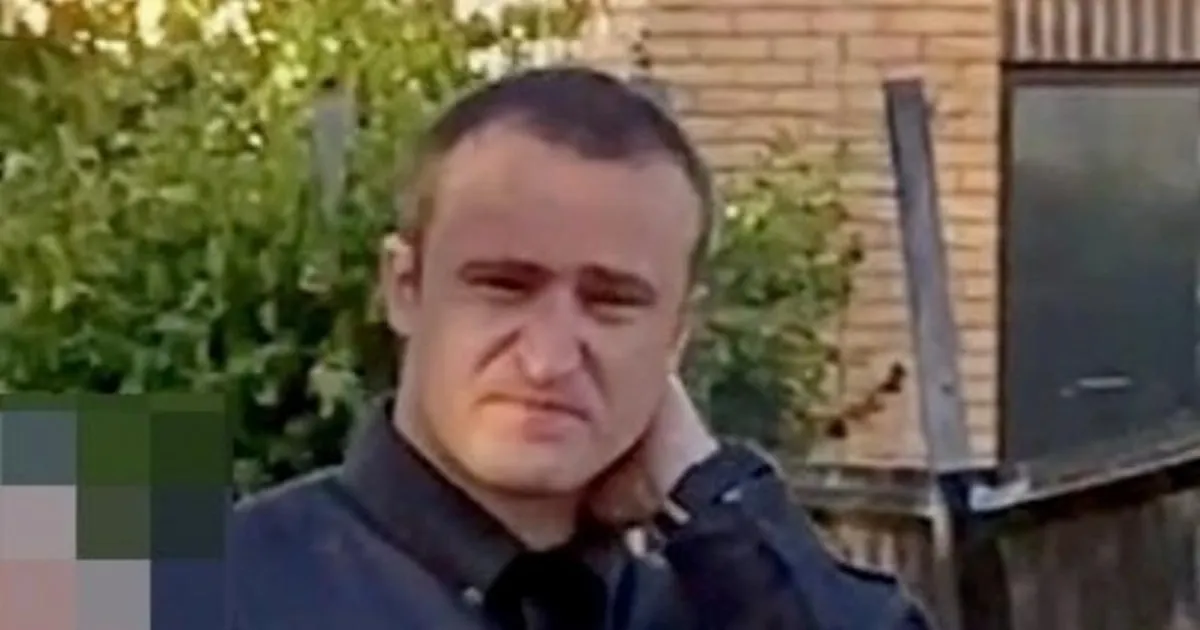
One summer morning in Westcliff, Essex, a routine spot check turned into the unmasking of a secret life. Officers arrived at Samuel Tobin’s home for a random supervisory visit, a standard condition of a court order that had been imposed on him years earlier because of his sexual interest in feet and shoes. They found him at his computer, and almost immediately his body language betrayed him. He grabbed his phone and began fussing with it, pressing buttons in a hurried attempt to delete something, until one of the officers took the device from his hands. What happened next revealed a hidden universe of images and recordings, arranged like a private collection. The phone’s visible gallery was empty, but its deleted folder was overflowing with more than 10,000 photographs and 444 videos, the vast majority devoted to the feet of young girls. Many of the girls were underage, and a significant number appeared in school uniform, photographed from different angles in what looked like a deliberate and sustained effort to capture them unnoticed. Some images even included the school’s sign in the background, making it clear where they had been taken. Tobin, 31, had apparently loitered outside a school to build this archive. Police also discovered a USB stick containing even more images, organised into folders with chillingly casual names: ‘flats’, ‘loafers’, ‘flip-flops’, ‘sandals’ and ‘schoolgirls’. Another 28 USB sticks, suspected of holding still more material, were set aside for further assessment. By the time the case reached Basildon Crown Court, Tobin sat in the dock with his head in his hands, a man whose private fixation had finally been pulled into the open.
The scale of what was found was enough to unsettle even experienced professionals. Prosecutor Hollie Davies described how Tobin appeared to have staked out a school to capture many of the photographs, which often showed girls in uniform and were clearly taken for his own sexual gratification. Judge Peter Clark later observed that the images, while not indecent in the narrow legal sense, had all the hallmarks of a secret sexualised collection. They did not contain nudity or explicit acts, which is why they were not treated as conventional child sexual abuse material. But the harm was real nonetheless. For the girls involved, the discovery that a stranger had spent months or years photographing their feet, their shoes, their uniforms and their daily movements is a violation that does not require nudity to feel deeply invasive. They were not touched, but they were watched, selected, framed and filed. The folder names alone suggest a disturbing level of organisation, a mind sorting and categorising human beings as though they were objects in a catalogue. The school sign in the background transforms an ordinary place of learning into a site of predatory attention, and it strips away any pretence that the images were accidental or harmless. This was not random opportunism; it was a methodical habit, built from the ordinary moments of unsuspecting schoolgirls who had no idea they were being observed.
Judge Peter Clark did not use the word ‘alarming’ lightly. Sitting in the same courtroom, he told Tobin that he was in ‘the last chance saloon’—a blunt phrase that captured the seriousness of the moment and the dwindling patience of the court. Yet, after listening to the facts, the judge chose not to send him to prison. Instead, Tobin was handed a two-year suspended sentence, along with 120 hours of unpaid work, a ‘Building Better Choices’ course, and up to 30 additional rehabilitation activity days with probation. A suspended sentence is not a pardon. It is a punishment held in reserve, a threat with a practical function. Tobin will be allowed to remain in the community only as long as he follows every rule, attends every session, and avoids even the appearance of reoffending. If he misses an appointment or is caught taking another photograph of someone’s feet without consent, the suspended sentence can be activated and he will go to jail. The judge acknowledged Tobin’s ‘terrible history’, including a prior sexual risk order from 2021, but also found that there was a realistic prospect of rehabilitation. Tobin had already started therapy to manage his urges, and the court appeared to believe that treatment, however imperfect, offered a better chance of protecting the public than a prison sentence that might simply harden him. A 10-year sexual harm prevention order was imposed, and Tobin was placed on the sex offenders register for that period. ‘It’s in your hands now to make sure you don’t tip over the edge,’ the judge said—words that carried both compassion and warning.
Tobin’s history made those words all the more poignant. In 2021, he was handed a sexual risk order specifically because of his ‘sexual preoccupation with feet and shoes’. The order banned him from taking photographs of people’s feet without their consent. For a while, the boundary held, but not for long. He breached the order in 2023, again in 2025, and once more in 2026. Each breach was a choice, or a series of choices, and each time he was caught he faced consequences. Yet the behaviour continued. The pattern suggests not a single lapse, but a deep, repeating compulsion. Tobin’s defence lawyer, Angelina Nurse, told the court that he had been diagnosed with autism and was awaiting a possible diagnosis of ADHD. In her view, that diagnosis could be seen in his offending—a reference to the intense, repetitive focus that can accompany these conditions. She described an obsession, a compulsion, with taking photographs of feet, ankles and shoes. This was not offered as an excuse, and it should not be accepted as one. Many people with autism do not break the law or invade the privacy of others. But the diagnosis helps explain why conventional legal warnings may not have been enough to stop him. A sexual risk order tells someone what not to do; it does not necessarily treat the urge that drives them to do it. Tobin’s repeated breaches suggest that the first intervention was never going to be sufficient, and that by the time his phone was seized in June, his compulsion had already outgrown the legal framework meant to contain it.
The court also had to confront the uncomfortable gap between public revulsion and legal categories. Of the thousands of images found in Tobin’s possession, only one gave rise to a charge of voyeurism: a photograph he had taken of a woman sunbathing in the privacy of her back garden. Under the law, voyeurism requires the victim to be engaged in a private act, and a woman lying in her own garden, hidden from the outside world, was clearly doing just that. The schoolgirls, by contrast, had been photographed in public or semi-public settings, where their feet and shoes were visible to anyone. The fact that Tobin sexualised those images did not make them voyeurism in the eyes of the law. Instead, they were charged as breaches of the sexual risk order, offences that carried community orders. This legal distinction may feel unsatisfying to anyone who hears the story and senses the violation experienced by the girls. But it also explains why the case focused so heavily on his previous order and why the new sexual harm prevention order is so important. The woman in the garden had done nothing to invite attention. She was in a place where she believed no one was watching. Tobin took that belief away from her, and she never even knew it had been stolen until the police arrived at his home. When defence lawyer Angelina Nurse argued that Tobin’s offending had crossed the custody threshold but that his risk could be managed in the community, the court had to weigh that assessment against the realities of public safety, victim impact, and the need for meaningful punishment.
Ultimately, Tobin’s story is easy to reduce to headline shorthand—‘foot fetish voyeur’—but the reality is more complex and more troubling. It is a story about how an ordinary-seeming interest can become criminal when it turns other people into objects without their knowledge. It is also a story about the limits of law and punishment. A sexual risk order could not cure his compulsion. A suspended sentence cannot rebuild the sense of safety that the schoolgirls and the sunbathing woman may have lost. At best, it can create the conditions for change: supervision, therapy, and a clear set of rules with real consequences. Tobin’s autism diagnosis and pending ADHD assessment do not erase his responsibility, but they should remind courts that people are not just the worst thing they have done. The judge’s phrase ‘last chance saloon’ suggests a man standing at the edge of a cliff, with the court offering him a hand while also showing him the drop. Whether he takes that hand is now entirely up to him. The victims, meanwhile, are left with a different burden: the uneasy feeling that a stranger saw them, saved them, and filed them away under a folder named after their shoes. The 28 USB sticks still awaiting further assessment hang over the case like an unfinished sentence, a reminder that the full extent of Tobin’s collection may never be known. If the system has worked, Tobin will never pass that way again. If it has not, the girls in those photographs, and the woman in her garden, will remain shadows in a story about one man’s secret world. For now, Samuel Tobin has been given a chance to step away from the edge. It is a chance many offenders do not receive, and one that cannot be wasted.