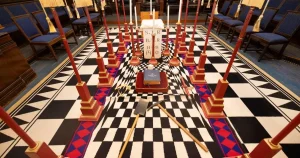


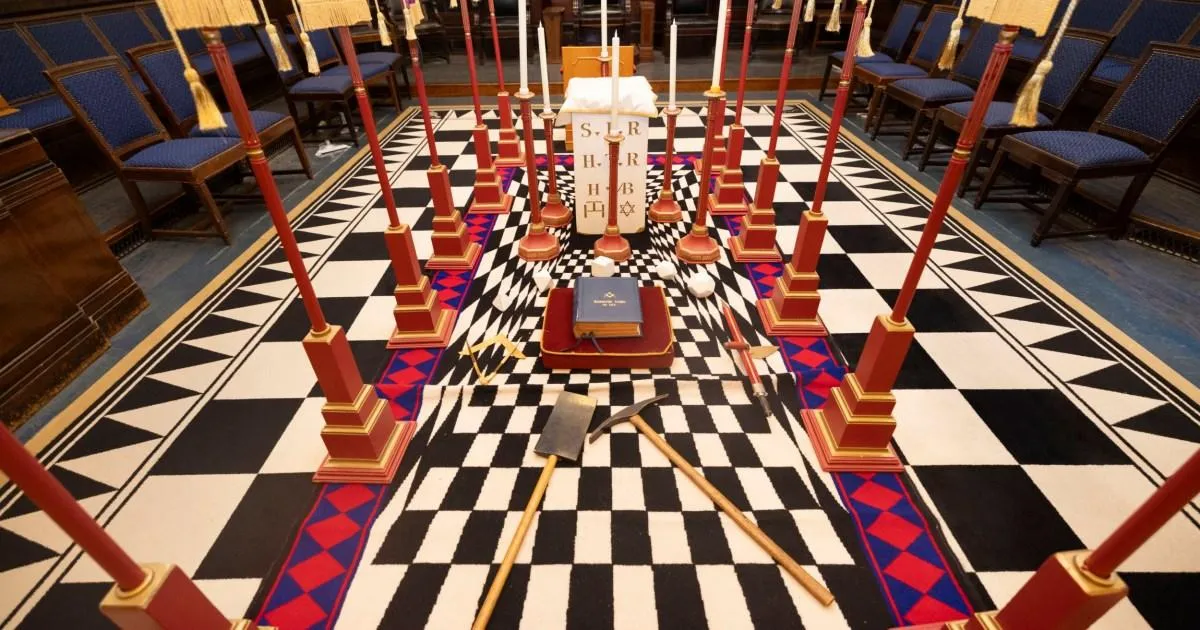
For centuries, the Freemasons have been shrouded in a fog of conspiracy, whispered about as a clandestine society pulling the levers of power from behind marble-clad curtains. Yet, when you walk into the United Grand Lodge of England (UGLE) near Covent Garden, the reality is far more human—and surprisingly accessible. Behind the ornate, cinematic architecture lies a community that is striving to shed its “secretive” skin. From the canteen where you can grab a reasonably priced coffee to the grand halls that have hosted James Bond film crews, the headquarters is less an impenetrable fortress and more a meeting place for an eclectic group of people searching for connection in a rapidly changing world.
At the heart of this organization are members like Nando Caicedo, a charity director who found a sense of belonging in Freemasonry that he struggled to find elsewhere. Nando’s story reflects a modern reality: London is a colossal, bustling metropolis, but for many, it is also a lonely one. His experience challenges the negative stigmas often attached to the group. Instead of plot-driven kabals, Nando describes an environment built on social stability, lifelong friendships, and a shared set of moral values. For a man who felt like an outsider after arriving in the UK from Colombia as a child, the Lodge provided a vital anchor, offering a brotherhood that transcends social background and occupation.
When you speak to members like Mitch Bryan, a 36-year-old working in the renewable energy sector, the “mystery” of the order quickly evaporates. Mitch describes the infamous initiations and rituals not as dark, occult happenings, but rather as “amateur dramatic shows.” Members spend time rehearsing their lines just as they would for a school play, viewing these ceremonies as a way to internalize teachings on ethics and personality development. When asked about the legendary “secret handshake,” the men laugh. They frame it as a relic of medieval stone-masonry intended for professional identification—something mundane, quite dull, and entirely discoverable via a simple Google search.
The structure of the organization is grounded in progression and responsibility. Newcomers start with a plain white apron and work their way through degrees, adding badges and rosettes as they grow in seniority. It is a meritocratic ladder where members can eventually take on leadership roles, provided they are willing to put in the time. However, this commitment comes with a price tag—membership fees and dining costs—as well as a social expectation to contribute. Beyond the social and ceremonial aspects, these Lodges are massive engines for philanthropy, contributing tens of millions of pounds to various causes annually. Their internal culture is strictly enforced by a cardinal rule: politics and religion are left at the door, ensuring that despite an individual’s personal beliefs or professional background, the focus remains on mutual respect.
The organization is currently undergoing a significant shift as it works to broaden its demographic. While the halls are still populated by older, established gentlemen, there is a concerted outreach effort underway to reach Gen Z and Millennials through social media. This push is finding resonance, particularly as many younger people report feeling the same disconnection that drew Nando to the Lodge years ago. The Freemasons are increasingly framing themselves as an antidote to the “loneliness epidemic,” offering a physical space for social interaction in an era dominated by digital isolation. For these younger initiates, lodge life looks less like a shadowy conspiracy and more like a social club: pub crawls, bowling nights, and neighborhood barbecues.
Ultimately, the allure of Freemasonry persists because it offers something increasingly rare: a sense of continuity. Whether they are walking in the footsteps of Winston Churchill or merely trying to find a group to have a drink with after a long work week, members are united by a desire to be part of “something bigger.” While the robes, candles, and stones might be a far cry from the lives most of us lead, the motivations behind the masks are entirely relatable. Freemasonry is not disappearing; rather, it is slowly evolving, proving that even a centuries-old society can adapt to find relevance in a modern age, provided it opens its doors—literally—to the public.