

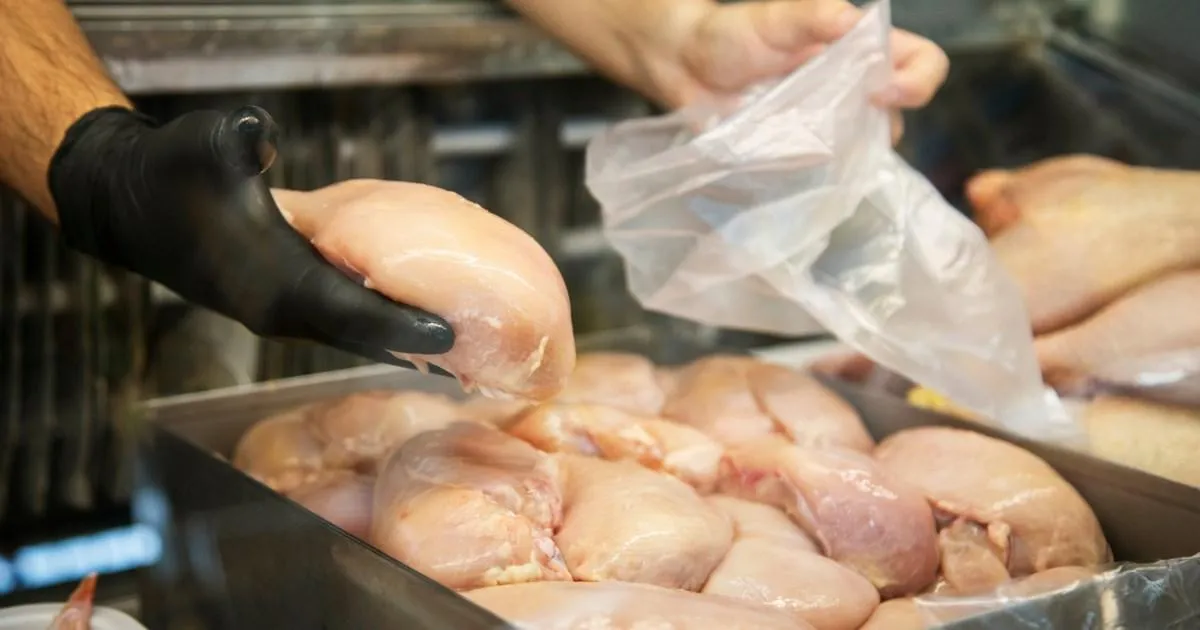
For months, a serious Salmonella outbreak has been quietly spreading across Europe, and now health experts believe contaminated chicken may be adding to the problem. At the centre of this outbreak is the United Kingdom, where 207 confirmed cases have been recorded, but the story is not just about numbers. Behind those figures are real people — families worried about a loved one in hospital, parents keeping a nervous eye on children with fever, and farmers watching their livelihoods being questioned. One person in the UK has already died, and at least 34 people across seven countries have been hospitalised. The original source of the outbreak, first detected in August last year, was thought to be contaminated eggs. That suspicion remains the strongest lead, according to the UK Health Security Agency. But European researchers have also pointed to chicken meat as a possible vehicle, after a Dutch investigation based on patient interviews suggested poultry may be involved. This is not just a clinical concern; it is a reminder that the food on our plates, no matter how ordinary it seems, can carry invisible dangers.
The outbreak has been felt hardest in the UK and the Netherlands, but it has not been limited to those two nations. Austria, Belgium, Denmark, France, Germany, and the Netherlands have all reported cases, making this a multi-country public health challenge that demands cooperation across borders. In the UK, the cases are heavily concentrated in London, which has seen 47 infections, and in Yorkshire and the Humber, where 38 people have fallen ill. The vast majority of British patients live in England, though six cases have been reported in Scotland, one in Wales, and one in Northern Ireland. The UK Health Security Agency has been clear that, at this stage, there is no identified link to UK-produced eggs or poultry. Instead, British investigators believe imported eggs are the most likely culprit. The European Centre for Disease Prevention and Control has echoed that view, saying that investigations point to imported eggs as the suspected source of infection. At the same time, the Dutch investigation has raised chicken meat as another possible route, even if the evidence is based on a small number of patient interviews. What this means is that the picture is still incomplete. Public health officials are working with partial information, trying to trace an invisible enemy that may have entered the food chain at multiple points.
For anyone who has ever experienced food poisoning, the symptoms of Salmonella infection are all too familiar: diarrhoea, stomach cramps, vomiting, and fever. But the particular strain behind this outbreak, known as Salmonella Enteritidis ST11, is not just an ordinary upset stomach. Salmonella is a type of bacteria that spreads through contaminated food, including eggs, poultry, meat, unpasteurised dairy products, and fresh produce. When consumed, it can cause an infection called salmonellosis, which can sometimes be fatal. For most healthy people, the illness is miserable but survivable, often passing after a few days of discomfort. However, for vulnerable individuals — young children, older adults, and people with weakened immune systems — the consequences can be far more severe. The infection can move beyond the digestive tract and enter the bloodstream, leading to serious conditions such as blood stream infection and sepsis. This is why an outbreak like this cannot be dismissed as a minor issue. Every time a child develops a fever after lunch, or an elderly parent is admitted to hospital with unexplained vomiting, the possibility of Salmonella becomes a genuine and terrifying concern. The strain in this current outbreak is the most common type in England, which means it is not an exotic rarity but a familiar and persistent threat that can resurface whenever food safety measures fail.
According to the latest assessment from the European Centre for Disease Prevention and Control, this multi-country outbreak is still ongoing, and the situation may get worse before it gets better. Case numbers have been increasing since May 2026, particularly in the Netherlands and the United Kingdom, which suggests that the source of contamination has not yet been fully contained. The ECDC has stated that epidemiological investigations are ongoing and indicate both eggs and chicken products as potential sources of infection. More cases are expected until proper control measures are implemented at the source. That final sentence is important because it highlights the urgency of finding where the contamination is coming from. Without knowing exactly which farms, packing stations, or slaughterhouses are involved, public health officials are essentially trying to stop a leak while the pipe is still hidden behind a wall. The message for consumers is not necessarily to panic, but to be mindful. Safe handling of eggs and chicken, thorough cooking, and good hygiene in the kitchen remain essential tools for protecting oneself and one’s family. Yet individual action can only do so much. The real solution lies in identifying the contaminated products, withdrawing them from shelves, and tightening the regulations that allow imported food to enter the market.
That concern has been taken up strongly by the National Farmers’ Union, which has called on the government to ensure that adequate checks are being carried out on all food coming into the country. Will Raw, chair of the NFU Poultry Board, described the news that this serious outbreak was being linked to eggs from abroad as hugely concerning. He pointed out that British egg producers have spent decades building a world-leading reputation, adhering to the highest standards and abiding by rigorous testing. The thought that imported food, produced to standards that would be illegal in the UK, is still being allowed onto the market is deeply frustrating for farmers who have invested so much in safety and quality. Raw’s words reflect a broader anger that is felt not just by producers but by consumers who trust that the food they buy is safe. Why, they ask, should lower standards elsewhere be accepted at the British border? This is not a question of trade restrictions for their own sake; it is about protecting public health and maintaining confidence in a food system that people depend on every day. The call for stronger border checks is not protectionism but a plea for fairness and basic safety.
At its core, this outbreak is a reminder of how interconnected the food system has become. An egg laid in one country can end up on a breakfast table in another within days. A single contaminated batch of chicken can trigger illnesses across continents. The statistics shared by health agencies — 207 cases here, 34 hospitalisations there — can easily feel abstract. But every one of those numbers represents a person who may have spent days in pain, a family who made a frantic trip to the emergency room, or a household that lost a loved one. The human cost of this outbreak cannot be measured in percentages. It is also a reminder of the immense responsibility that falls on governments, importers, and food producers to act before more people get sick. The UK Health Security Agency says there is currently no identified link to British-produced eggs or poultry, and that is reassuring for domestic farmers. But the fact that contaminated imported food is suspected means that standards abroad must be taken as seriously as standards at home. As the ECDC warns, more cases are expected until proper control measures are implemented. The hope is that investigators will soon trace the outbreak to its exact source, and that the countries involved will act swiftly and decisively. Until then, the best advice remains simple: cook food thoroughly, wash hands often, and stay alert to the symptoms of Salmonella. This outbreak may have started in the shadows of the food chain, but it has forced a very public conversation about safety, trust, and the true value of the food we so often take for granted.