

Paragraph 1: The Weight of a Gilded Past
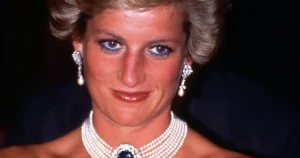
On a crisp, somber September morning, the machinery of the British monarchy grinds forward with its characteristic, almost defiant, precision. Yet beneath the polished veneer of official diaries and carefully orchestrated public appearances, a seismic tremor has rippled through the royal household, dragging its members back to a harrowing moment frozen in time—the tragic death of Princess Diana in 1997. The catalyst for this unease is a new memoir penned by Diana’s brother, Charles Spencer, the 9th Earl Spencer, whose serialized excerpts in the Daily Mail have reignited a decades-old wound with startling ferocity. The claim is not merely a historical footnote but a visceral, painful accusation: that in the immediate, chaotic aftermath of Diana’s fatal car crash in Paris, the then-Prince Charles, in a moment of raw fury, told the grieving Earl over the telephone, “Rest assured, we’ll forget her soon enough.” This single, bitter sentence, allegedly hissed down the line, cuts to the heart of a family still haunted by its most public tragedy. It paints a portrait of a man—now King Charles III—consumed by a “stream of anger” and, according to Spencer, a “pent-up contempt” for his former wife, a woman whose global canonization in death stood in stark contrast to the fractured, deeply personal resentments that had defined their marriage and its acrimonious dissolution. The timing is particularly brutal, arriving as the royal family attempts to project an image of stability and modern relevance, forcing them to confront a past that refuses to stay buried, even as they are forced to carry out their duties with smiles fixed and spines straight.
Paragraph 2: The Explosive Claim and the Fractured Grief
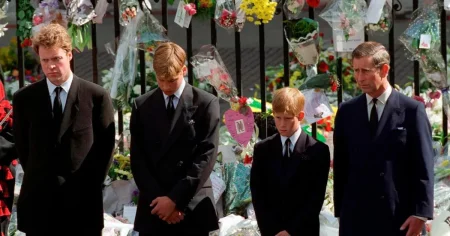
To understand the depth of this bombshell, one must revisit the fraught, agonizing days following Diana’s death. The world was in a state of unprecedented, almost hysterical mourning, a phenomenon that baffled and, according to Spencer’s account, infuriated the Prince of Wales. The core conflict that triggered the alleged phone call was deeply human and terribly painful: the funeral procession. Earl Spencer, fiercely protective of his sister’s legacy and her two young sons—William, just fifteen, and Harry, only twelve—had insisted that the boys should not be forced to walk behind their mother’s coffin, a public spectacle that would expose their raw grief to the world’s cameras. He felt it was an inhumane imposition on two children. However, courtiers and senior aides to Queen Elizabeth II informed him that the young princes were expected to walk. When Spencer objected, stating, “That’s not going to happen,” the call from Charles came swiftly. In his memoir, Swan Song: Diana, My Sister, Spencer recounts how Charles attempted to justify the decision by referencing his own experience of walking in the funeral procession of his great-uncle, Lord Mountbatten, eighteen years earlier, when he was a young man. But the Earl’s account suggests this reasoning was merely a prelude to a darker eruption. Spencer describes a man losing control, unleashing a torrent of anger before delivering the chilling, contemptuous promise: “We’ll forget her soon enough.” The human tragedy here is staggering. It is a story of a man whose ego and bitterness were, in that moment, seemingly incapable of recognizing the seismic global grief, nor the fragile emotional state of his own children. Spencer’s revelation, whether an exact quote or a man’s deeply held interpretation of a traumatizing moment, reveals the raw, unvarnished dysfunction that lay beneath the crown. It transforms the historical narrative of a unified royal mourning into a story of internal warfare, where a dead woman’s memory became a battlefield, and her brother became the guardian of a legacy that the institution seemed eager to erase.
Paragraph 3: The Palace’s Defensive Shield of Grief
In the face of these inflammatory accusations, Buckingham Palace was swift to respond, but its carefully crafted statement spoke volumes in its strategic ambiguity. Rather than offering a flat denial, a senior spokesperson issued a statement that sought to reframe the entire narrative through the lens of human fallibility and the distorting power of trauma. “While we do not comment on books as a matter of principle,” the statement read, “His Majesty is mindful that the pain of fraternal grief can cloud reason, affect judgment and colour memory in ways others do not recognize, even many years after such a loss.” This response is a masterclass in psychological deflection. It implicitly acknowledges that something devastating occurred, but attributes Spencer’s account not to historical truth, but to the “pain of fraternal grief” that can “cloud reason” and “colour memory.” It subtly suggests that Earl Spencer, still grieving his sister twenty-seven years later, may have misremembered or distorted the events. The phrase “fraternal grief” is poignant, humanizing the accuser while simultaneously absolving the King. It implies that both men were broken by the same tragedy, and that the memory of that dark period is unreliable, filtered through the lens of personal loss and anger. For Charles, the statement serves as a shield, allowing him to remain above the fray, a monarch who acknowledges the suffering of others without admitting fault. It also highlights the cruel paradox of royal life: the King must publicly manage a family feud that would devastate any ordinary household, all while maintaining the dignity of the Crown. The response seeks to elevate the debate from a “he said/he said” tabloid spat to a philosophical reflection on the nature of memory and grief, a move that attempts to protect the institution from the stain of a man appearing callous in the face of his ex-wife’s death.
Paragraph 4: The King’s Futuristic Consolation
While the ghosts of 1997 swirl around him, King Charles III is forced to don the mantle of a forward-thinking monarch. On this particular Thursday, his diary is filled with a strikingly modern engagement: a summit at the stunning Dumfries House in Scotland, where he is scheduled to address the leaders of some of the world’s most influential artificial intelligence companies—Nvidia, Anthropic, and OpenAI. It is a jarring juxtaposition of the deeply personal and the radically technological. Here is a man accused of wanting to forget his past, standing before the architects of our future, speaking about the ethical deployment of AI. He is expected to emphasize that this powerful new technology must be placed in the “service of humanity, community and the natural world,” a noble sentiment that feels almost ironic given the human failings swirling around his own history. The summit presents an opportunity for Charles to demonstrate relevance, to steer the global conversation towards responsible innovation, and to project an image of a thoughtful, engaged leader concerned with the existential challenges of the 21st century—from climate change to algorithmic bias. Yet, one cannot help but wonder if the weight of the day’s accusations bears down on him as he speaks. The ability to compartmentalize is a necessary survival skill for a monarch, and Charles exemplifies this, seamlessly transitioning from a private man haunted by a bitter divorce and a global tragedy to a public figure speaking on the cutting edge of technology. The stark contrast highlights the strange duality of his existence: a lifetime of personal turmoil perpetually overshadowed by the relentless demands of public duty. As he listens to tech billionaires discuss the potential for artificial intelligence to outpace human intelligence, he is simultaneously managing a narrative that threatens to undermine his personal legacy, proving that even the most advanced algorithms cannot solve the messy, immutable complexities of human emotion.
Paragraph 5: The Waleses’ Duty and the Sussexes’ Storm
The royal schedule on this fraught day reveals the generational divide in how the family copes with scandal. Prince William and Kate Middleton, the Prince and Princess of Wales, offer a picture of serene continuity as they embark on their first official visit to the Isle of Bute in Scotland. Holding the Scottish titles of Duke and Duchess of Rothesay, they will visit the town of the same name, engaging in the soft diplomacy of community visits, school openings, and handshakes. Their presence is a reminder of the monarchy’s enduring stability, a projection of a modern, unified couple navigating their roles with grace. William, who was just a boy when his mother died, now stands as the heir apparent, seemingly embodying the emotional intelligence and compassion that his mother was known for, a stark counterpoint to the coldness his uncle describes in his father. However, the undercurrent of family turmoil is far more acute for Prince Harry and Meghan Markle. Having recently relocated back to the UK from the United States, the Duke and Duchess of Sussex are facing a turbulent re-entry. This Thursday marks Harry’s first public appearance since their return, yet the personal chaos surrounding them is palpable. The Royal Household has clarified that they will be treated as private citizens, a move reportedly “surprising” to the couple, further alienating them from the institution they left. Their children, Archie and Lilibet, were reportedly pulled from school just days into the autumn term due to alleged security issues, and the family’s privacy has been breached again, with Meghan’s mobile number allegedly leaked from a parents’ WhatsApp group. The contrast between William’s steady, predictable path and Harry’s turbulent, security-obsessed existence is a tragic reflection of their divergent upbringings and responses to their mother’s death. While William channels his grief into duty, Harry appears locked in a perpetual struggle against the forces he blames for her demise, making his public appearances feel less like royal engagements and more like acts of defiance in a gilded war zone.
Paragraph 6: The Unforgettable Legacy and the Unhealed Wound
Amidst the chaos of the King’s AI summit, the Waleses’ trip to Bute, and the Sussexes’ private struggles, the rest of the royal family continues its relentless, stoic march. The Duchess of Edinburgh is visiting Zambia, engaging in international development work, while the Princess Royal attends the opening of a History Centre at a German Military Cemetery in Staffordshire. These mundane yet vital duties serve as the bedrock of the monarchy, a reminder that the institution is far larger than the personal dramas of its central figures. Yet, as the day unfolds, the central question posed by Earl Spencer’s memoir hangs in the air: can the royal family ever truly forget Diana? The answer, as evidenced by the sheer volume of activity and the defensiveness of the Palace, is a resounding no. Princess Diana was not a fleeting celebrity; she was a transformative figure whose empathy, style, and vulnerability reshaped the public’s perception of the monarchy. Her sons, her former husband, and even the institution itself are forever shaped by her presence and her tragic absence. Charles’s alleged desire to “forget her soon enough” seems almost absurdly naive in retrospect, as her memory is woven into the very fabric of the royal identity—from William and Kate’s humanitarian work to Harry’s relentless advocacy. The King, now in his seventies, may wish to move forward, but the past is a stubborn companion. Earl Spencer’s memoir, whether accurate in every detail or colored by his own profound loss, serves as a powerful testament that grief does not have a statute of limitations. It forces the royal family, and the public, to re-examine the cruel dynamics that led to that fateful night in Paris. In the end, the promise to forget has failed spectacularly. Diana is remembered not only in the hearts of millions but in the very DNA of the British monarchy, a ghost that walks beside the King at every summit, every state opening, and every quiet, private moment of reflection. The drama of this day is not just about a controversial quote; it is a poignant, human reminder that some wounds never fully heal, and that even the most powerful families are not immune to the corrosive power of bitterness, grief, and the unrelenting memory of a love lost.