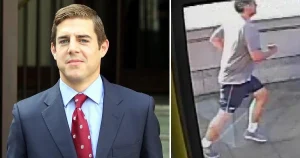

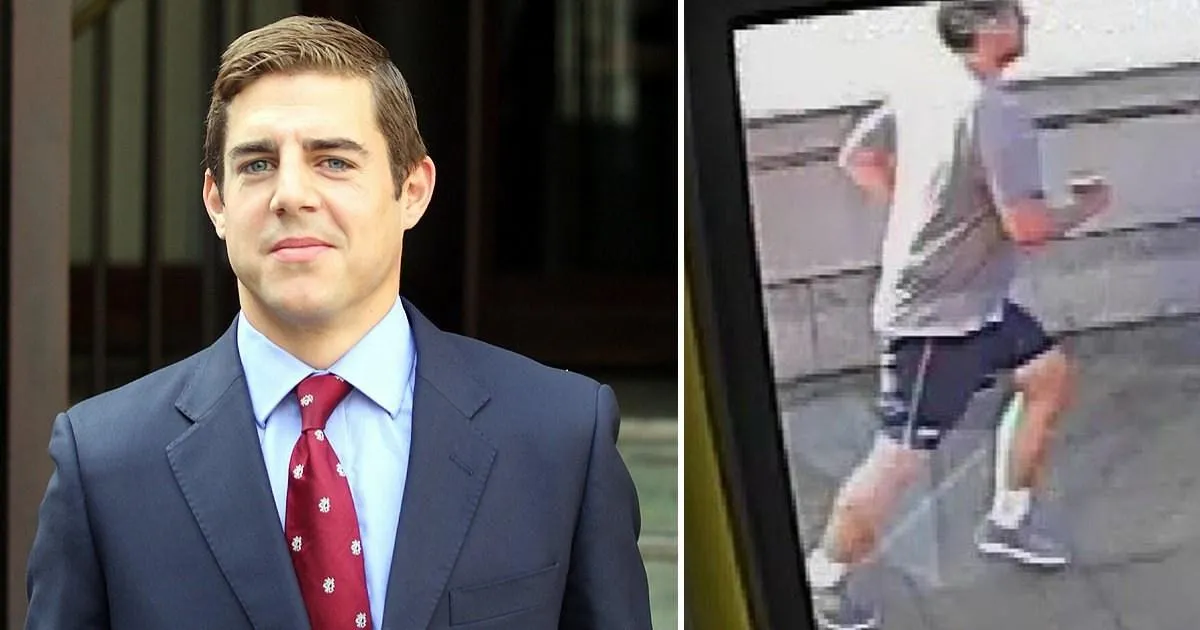
The strange, sad story of the Putney Pusher has reached an ending that no one could have predicted. For years, a single piece of CCTV footage showed a woman being shoved from a London bridge into the path of a bus, and the country held its breath. Then, in a sudden and sombre twist, the millionaire suspect connected to that long-cold case was found dead in his west London home, leaving the mystery not solved but dissolved into grief. On Tuesday 15 September, officers from the Metropolitan Police and the London Ambulance Service were called to an address in Chiswick, Hounslow, after reports of an unresponsive man inside a property. The man, later identified as Nicholas Brandram, 44, was pronounced dead at the scene. His next of kin were informed. In the carefully measured language of officialdom, the police said his death was being treated as unexpected but was not believed to be suspicious. Brandram’s name had not been made public while the investigation was still unfolding; it was only after his death that the restriction fell away. That small detail made the moment even more unsettling: the person at the centre of one of the capital’s most notorious unsolved crimes was now being spoken about in the past tense, and the courtroom that might have provided answers would never convene. A life that had once moved through royal corridors and war zones had come to a quiet, bewildering end.
The ordeal began in 2017 on Putney Bridge, when a 33-year-old woman was pushed violently into the road, directly in the path of an oncoming bus. It was the kind of attack that seemed to come from nowhere, a random act of cruelty on an ordinary day. The moment was caught on CCTV, and the footage went on to shock the nation. It showed the woman falling toward the wheels, helpless, before the bus driver swerved at the last possible second. That driver, Oliver Salbris, would later be called a hero, and his own account of the incident remains haunting. “If I hadn’t swerved, I would have smashed her head,” he told the Sunday Times in 2017. “It was reflex. The consequences would have been terrible for her – and for me.” In the event, the woman survived, but the emotional injury was severe enough to echo through every appeal and every fresh lead. The footage turned the unknown attacker into a ghostly figure known only as the Putney Pusher. Police launched a manhunt that would stretch on for months and then years. Officers studied the film, appealed for witnesses, mapped the bridge, and tried to understand what motive could possibly have led someone to do such a thing. Yet for a long time, the ghost refused to take on a name. Every woman who had ever walked along that bridge, every commuter who had glanced over the railings, suddenly saw herself in that grainy image, reminded how fragile ordinary safety can be. The bus driver’s reflex had saved a life, but the fear of that moment never entirely disappeared.
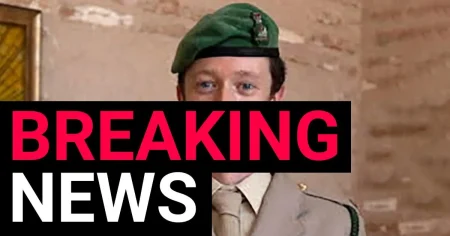
Then, in a development that felt like a breakthrough, a man was arrested in connection with the case. It was June, more than three years after the attack. The suspect was Nicholas Brandram, and his biography made the story almost impossible to process. He was a grandson of Princess Katherine of Greece and Denmark, which meant his family tree brushed against European royalty. He had served as a captain in the British Army, with tours in Iraq, Bosnia and Afghanistan. He had worked at HSBC’s private banking branch, and after his arrest he was suspended from that job. Reports described him as a millionaire, a man who had moved through the upper strata of British life, a person with the kind of quiet privilege that normally protects people from public shame. But the arrest in June was not simply a follow-up to the 2017 attack. At his home in west London, he was arrested on suspicion of attempted grievous bodily harm and released on bail. The following day, he was re-arrested after the discovery of Class A and Class B drugs. From that point on, the story became a strange mix of tabloid drama and private tragedy. A decorated former soldier, a royal relation, a banker accused of one of London’s most disturbing random attacks — and now the police were saying he had also been caught up in a drugs investigation. The public was left to wonder which part of the portrait was real: the man who had served his country, the wealthy financier, the suspect, or someone else entirely.
The original investigation had already had its share of false starts and dead ends. At one stage, police had made two arrests and questioned at least fifty suspects, but no charge was ever brought. The case was eventually closed, despite the best efforts of detectives and the desperation of a public that wanted someone held accountable. The footage continued to haunt the internet, and the term Putney Pusher became shorthand for inexplicable urban menace. But cold cases have a way of resurfacing, and in June, detectives came knocking on Brandram’s door. The arrest suggested that the long search had finally narrowed onto a single person. Yet before the search could conclude with a charge, or a trial, or a verdict, the process stalled. Last week, detectives said that Brandram had been released under investigation while “outstanding enquiries were being completed.” It is a phrase that speaks to the slow, careful work of building a case, but it also leaves everyone in limbo — the suspect, the victim, the witnesses, and the officers who had invested so much. The woman at the centre of it, who had been pushed toward death on a summer day, learned that the man accused of that act would not be coming before a court. Instead of a trial, there would be a death notice. Instead of cross-examination, there would be an obituary. No court ever declared him guilty; in the eyes of the law, he remained a suspect who died before his case could be resolved.
The final chapter came in the same quiet style as so many police statements, with an exact time and a neutral tone. At 19:12 on Tuesday 15 September, officers and ambulance crews attended an address in Chiswick, Hounslow, after a man was found unresponsive inside a property. The 44-year-old was pronounced dead at the scene. His next of kin were informed. His death is being treated as unexpected, but is not believed to be suspicious. What those words do not say is how hollow it all feels. Brandram leaves behind a family that must now grieve in public, a set of unanswered questions that will never be put to him, and a legacy shaped by two very different narratives: one of service and privilege, the other of a chilling accusation. Because he died while he was still under investigation and before he was formally charged, no court will ever determine whether he was the Putney Pusher. The name that could not be printed while he was alive can now be used; but in a strange way, the release of his name has only added to the sadness. It is no longer a suspect we are discussing, but a person, with a family, a past, and a heart that stopped in a house in Chiswick. For the family, grief will now be mixed with the impossible weight of public scrutiny, because the man they loved will be remembered forever through a cruel nickname.
In the end, perhaps the most human response is to look beyond the label. The bus driver, Oliver Salbris, acted on pure instinct and saved a life; he has to live with the memory of that split second. The woman who was pushed survived, but survival does not mean the fear is gone. The officers who spent years chasing a ghost now have a file marked by an unexpected death. And the man at the centre, Nicholas Brandram, has left a portrait of contradictions: a soldier who served in Iraq, Bosnia and Afghanistan; a private banker who moved among the wealthy; a royal grandson; a suspect in a case that frightened a city; a man found unresponsive at home. His death may not be suspicious, but it is unquestionably sad. The Putney Pusher will no longer be searched for, and the cold case, at least in the eyes of the law, has been silenced. But for the victim, for the bus driver, for the detectives who never quite let go, and for the family now left to mourn a man they knew in a different light, the ending is not justice, and it is not closure. It is simply the last frame of a story that leaves behind no answers, only a strange and sobering reminder that even the most privileged lives can end in the shadow of an unresolved tragedy. Somewhere, on a bridge in London, the river still flows beneath the spot where a woman nearly died. The mystery may have ended, but the question “why?” will always remain.