


The Hidden Chapel: How Schoolchildren Unearthed a Thousand Years of Viking History
Under a gray Scottish sky, on a wind-scoured scrap of land where only feral cattle now roam, a group of young students discovered something extraordinary: the ancient stones of a Viking church that had been sleeping beneath the earth for a thousand years. The island of Swona, poking out of the churning North Atlantic about seven miles from John O’Groats, seemed an unlikely place for such a momentous find. Storm-battered, virtually uninhabited, and accessible only to the seabirds that wheel above its cliffs, this tiny speck of the Orkney archipelago holds few secrets on the surface. But beneath the tangled grass and bracken, a hidden history was waiting—patient, patient across ten centuries—for someone to notice. And when the students from the prestigious Gordonstoun School, the same hallowed halls once walked by King Charles himself, brushed away the soil and weeds on that windswept slope, they found themselves touching a past so distant yet so tangible that it had to be measured not in years, but in generations upon generations of human memory, faith, and mystery. The building they uncovered—and the step that would have led to a Viking altar—represents a stunning connection to a time when the Norse world stretched its long, sea-faring fingers across the northern reaches of Britain, leaving behind a heritage that scholars are only beginning to fully understand.
The expedition that led to this remarkable discovery was no ordinary school field trip. Led by Dan McLean, a housemaster at Gordonstoun with a passion for the past that he clearly has passed on to his students, the group of ten pupils spent six rigorous days on Swona, working hand in hand with experts from the Orkney Research Centre for Archaeology, or ORCA. These were no cushy accommodations for the young explorers; instead of warm beds and hot meals, the students made their home in a crumbling, abandoned crofting cottage that had stood empty for the better part of a century. There was no electricity to ward off the long northern twilight; instead, they used paraffin lamps. There was no running water; they pumped fresh, cold water from an ancient well and lugged it back to their rugged headquarters. Conditions, by all accounts, were basic at best. Yet the discomfort of it all seemed to be part of the romance and the gravity of the experience—a way to step out of the modern world and into the rhythms of an older way of life. It echoed, in a sense, what the monks and early Viking settlers would have known: the hardness of the landscape, the ever-present wind, the sea as both a road and a wall, and the importance of community and shared purpose in the face of an unforgiving natural world. In that setting, the past didn’t feel so far away anymore.
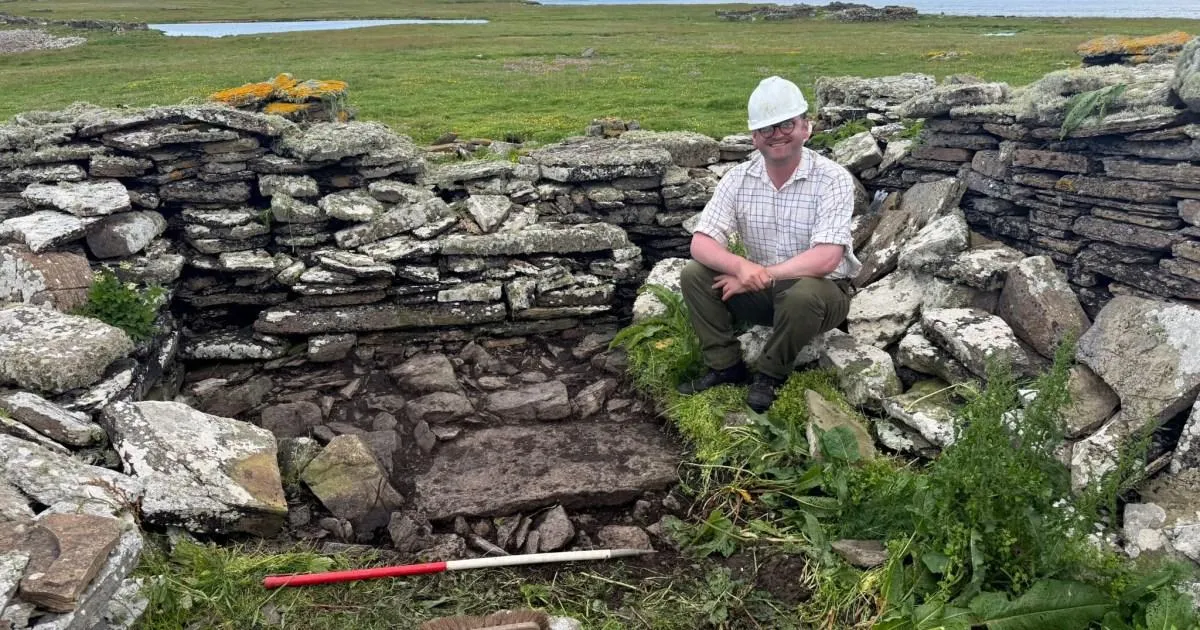
The trail that led the team to the ancient church was as much about local legend and educated guesswork as it was about high-tech archaeology—at least, at the start. The team had heard the whispers, the old stories passed down through the thin ranks of local tradition. A map reference, faded and yellowed with age, had referred to a ruin known as “Twinly Kirk,” suggesting a sacred space dedicated to the Holy Trinity, or at least acknowledging a place where the natural and the divine had once met. For years, antiquarians and historians had wondered about this site. Could the old ruins be the site of a forgotten chapel? And if so, who built it? The hunch was that the answer might lie with the Vikings, those indomitable seafarers who settled the North Atlantic and left their mark on Orkney’s DNA, both genetic and cultural. But a hunch is not proof, and proof is what archaeology is all about. When the team started digging a test pit and clearing away the years of overgrowth and windblown soil, they made a spine-tingling discovery. Just beneath the surface, barely hidden by the detritus of a millennium, lay a step—a single, weathered step—that was almost certainly the platform for the church’s altar, the most sacred point of any Christian building. It was a moment of pure magic, a whisper from the deep past that broke through the veil of time and left the students breathless. “We did this,” they must have felt. “We found it.”
Though the earthen walls were crumbled and the structure of the new-found building lay in wait for further examination, the experts quickly recognized the style. Similar churches from the 10th and 11th centuries dot the far landscape of the Norse world, and the building on Swona shared their distinctive construction methods, their sacred orientation, and their simple, unadorned severity. This was a church built by a Christian Viking community, a fascinating hybrid of two worlds that collided and merged in this remote corner of Europe. For decades, the popular imagination has painted the Norsemen as barbaric, pillaging raiders obsessed with blood and plunder, with horned helmets that never actually existed, but the truth, as always, is far more complex and fascinating. These were a people with a sophisticated culture and deep belief systems, navigating the vast, dangerous seas for trade, exploration, and settlement. By the 10th century, Christianity was making significant inroads into the Norse homelands. The discovery of this church isn’t just about a building; it’s about the everyday faith of people who lived and died on the knife’s edge of two eras. They gathered in this very spot, their voices raised in prayer against the fierce Atlantic storms that battered their island home, their communal identity bound together by shared belief. This church was a beacon not only to a new god but also to a changing world—a world of shifting alliances, political power plays, and the slow, inexorable march of change that swept across the Viking world. To have such a tangible link to these people is both a treasure and a profound reminder of our shared mortality.
For the students involved, this was more than just a lesson in history; it was an experience that will likely resonate with them for the rest of their lives. Archie Maclean, all of 17 summers old, captured the sentiment perfectly, admitting that being able to “discover history in real time was incredible.” His words, though simple, express a profound truth. History is often presented to us as a series of facts and dates to be memorized, a dusty and distant recollection of things long past. But this was entirely different. For Archie, for his fellow student Iona Fell, and for the rest of the young crew, history became a living, breathing reality. They felt the dirt in their hands, smelled the old earth, and understood, in a way that no textbook could ever convey, the sheer weight of the past pressing up against the present. Iona echoed this feeling, focusing on a more human element that many can relate to: the strong sense of community and the speed with which the group united as a team. The shared adventure—the hardships of the living arrangements, the physical labor of digging, and the thrill of the discovery—forged an unbreakable bond between them. They learned lessons in teamwork, resilience, and the sheer joy of meeting a challenge head-on, lessons that are printed on no syllabus but will remain with them long after the school gates are far behind. They were not passive recipients of a legend; they were active participants in its unearthing, and that makes all the difference. Paul Clark, ORCA’s senior project manager, was certainly impressed by their passion and application, noting their “great enthusiasm” – a glowing endorsement from a professional who has likely seen everything.
But this is not the end of the story; it is, in many ways, just the beginning. The young archaeologists have returned to the mainland, but the work is far from over. The most crucial piece of evidence lies not in the shape of the stones but hidden in the microscopic remnants of carbon that they carefully collected from the site. These samples have been sent for radiocarbon dating, a scientific process that will, with a high degree of accuracy, unlock the age of the chapel. While experts are confident in their Viking hypothesis, this dating will provide the definitive proof they need, pinning a rough decade onto the site and anchoring the church within a specific historical context. It will tell them which era of Viking history the builders were living in, potentially linking them to kings and chieftains known from the old Norse sagas, or perhaps revealing a missing piece of a long-running historical puzzle. It is the closest thing archaeology has to a time machine. As Paul Clark further explained, the next step is to examine the samples and see what they can tell about the activity undertaken at the chapel. Was it a single building or part of a larger monastic complex? Was it a local gathering place for rites and rituals, or a hermitage for one or two holy people? The possibilities are as vast as the northern sea itself. One thing is certain: this quiet, remote island, known primarily for its feral cattle, has opened a window into a vanished world. What was once lost, over a thousand years, has been found. And all it took was the curiosity of youth, the perseverance of dedicated teachers, and the ancient land that continues to hold its mysteries close, yielding them up to those willing to look, to dig, and to wait a little longer for the stories to come to light.