
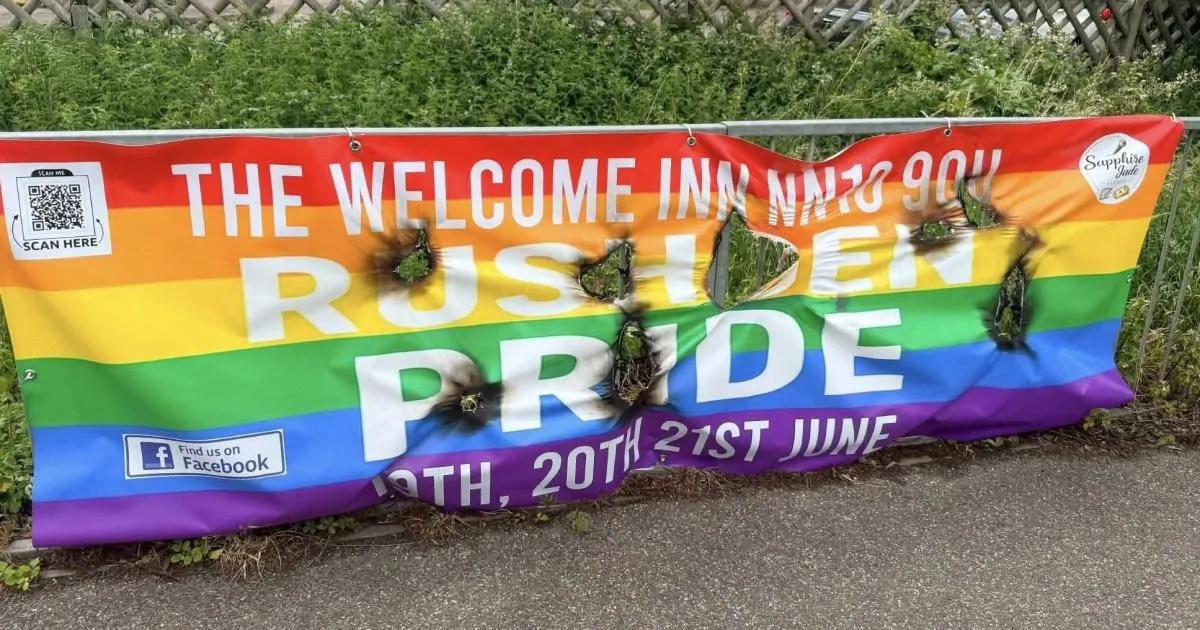
The recent act of vandalism against a Pride banner in Rushden, Northamptonshire, has left the local LGBTQ+ community reeling, shedding a stark light on the persistent issue of homophobia in our neighborhoods. Just days after the banner was proudly displayed on local railings to promote a forthcoming three-day Pride event, it was discovered defaced with large, scorched holes. This wasn’t merely a random act of property damage; for those who worked tirelessly to organize the celebration, it felt like a direct, malicious attack on their identity and their effort to foster community inclusivity. The sentiment among residents is one of profound devastation, as a symbol of unity and visibility was silenced by hate.
This incident is particularly distressing because of the history behind it; it isn’t the first time the organizers have faced such hostility. Previously, another banner vanished without a trace shortly after being placed near a local supermarket, and now this second, paid-for display has been deliberately set alight. Sapphire Matthewman, one of the primary organizers, admitted she was “distraught” upon finding the damage. Tragically, the hate didn’t come out of nowhere—since announcing the event, the team has been forced to endure a barrage of online threats, with many commenters explicitly calling for the banner to be burned. It is heartbreaking to hear Sapphire admit she cannot even speak about the incident without tears, noting that this attack doesn’t just hurt the organizers, but also the charities they have partnered with, such as Serve and Stonewall, whose missions are now being targeted by proxy.
The impact of this hate crime extends well beyond the physical cost of a £160 banner. Traya Buns, a local drag queen who selflessly funded the banner out of their own pocket, poignantly described the event as a “kick in the guts.” For Traya, the arson is a confirmation of a growing, suffocating climate of homophobia in the area. They have personally endured a rise in public harassment, ranging from being slurred in the street to enduring the exhausting labor of scrubbing their social media presence to escape online abuse. This is the reality for many in the community—a constant vigilance that ruins the joy of simply existing in public spaces. The burning of the banner isn’t just an isolated case of vandalism; it is a symptom of a larger, systemic environment where queer individuals are being forced to look over their shoulders.
Despite the fear and the trauma, the organizers of Rushden Pride have shown remarkable resilience, insisting that the event will continue as planned. However, the atmosphere will be understandably different. To ensure the safety of their attendees, they have been forced to implement significant security upgrades, working closely with local law enforcement to coordinate patrols and stricter entry protocols. It is a sad indictment of the times that a celebration of love and diversity now requires the kind of security detail usually reserved for high-risk situations. This shift is a painful reminder that while progress is being made, the struggle for a space that is truly safe and welcoming for everyone is far from over.
Local authorities have stepped in to address the situation, with the police investigating the arson as a potential hate crime, along with the previous theft of their earlier signage. The Neighbourhood Policing Team is actively engaging with the organizers to provide reassurance and protection for the upcoming event. While these statements of support from the police are necessary, they serve as a stark reminder of the gravity of the incident. The authorities are essentially tasked with investigating a campaign of harassment that has spanned weeks, signaling that this is not just a police matter, but a moral alarm bell for the entire community of Rushden.
Ultimately, the story of the burnt Rushden banner is a call to action for empathy and solidarity. It forces us to confront the fact that prejudice still flourishes in our own backyards, hiding behind the screens of social media and manifesting in the dark of night. As the community gathers for the Pride event, they do so not only in celebration but in defiance of those who wished to burn away their visibility. By standing together—and by demanding that our public spaces remain inclusive and safe—we can push back against the darkness. Every act of hate is a reminder of how much work remains to be done, underscoring the urgent need for a society where one’s existence is never met with fire and hostility, but with respect and belonging.