



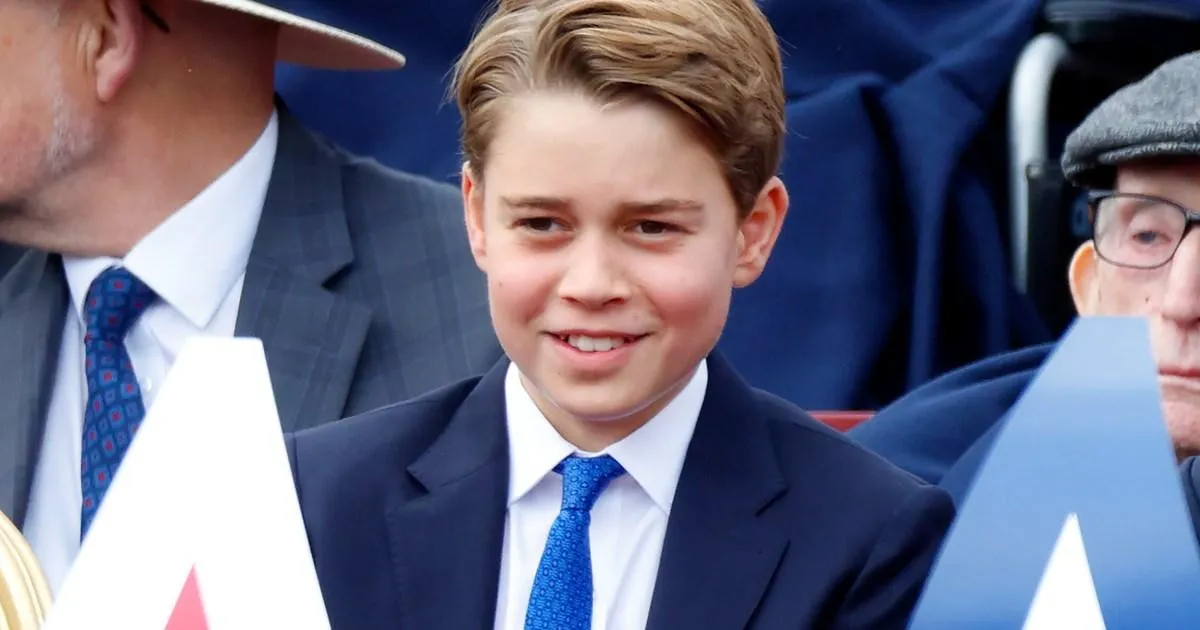
As Prince George prepares to cross the threshold from his primary education into the chapters of secondary school, public curiosity regarding his next step has reached a fever pitch. For months, royal watchers have been speculating about where the young heir will continue his studies, questioning whether he will follow in the time-honored footsteps of his father, Prince William, and uncle, Prince Harry, at the historic Eton College, or if he will pioneer a new direction for the royal family. Given the weight of the monarchy’s future, every prospective school visit conducted by the Prince and Princess of Wales has been scrutinized by the media, turning a routine parental task into a significant cultural talking point.
The deliberation process has been extensive, marked by visits to various prestigious institutions across the country. The couple spent time exploring options like Marlborough College in Wiltshire—where Kate herself was a student—and reportedly toured St Edward’s School in Oxford and Oundle in Northamptonshire. While Oundle initially sparked rumors, it was later clarified that those inquiries were likely intended for Princess Charlotte’s future rather than George’s. These outings highlighted the complexity of the Prince and Princess of Wales’ decision-making process, as they balanced tradition, academic excellence, and the logistical challenges of raising a future monarch in the modern era.
Ultimately, all signs point to the conclusion that Eton College is the chosen destination. Reports have suggested that an official announcement is imminent regarding George’s start this coming September, following his successful completion of the school’s rigorous common entrance examinations. While the selection of such a storied institution satisfies traditionalists, the decision was clearly rooted in practical considerations as much as royal legacy. Eton’s status as an all-boys school became a key deciding factor; by choosing a single-sex environment, the royal family hopes to offer George a slightly higher degree of privacy in an age where social media can instantly disseminate images and distort the most innocent of teenage moments.
Beyond the academic and social considerations, the decision was heavily influenced by the pragmatic need for security and family unity. Eton’s close proximity to Adelaide Cottage—the family’s residence in Windsor—cannot be overstated. Being a mere 12-minute drive away allows George to remain firmly rooted in his home life, balancing the demands of his unique heritage with the comfort of familiar surroundings. As the Wales family looks toward their future, including the eventual ascension of Prince William to the throne, maintaining a “forever home” base in Windsor provides a necessary stabilizing force for George, Charlotte, and Louis as they navigate the pressures of their public roles.
However, the finalization of the decision has not been without its emotional internal friction. Reports have surfaced suggesting that the Princess of Wales was initially “heartbroken” at the prospect of sending her son to such a traditional and, at times, polarizing institution. Sources close to the family have previously indicated that Kate had long hoped to steer her children toward a more modern, inclusive, and relaxed educational environment, viewing Eton’s “stuffy” reputation as potentially conflicting with the couple’s shared goal of modernizing the monarchy. Relinquishing that desire in favor of tradition has been a deeply personal concession, reflecting the often-invisible tension between royal duty and private parenting.
Ultimately, the choice of Eton represents a compromise between the old guard of the institution and the forward-thinking values of William and Kate. While the Princess of Wales may have preferred a departure from the rigid upper-crust heritage that has defined the education of past heirs, the practicalities of safety, tradition, and logistical stability have won out. As Prince George prepares to don the iconic tailcoat of an Etonian, he does so at a pivotal moment. The decision underscores a reality that the Princess of Wales has seemingly come to accept: while they are committed to shaping a more relatable and contemporary monarchy, there are certain threads of institutional history that remain unavoidable, even for those destined to lead.