



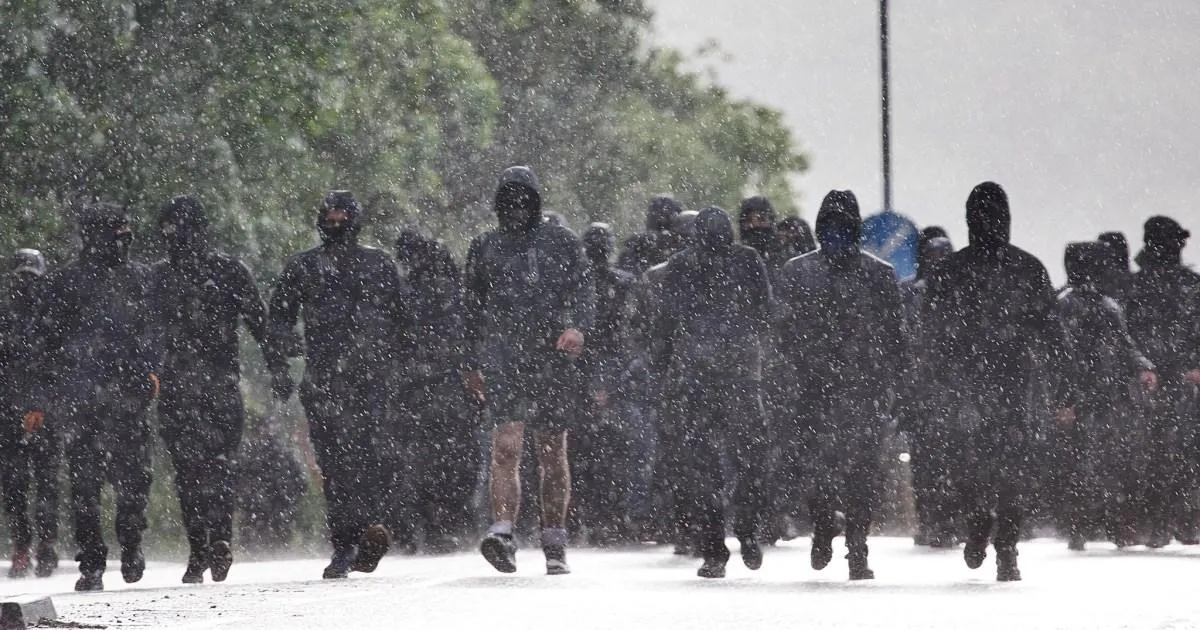
The recent unrest in Belfast serves as a stark, distressing reminder of how volatile the intersection between real-world violence and digital incitement has become. Following the brutal knife attack on Stephen Ogilvie, allegedly at the hands of a 30-year-old Sudanese national, the city was plunged into chaos. What might have remained a contained local tragedy—a violent assault leaving a man in serious condition—quickly metastasized into a series of destructive riots. As cars were set ablaze and families were forced to flee their smoldering homes, it became clear that the anger on the streets was being fueled by much more than localized frustration; it was being meticulously stoked by influential figures operating on a global scale.
The role of social media in this escalation has drawn sharp criticism from political leaders, who argue that digital platforms have become catalysts for genuine harm. Elon Musk, the world’s wealthiest individual and the owner of the platform X (formerly Twitter), has come under fire for his active participation in magnifying these tensions. As destruction unfolded on the streets of Belfast, Musk repeatedly shared politically charged content, endorsed right-wing narratives, and actively encouraged public demonstrations. By framing civil unrest as a necessary “fight back,” he provided a megaphone for extremist rhetoric, leaving policymakers and observers to grapple with the reality of an algorithm-driven environment where the most combustible voices gain the most reach.
The coordination behind these protests was not organic; it was orchestrated with chilling efficiency. Far-right activist Tommy Robinson, known for his ability to mobilize crowds, played a central role in directing the anger. On his social media channels, Robinson circulated explicit instructions for the public, including mandates for businesses to close and advice for protesters to ditch their phones to avoid leaving a digital trail for law enforcement. His messaging specifically targeted the presence of foreign-owned businesses and asylum housing, framing ordinary residents and workers as combatants in an ideological war. By casting the riots as a patriotic duty, he effectively turned civil disobedience into a campaign of intimidation.
The human cost of this rhetoric was felt deeply by those forced to witness it firsthand. Reports from the ground paint a harrowing picture: residents watching their family heirlooms turn to ash, and vulnerable individuals being forced to abandon their homes in the middle of the night. In London, a parallel demonstration organized by supporters of Robinson devolved into aggressive confrontation, where women were subjected to horrific verbal abuse. These were not abstract political debates; they were tangible moments of terror that left onlookers and participants alike shaken by the sheer vitriol directed at anyone identified as an “other” by the swelling, angry crowds.
Predictably, the discourse surrounding these events has been heavily polarized, with Labour politicians like Anna Turley openly identifying people like Musk as “bad-faith actors.” The concern is that these figures, often shielded by geography and vast wealth, treat the instability of a city like Belfast as collateral content for their own ideological agendas. By resharing lists of protest locations and amplifying extremist slogans, they ensure that local grievances are never given the space to settle. Instead, they are supercharged, turning local crime into a national—and international—flashpoint, effectively turning real people’s livelihoods into fuel for a digital fire.
Ultimately, the Belfast riots illustrate a dangerous new reality: the total breakdown of the barrier between online misinformation and physical destruction. When tech magnates and established activists use our digital public squares to urge communities to “fight back” against one another, the result is the tragedy we see today: destroyed homes, displaced families, and a profound sense of insecurity. As we look at the wreckage in Belfast and the scattered protests across the UK, the focus must shift toward accountability. We are living in a time where a single repost can ignite a city, and as long as those with the largest platforms choose to prioritize chaos over calm, the consequences will continue to be written in the smoke of burning neighborhoods.