


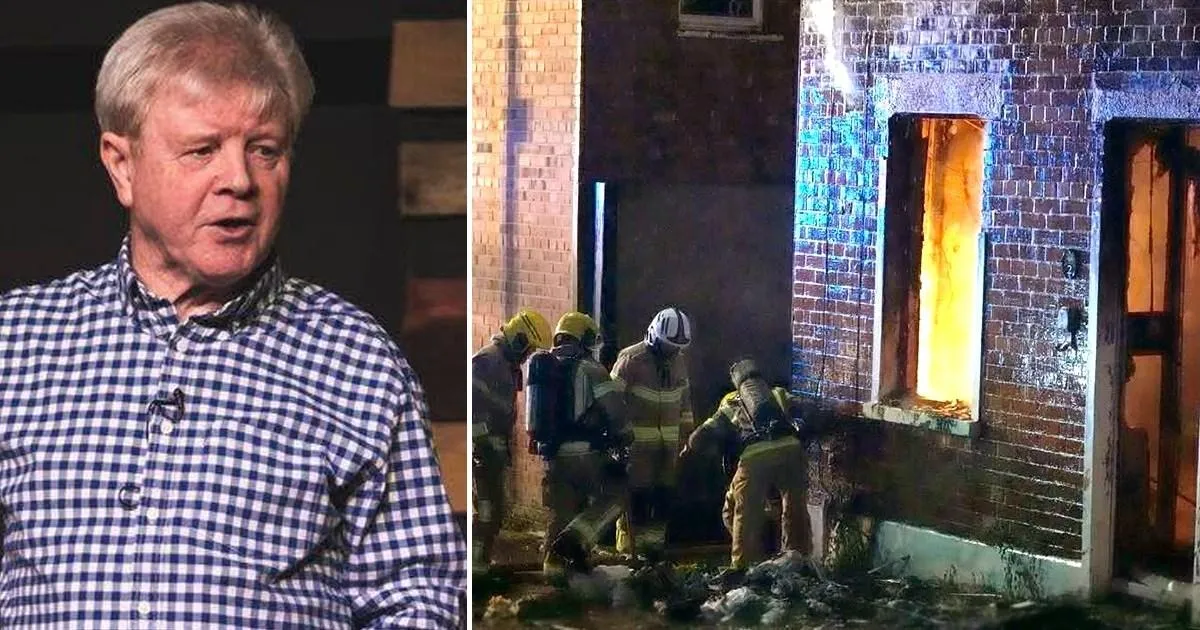
In the heart of Belfast, amidst the chaos and rising smoke of recent civil unrest, an extraordinary act of courage emerged from the most unlikely of places. Jack McKee, a 74-year-old local church leader, found himself in the middle of a harrowing ordeal when he received word that members of his congregation were being targeted by a rampaging mob. On the night in question, the streets were transformed into a war zone; individuals were hurling petrol bombs, setting fire to property, and creating an atmosphere of pure terror. Rather than retreating, Jack and his daughter, Paula, felt a profound moral obligation to intervene when they heard that two African migrant women, both essential care workers, were trapped inside their home as bricks smashed through their windows.
The scene inside the property on Oakley Street was one of utter desperation. The house was being besieged from all sides, with the front windows shattered by debris and a encroaching fire from a neighboring building threatening to engulf the entire structure. When Jack and his daughter finally reached the women, they found them cowering in a corner, paralyzed by a level of fear that rendered them physically unable to stand. Still clad in their professional care worker uniforms, these women were the targets of a brutal, mindless surge of hatred that had swept through their neighborhood. The McKee family’s immediate reaction was one of pure human instinct—a refusal to let innocent people suffer at the hands of a mob.
What followed was a tense, high-stakes extraction that required nerves of steel. With the sounds of rioters screaming, “Where are the migrants?” nearby, Jack and his family realized they could not exit through the front of the house. They were forced to carry the women out through the back, moving with practiced secrecy to avoid drawing the attention of the hostile crowds. There was no hesitation in their movements, only a singular focus on ensuring these women, who had done nothing more than show up for their shift to care for others, were moved to safety. They eventually reached Jack’s car, gently placing one of the women into the backseat as they prepared to spirit them away from the wreckage of their own home.
The aftermath of this rescue paints a sobering picture of how quickly lives can be upended by collective anger. The trauma inflicted upon the two women is profound, as their home now stands damaged, boarded up, and ultimately uninhabitable. These are workers who have dedicated their lives to helping vulnerable people, only to become the very people needing protection themselves. Jack, reflecting on the rescue, expressed a heavy heart not just for the physical destruction caused by the rioters, but for the life-altering psychological toll this experience has taken on the survivors. He notes that while the windows can be boarded up, the sense of security and belonging in their own community has been shattered, perhaps beyond immediate repair.
The broader context of these riots reveals a city struggling to regain its footing in the wake of widespread disorder. These protests, which have seen buses burned and residential streets turned into battlegrounds, were sparked by a specific, violent incident involving a stabbing. While the legal process is now underway—with the suspect being remanded and charged—the emotional fallout continues to ripple through Belfast. The incident at Oakley Street stands as a stark reminder that in the heat of political and social instability, it is often innocent bystanders, integrated residents, and hardworking public servants who pay the highest personal price.
As the city attempts to heal, the story of Jack McKee serves as a powerful testament to the influence of quiet, individual bravery against a backdrop of public malice. It is a story that strips away the noise of the “protest” and focuses instead on the essential human duty to protect one’s neighbor. In a time where social media fuels polarization and fear, the McKee family’s decision to risk their own safety to save two terrified women highlights the triumph of humanity. Their actions offer a sliver of light in a dark week for Belfast, proving that even when the world seems to be falling apart, the instinct to choose love over hate is a choice that can be made by anyone, at any age.