


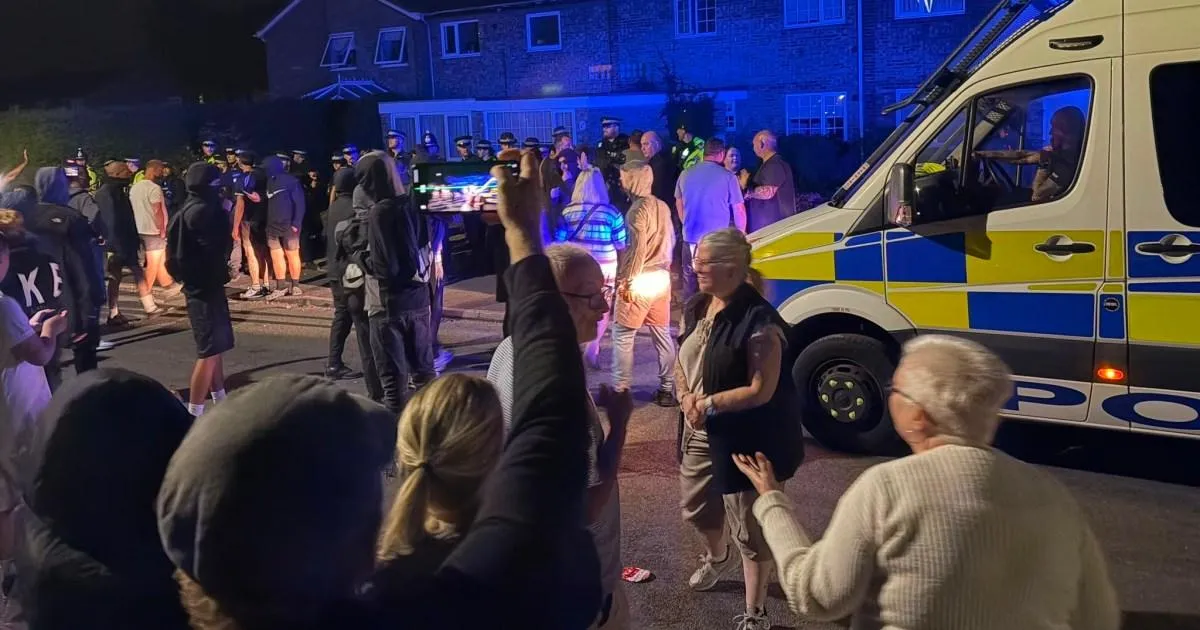
The quiet market town of Thetford, Norfolk, has been shaken to its core over the past few days, as what began as expressions of local frustration spiraled into two nights of chaotic disorder. Residents of the usually tranquil St. John’s Way and Clover Way suddenly found their streets transformed into a flashpoint of tension. What started as gatherings of up to 100 people quickly turned aggressive, with mobs storming residential properties they believed were linked to asylum seekers. The scenes were deeply unsettling; witnesses described windows being smashed, fences being torn down, and, most alarmingly, individuals physically forcing their way into a home, terrorizing a resident and stealing their phone.
The situation placed a heavy burden on local police, who were forced to navigate an increasingly volatile environment. By Thursday, the police presence had significantly intensified, as officers dealt with direct physical assaults. The violence directed toward law enforcement was shocking: a male officer was struck with a rock, another was spat upon, and a female officer suffered a serious injury after being bitten hard enough to break the skin. As the disorder deepened, Norfolk Police were forced to invoke emergency powers, legally authorizing them to order crowds to disperse and mandating that individuals remove face coverings. Those failing to comply faced immediate arrest as authorities scrambled to restore a sense of safety to the neighborhood.
This unrest has ignited a fierce debate about the root causes of the anger and the appropriateness of the response. Richard Tice, deputy leader of Reform UK, argued that the violence is merely a symptom of a much larger, neglected issue. He suggested that local residents are reaching a breaking point, feeling as though their communities are being overwhelmed by migration without any consultation or transparency. According to Tice, these citizens should be allowed to voice their anxieties without being instantly dismissed or labeled as bigots. His perspective highlights a growing divide between national policy decisions and the immediate, lived reality of small-town residents who feel their concerns are being ignored.
However, on the ground, the narrative is far more complex and fragmented. Some locals who were caught in the middle of the chaos offer a different, more nuanced account. One Clover Way resident described the events as a mixture of genuine community worry and the reckless behavior of local youths, noting that while the gathering initially appeared peaceful, it turned sour once police lines tightened. She observed that some of the escalation stemmed from young people throwing stones and eggs, which prompted a swift, heavy-handed police response, including the use of pepper spray. For those living on the estate, the sight of riot vans and drawn batons in such a quiet, family-oriented area has been a jarring and distressing experience.
Local leadership is now struggling to find a path toward reconciliation. Scott Hussey, a Reform UK councillor, maintained that the crowd was largely composed of concerned neighbors who had simply come out to observe the situation, rather than professional agitators. Meanwhile, the town’s MP, Terry Jermy, has condemned the “ugly scenes,” labeling them deeply concerning. Jermy has been proactive in urging the Home Office to stop operating in a veil of “secrecy and confusion,” specifically regarding the potential use of former military sites like RAF Barnham for housing. He suggests that the lack of clear communication from the government is a significant factor in fueling the fear and misunderstanding currently tearing at the social fabric of the town.
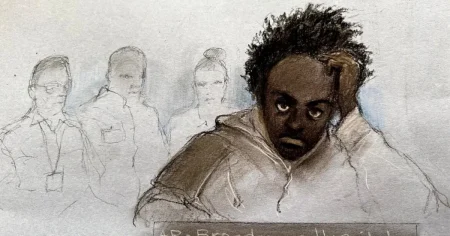
As the dust begins to settle, Thetford is left to pick up the pieces, both physically and socially. While arrests have been made—including one individual charged with possessing a wooden bat—and the immediate violence has subsided, the underlying issues remain unaddressed. The tension between the need for public order and the right to protest, coupled with the immense strain of housing policies on small communities, suggests that the town’s peace remains fragile. For the residents of Thetford, the events of the past few days have been a stark reminder of how quickly a community can be fractured when communication fails and anger is left to fester in the streets.