

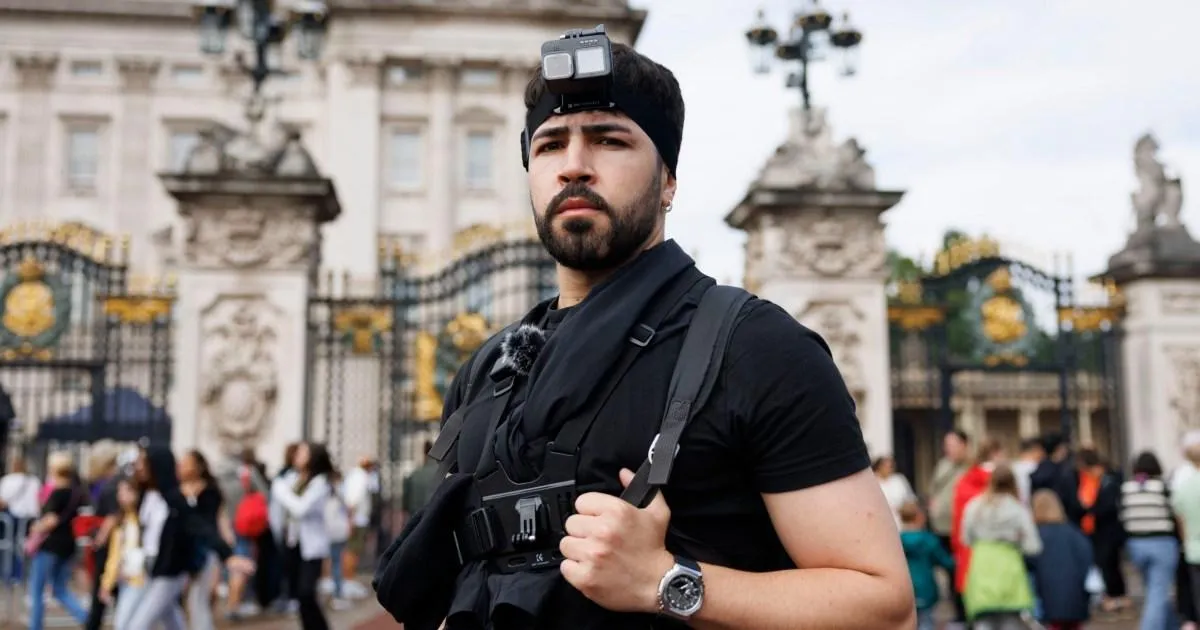
The bustling streets of London have become the stage for an unlikely modern-day hero: Diego Galdino. Once an ordinary delivery driver, Diego has transformed himself into the city’s most viral “pickpocket hunter,” a figure who now commands a massive social media following dedicated to purging the capital of opportunistic thieves. His patrols, often filmed and shared with hundreds of thousands of viewers, have turned him into a symbol of grassroots justice. However, this civilian crusade has placed him in the direct crosshairs of London’s top political official, Mayor Sadiq Khan, who has publicly dismissed the role of vigilantes in the city’s ongoing battle against street crime.
For Diego, the path to becoming a local legend was born out of frustration with the status quo. He claims that in just two years, his presence on the streets has deterred countless thieves who now recognize his signature style and avoid areas where he operates. Diego doesn’t just watch; he actively intervenes, providing the Metropolitan Police with the intelligence and evidence needed to make arrests. With roughly 25 arrests directly linked to his efforts—some of which have resulted in deportations—Diego feels his impact is undeniable. He admits to being “disappointed but not surprised” by the Mayor’s cold shoulder, but remains stoic, arguing that the results on the ground speak louder than any political rhetoric.
Mayor Khan’s stance, however, remains firm. While he acknowledges the hard work of the Metropolitan Police in driving down neighborhood crime—a statistic that boasts a 14% reduction in theft and robbery—he is quick to distance the force’s success from civilian interference. His message to Londoners is a cautious one: he encourages everyone to be an “active bystander,” but draws a sharp line at groups of vigilantes patrolling the city. In the eyes of the Mayor’s office, public safety is a matter for sworn officers utilizing cutting-edge technology and established policing protocols, not for unauthorized individuals operating in the shadows of London’s busiest shopping districts.
The tension between the two sides deepens when the conversation shifts to what happens after an arrest is made. Diego expresses a profound, shared sense of frustration with the judicial process, noting that many of the criminals he helps apprehend are back on the streets within hours. He frequently observes these individuals providing false details to the police, allowing them to evade court hearings and continue their light-fingered trade with little more than a slap on the wrist. It is a revolving door of justice that makes his efforts, and those of the police, feel like a Sisyphean task, turning his triumphs into temporary delays rather than lasting solutions.
Interestingly, despite their ideological differences, both the Mayor and the vigilante seem to be singing from the same hymn sheet regarding the systemic failings of the court system. Mayor Khan has openly admitted to his own frustration, acknowledging the pain of victims who face years of waiting for a trial, only to see perpetrators released prematurely by judicial decisions. When the legal system is backed up and resources are stretched thin, it creates a vacuum that residents like Diego are all too eager to fill. The Mayor concedes that these bureaucratic hurdles are indeed hampering the progress made by the Met, acknowledging that the fight against crime is as much about the efficiency of the courtroom as it is about the boots on the ground.
Ultimately, the debate highlights a shifting landscape in how citizens interact with law enforcement in a major metropolis. While Met Commissioner Sir Mark Rowley credits a strategic, tech-driven approach for the current 14% drop in neighborhood crime, the existence of a viral “pickpocket hunter” suggests that a segment of the public remains disillusioned or eager for a more direct form of accountability. Whether Diego Galdino is a necessary catalyst for change or a risky outlier in the city’s security framework remains a point of contention. What is clear, however, is that as long as victims remain frustrated and criminals continue to slip through the gaps of the legal system, London’s streets will remain a place where the lines between civic duty and vigilantism continue to blur.