


On a crisp December morning in 2024, the busy platforms of Ilford station in east London were filled with the familiar sounds of a normal commute: announcements, footsteps, trains pulling in and out. The station, part of the Elizabeth line network, is a transit point for thousands of people every day. Nothing about the day suggested that routine would turn into tragedy. Ayodele Jamgbadi, 29, of Ilford, had just missed his train to Stratford. What might have been a minor annoyance for most people became something far darker. According to prosecutors at Inner London Crown Court, Jamgbadi began kicking an advertising frame, venting his frustration in a burst of violence. The noise drew Jorge Ortega and two other Transport for London employees from their office on the platform. Ortega, 61, was a customer experience assistant—a man whose job was to help passengers and make their journeys easier. When he saw the agitated man, he and his colleagues went out to check on him. They asked if he was okay. The response was not gratitude but rage. In a split second, Jamgbadi allegedly threw a single punch that caught Ortega near the temple. The older man fell backward, his head striking the concrete platform with a force that caused a severe traumatic brain injury. Colleagues rushed to help, but there was little anyone could do. Two days later, in a hospital bed, Jorge Ortega died. The initial charge of grievous bodily harm was upgraded to murder. All of that horror—and all of that grief—began with a missed train. It is a detail so small and so random that it makes the tragedy feel almost impossible to accept. The fall lasted only seconds, but its consequences will stretch across decades. For an instant, the station became the scene of an emergency: witnesses shouting, people fumbling for phones, the limp body of a man who had been upright and alive moments before. In the chaos, no one could have known that this was not just an accident but an act of violence that would lead to a murder trial.
The courtroom at Inner London Crown Court has had to grapple with something that complicates the straightforward story of a fatal assault. Judge Benedict Kelleher has ruled that Ayodele Jamgbadi is unfit to plead. He is mentally unwell, the judge explained, and not fit to stand trial; he is now in hospital for that reason. Because of this, the proceedings have taken the form of a trial of issue. The jury’s task is not to decide premeditation or criminal intent in the usual sense. Instead, they must determine whether Jamgbadi did the act that caused Jorge Ortega’s death—whether he threw the punch and whether that punch was a significant cause of the tragedy. Prosecutor Patrick Dennis presented the events leading up to the attack with clarity and restraint. Ortega and his colleagues were in an office on the platform when they heard banging. They went outside and saw Jamgbadi kicking an advertising frame. They asked him if he was all right. Dennis said that they effectively tried to calm the passenger down. It is a detail that should not be overlooked. In an era when public-facing workers are often ignored or abused, these employees chose to intervene with concern. Their instinct was not to call for security or to shout at the man, but to ask if he needed help. That instinct cost Ortega his life. Yet it also says something profound about who he was and about the values of people who do invisible public service work every day. The court heard these facts not as abstractions but as the beginning of a human catastrophe. The legal machinery, with its careful language and narrow questions, exists to ensure some measure of justice, but no verdict can restore what was lost. For Ortega’s family, the weeks of waiting and arguing over procedure have been another kind of suffering. Every legal term—“trial of issue,” “unfit to plead”—is a reminder that the world will never be as straightforward again. They must sit in a courtroom and listen to the mechanics of death while holding their grief close. It is a painful process, but it is also a necessary one. Society cannot simply look away.
The most visceral testimony came from Mohammed Alim, Ortega’s colleague and friend, who watched the attack happen no more than an arm’s length away. Alim told the court that the young man seemed “a bit disturbed, a bit angry.” When asked if he had a problem, the passenger replied with a challenge: “Who’s got a problem?” Then, without warning, the ordinary moment turned monstrous. “Within a split second he swung a punch at Jorge’s left-hand side,” Alim said. “The attacker used his right hand. It struck Jorge near the temple area. The impact of the punch was with so much force that I saw something fly out of his mouth.” Ortega collapsed backward, hitting the back of his head on the concrete. He was unconscious before he hit the ground. Alim’s fear did not end there. The attacker appeared to move toward the fallen man, and Alim feared he might strike again. “He went to Jorge,” Alim recalled. Facing the attacker, Alim raised his hands defensively and said, “Take it easy.” Somehow, the man stopped, seemed to think for a moment, turned, and walked away. It was a small act of bravery that may have saved Ortega from further injuries in those final moments. Colleagues and members of the public rushed to carry Ortega into an office. There, he drifted in and out of consciousness. The severity of the brain injury was not yet visible, but the fall had already sealed his fate. Jamgbadi was arrested later. His words to British Transport Police were reported by the prosecution: “I punched him in the face, I literally punched him in the face. What are you going to do about it, are you going to nick me?” The confession—if it can be called that—was raw, unvarnished, and almost impossible to hear without feeling the weight of what had been lost. In one ugly sentence, he acknowledged the act that ended a man’s life.
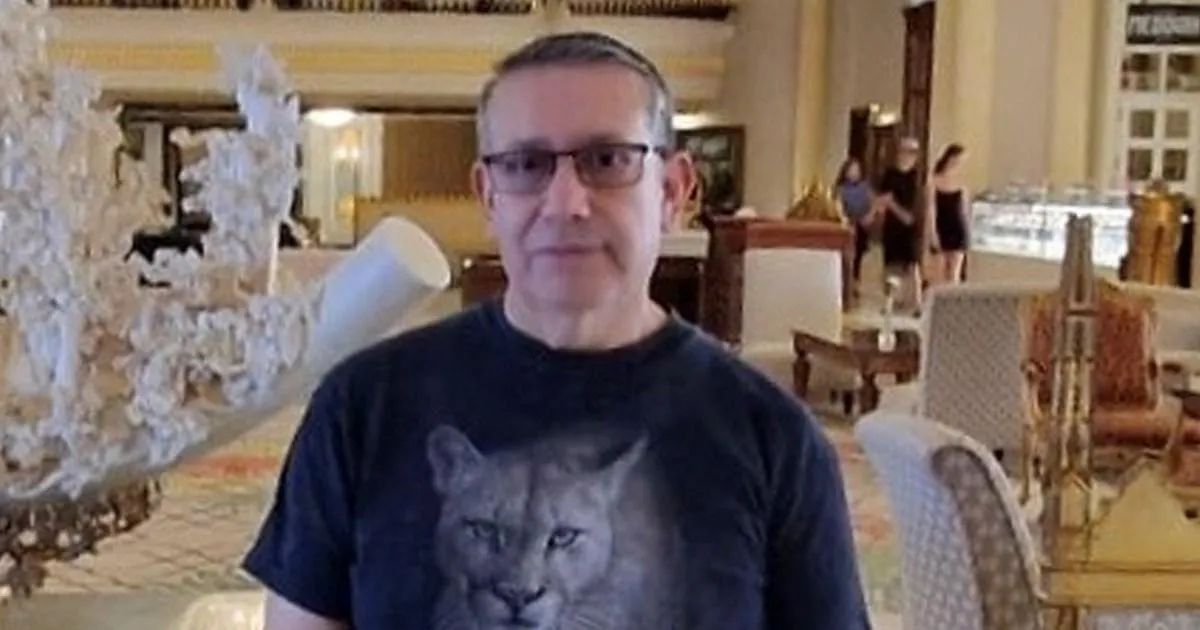
For the family of Jorge Ortega, the trial is not about legal doctrines or psychiatric assessments. It is about a father and grandfather who will never come home. In a deeply moving statement, his son painted a portrait of a man who embodied kindness. “Our dad was the most loving person, the kindest soul you could have the pleasure of meeting,” he said. “Everyone who has met our dad or who has ever worked with him over the years will tell you this. He had a brilliant mind, enjoyed cooking, loved drawing, and was highly skilled in art. He was an amazing family man and would always put other people first. He loved his grandchildren, and in turn, they adored our dad.” These are not the words of a family trying to redefine a flawed man. They are a testimony to a life lived with generosity. Ortega worked as a customer experience assistant for MTREL, the company that runs the Elizabeth line, and he was a proud member of the RMT union. Mick Lynch, the union’s general secretary, offered his condolences. Then Prime Minister Sir Keir Starmer described the incident as “absolutely tragic.” The tributes matter because they place Ortega in a community. He was the person at the station who greeted passengers, solved problems, made the impersonal network feel human. His colleagues will feel his absence every time they walk onto the platform. His family will feel it in the empty chair at the table, in the recipes he no longer cooks, in the drawings he will never make. The profound ordinariness of his goodness is precisely what makes his death so hard to bear. There were no warning signs, no chance to say goodbye, no reason for a man like Jorge to be the victim of a stranger’s rage.
Beyond the facts of the case, there is a larger, more uncomfortable conversation to be had. Judge Kelleher’s words—that Jamgbadi is mentally unwell and in hospital—remind us that violence often intersects with untreated psychiatric distress. None of this excuses the harm done. No explanation can bring back a beloved father or erase the terror of that platform. But it does force us to confront a system that so often fails people before they reach the point of crisis. Jamgbadi, a resident of Ilford, was a young man who apparently unraveled in a public space. The workers who approached him did not know that he was in the grip of something beyond ordinary anger. They saw a person who needed help, and they tried to give it. Could better mental health services have prevented this? Could earlier intervention have defused the rage? These are unanswerable questions, but they linger around the edges of the courtroom like unresolved chords. The tragedy of Jorge Ortega’s death is thus multiple. There is the loss itself, with its immense weight on his family. There is the corrosive fear that violence can strike anywhere, at any time. There is the painful knowledge that both victim and perpetrator were part of a society that too often overlooks the vulnerable. For Ortega, the final moments of his working life were spent trying to calm a stranger. That is who he was. The rest of us are left to ask what we owe to people in distress—and what we owe to the quiet, kind workers who too often pay the price for our collective failures. Public spaces should not be places of mortal danger, and the people who staff them should never have to sacrifice their lives simply because someone else is suffering. The visible moment of rage is only the final stage of a long and silent collapse, and that uncertainty is part of the tragedy.
The trial of issue continues. The jurors will decide whether Ayodele Jamgbadi did the act that caused Jorge Ortega’s death. It is a narrow legal question, but the answer will shape what happens next for both families and for the public’s understanding of this case. Jamgbadi remains charged with murder, and the court will eventually have to resolve how a man in his condition should be treated under the law. Whatever the outcome, the memory of Jorge Ortega will not be defined by the violence that ended his life. It will be defined by the way he lived: with love, with art, with an unassuming devotion to family and to the passengers who passed through his station. His son’s tribute is the last word that matters: he put other people first. In a society that rushes past one another, he was a man who paused to ask, “Are you okay?” That question, on the morning of his death, was an act of compassion. It was met with a blow. But even now, in the grief and anger and court proceedings, his kindness remains. The Elizabeth Line still runs through Ilford. Commuters still miss trains, still feel frustrated, still have bad days. But one of the people who used to make those days a little brighter is no longer there. His name was Jorge Ortega. He was 61 years old. He loved to cook, he loved to draw, and he was the kindest soul you could have the pleasure of meeting. His life ended because someone missed a train. His legacy, however, is the love he gave and the example he left behind. In that sense, he is not truly gone. He lives on in every moment his grandchildren remember him, in every act of kindness his family continues to perform, and in the quiet dignity of a man who went to work and tried to help.