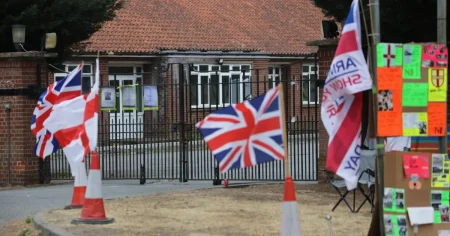



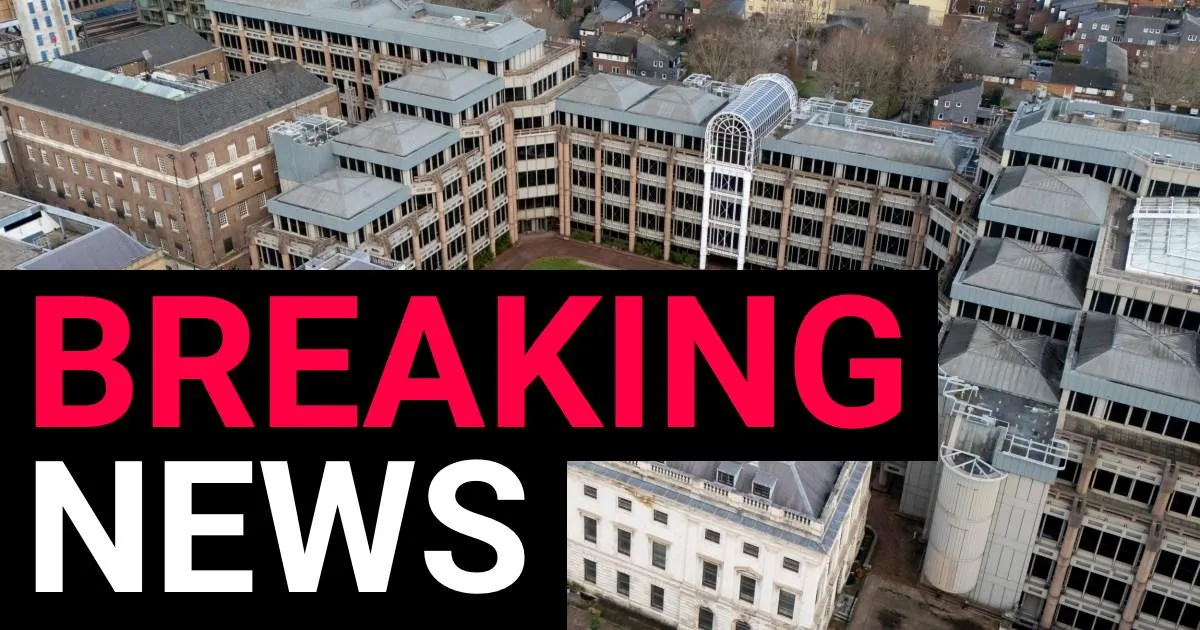
The proposal to establish a massive Chinese “super embassy” at the historic Old Royal Mint Court in London has become a lightning rod for community anxiety and legal contention. Local residents, organized under the Royal Mint Court Residents’ Association (RMCRA), have spent months fighting the project, driven by a deep-seated fear that the site’s proximity to the Tower of London would invite significant security threats. For those living in the immediate vicinity, the prospect of such a high-profile diplomatic facility feels less like a boost to international relations and more like an unwanted invitation for danger, raising urgent questions about how local infrastructure can safely accommodate such an imposing government presence.
At the heart of the residents’ opposition is a complex mix of safety concerns and human rights worries. Beyond the tangible fear of becoming a target for terrorism or a hotspot for chaotic protests, the locals have expressed profound moral objections regarding the potential use of the embassy. Many residents worry that the facility could serve as a base for enforcing restrictive Chinese laws on British soil, potentially creating an environment where dissidents are monitored or harassed within the heart of London. This wasn’t merely a NIMBY (Not In My Backyard) argument over architecture; it was a fundamental challenge to the perceived influence of a foreign power in their neighborhood.
Seeking to halt the development, the RMCRA launched a formal legal challenge against both the Ministry of Housing, Communities and Local Government and the London Borough of Tower Hamlets. Their case hinged on the idea that the planning process had been flawed, specifically alleging that the public had been kept in the dark regarding critical security information. The residents argued that without full transparency—particularly concerning a “blast assessment” that analyzed the potential impact of a terrorist attack—their ability to voice informed objections had been essentially curtailed, leaving them vulnerable to a decision made behind closed doors.
However, the legal battle hit a significant roadblock in the High Court earlier today when Mrs. Justice Lieven handed down her ruling. The judge was clear in her assessment: the government had acted within its rights, and there was “no doubt” that officials had properly considered the national and diplomatic implications of the Chinese government’s application. In her view, the planning process held up under scrutiny, effectively dismissing the narrative that the local community had been intentionally sidelined or misled during the vetting of the project.
Addressing the specific controversy surrounding the “blast assessment,” the judge dismissed the notion that the residents were unfairly treated by the nondisclosure of these sensitive documents. While the RMCRA argued that the technical nature of the security documents necessitated their input, Justice Lieven maintained that the government’s failure to share the report did not amount to a breach of fairness. According to the court, the decision-making process remained robust, and the state’s duty to ensure security did not necessitate the public dissemination of sensitive disaster-mitigation details during the planning phase.
As the court ruling clears the path for the embassy to move forward, the situation serves as a poignant reminder of the friction between global diplomacy and local urban life. For the residents, the High Court’s decision is likely a disheartening blow, leaving them to grapple with the reality that a facility they vehemently opposed will soon become a permanent fixture of their skyline. While the legal pathway may now be open, the tension between the sanctuary of a London neighborhood and the geopolitical requirements of a “super embassy” remains palpable, highlighting a growing discomfort with how foreign government projects are integrated into the fabric of British communities.