
The brilliant, cloudless blue of the sky overhead offered no hint of the terror that awaited. The air at Pleasurewood Hills theme park in Lowestoft, Suffolk, hummed with the usual cacophony of a Bank Holiday Monday: the distant shrieks of joy, the tinny jingle of arcade machines, and the mechanical clatter of rides twisting their steel limbs against the horizon. For 31-year-old Stacey Stewart, it was supposed to be a perfect day out with her daughters, Poppy, eight, and Marnie, seven. The sun was warm, the ice cream was melting, and the promise of a day filled with laughter and adrenaline lay ahead. Eager to experience the thrill of the park’s signature attraction, the Wipeout, the family queued up, unaware that within moments their carefree outing would turn into a suspended nightmare that would test their nerves for over two agonizing hours, leaving them permanently shaken by the very machines designed to bring them joy.
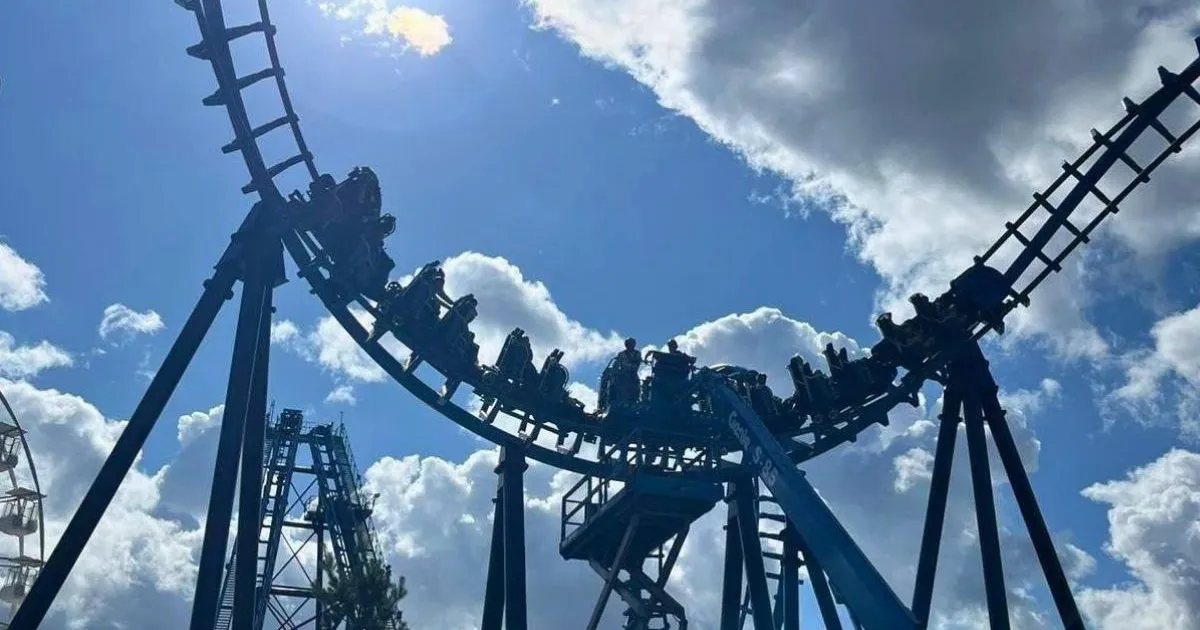
The Wipeout, a Vekoma Boomerang rollercoaster—the only one of its kind in the country—is a beast of engineering designed to twist, turn, and invert its passengers with brutal efficiency. It shoots riders down a steep lift hill before propelling them through a cobra roll, a vertical loop, and then backward through the same torturous track. As the carriages moments into the ride, carrying nearly 30 riders including Stacey and her two daughters, the familiar rush of wind and gravity was abruptly severed by a lurching, grinding halt. The cars locked to a standstill, suspended a terrifying 50 feet above the hard ground, tilted but mercifully not upside down. The initial seconds were filled with confusion, the kind that registers as a glitch before the brain processes it as a threat. But as seconds stretched into minutes, and the realization dawned that this was no momentary pause but a complete mechanical failure, the air of excitement turned thick with dread. For Stacey, peering down at the concrete below, the world seemed to shrink to the cold, unforgiving surface waiting beneath her, a reminder of the sheer precariousness of their predicament. Her partner, Joseph Bowman, stood helplessly far below, clutching their 10-month-old daughter Raya and three-year-old Isla, his face a mask of strained reassurance that failed to hide the terror in his eyes as he watched his family suspended in the sky.
The initial ten minutes of stillness were, in some ways, the most deceptive. The park staff, realizing the situation, began their standard emergency procedures, but the passengers remained strapped in tightly, their knuckles whitening on the safety restraints. Stacey’s mind raced through the terrifying possibilities: the creaking of the metal frame, the increasing heat of the sun on the plastic seats, and the constant, unnerving sensation of swaying in the wind. It was a bizarre purgatory, a theme park ride transformed into a prison cell. She held her daughters’ hands, trying to soothe them with whispers of calm, while internally fighting her own surge of panic. The children, initially confused, began to whimper, their adventurous spirit replaced by a palpable fear of the drop below. Then, after what felt like an eternity, the staff made a critical decision: they would manually release the hydraulic locking system that held the carriage mid-circuit, hoping that gravity would carry them to a safer section of the track where the emergency brakes could catch them)Skip the ride’s intended motion.
It was a gamble that nearly went horribly wrong. The release mechanism engaged with a loud, mechanical clunk, and the carriage suddenly lurched forward, free-falling for a fraction of a second before the track curved. For Stacey, the sensation was not one of a smooth ride, but a stomach-churning, uncontrolled plummet. The carriages began to move, sliding along the rails, picking up a terrifying momentum as they careened backward through the layout. They whipped around the curve, the G-forces pressing them deep into their seats, and then propelled them up the reverse section of the track. But as they reached the crest, instead of gently coming to a stop, the emergency braking system failed to engage as expected. The carriage shot past the designated braking point, sailing over the top and starting the descent down the other end of the track, hurtling back toward the start of the ride. The passengers screamed, a mingled chorus of terror and hope, as they swung through the full track layout, only coming to a jarring, upright stop halfway up the next loop, once again suspended in mid-air, the relief of being alive quickly replaced by the dread of being stranded anew.
Thirteen-year-old Honey Purkiss was among that trapped contingent, and she later recounted the surreal horror of the malfunction. She described how the initial panic of the sudden stop was exacerbated by the failed release. “They had a manual release bar,” she explained, “and the worker came up to release it, telling us it would be fine.” But as the carriage passed the expected stopping point White-knuckled, the ride operator’s calm demeanor shattered. Honey vividly remembered the look on the worker’s face as the safety system failed to engage—a fleeting but unmistakable flash of pure horror and panic that crossed his features as he realized the machinery was no longer obeying command. That single look told them everything they needed to know: they were not in control, and the ride was improvising. The carriage slammed through the track, only stopping when physics dictated it must, leaving them dangling at a precarious angle. For the next hour and a half, they remained there, suspended in that silent, terrifying limbo, the metallic groans of the stressed machinery echoing around them. The initial thrill of the ride had been completely replaced by a gnawing, primal fear, their bodies aching from the stress of being held rigidly upright in the restraints for so long.
Meanwhile, on the ground, the situation was escalating into a full-scale emergency. Parents, including Stacey’s partner Joseph, were in a state of frantic alarm, watching their loved ones dangling like helpless puppets against the sky. Joseph had his hands full with the babies, but his eyes were glued upward, willing his family to be safe. The park’s own ride operators were quickly overwhelmed, prompting a call to Suffolk Fire and Rescue Service. The fire crews arrived with a detachment of professionalism and heavy machinery, including a substantial aerial ladder and a scissor lift. The operation was slow and meticulous. Rescuers had to bring in specialized equipment to reach the elevated carriages, safely strap each rider into a harness or basket, and lower them one by one to the tarmac below. It was this agonizing, methodical process that stretched the ordeal past the two-hour mark alphabetically. As the minutes crawled by, the suspended passengers baked in the afternoon sun, their legs cramping and their minds wandering to darker places aspectofimminent danger. Stacey’s daughters were growing more distressed, and she had to conjure every ounce of maternal strength just to keep them from fully succumbing to panic, singing softly to them and promising that the firemen were coming to save them.
Down on the ground, the scene was one of frantic helplessness. Joseph was pacing, his phone clutched in his hand, his eyes glued to the rescue effort unfolding. He had the impossible task of watching his partner and stepdaughters hanging in the sky while simultaneously tending to a crying baby and a confused toddler who only understood that Mummy was stuck up high. Other parents in the crowd were similarly distraught, some screaming out the names of their children, others silently praying as they stared at the spotlit metal above. The arrival of the fire crews brought a fragile sense of hope, their bright yellow helmets and uniformed movements cutting through the chaos. But even with the professionals on site, the relief was tempered by the sheer distance of the stranded passengers. Firefighters extended the platforms and ladders, inching closer and closer, with the painstakingly slow movements of a rescue operation that cannot afford a single mistake. The chatter of the crowd below faded to a tense hush as spectators watched the brave crew in action, a silent tribute to the severity of the situation unfolding in what was meant to be a haven of carefree fun.
Finally, at 4:05 pm—almost two and a half hours after the ride had first shuddered to a halt—the last passenger was brought down. The official confirmation came at 4:05 pm; all 27 passengers were freed and brought safely to the ground. No one was physically injured, a testament to the skill of the rescue teams and the structural integrity of the ride. Stacey’s feet hit the solid ground with a wave of sheer, overwhelming relief that made her knees buckle. The air, which had felt so thin and dangerous above, now tasted sweet and thick with the reassuring scent of grass and cotton candy. She was enveloped in Joseph’s embrace, and the moment her feet touched solid ground, her ten-month-old baby, who had been bounced nervously by her father, turned and wailed for her mother. Stacey’s heart shattered and mended in the same breath as she scooped up her youngest, while my older daughters clung to her legs, trembling. But the ordeal wasn’t over; the psychological tremors would reverberate long after their feet touched the pavement UnitClassifiers.
A spokesman for Suffolk Fire and Rescue soon confirmed the successful conclusion of the rescue, stating that all 27 passengers were brought down safely at 4:05 PM, nearly three hours after the ride first jammed at approximately 1:30 PM. “The carriages, which came to a stop on the track, were not upside down,” a spokesman clarified earlier, reassuring the public that the situation, while frightening, was not causing immediate physical harm. They used advanced aerial platforms to reach the stranded riders, and remarkably, given the extreme shock and physical strain of being suspended for so long, no one was physically injured. The psychological toll, however, was profound. Stacey described the entire experience as “horrendous” and “really scary.” For her, the worst part wasn’t just the initial stop, but the terrifying lurch backward when the brake failed skewing. “They had to manually release the ride, allowing us to shoot backwards,” she recounted, the memory still vivid in her mind. “The girls are now shook up and so am I. Looking down at the concrete was the worst part, knowing there was nothing between us and it but a faulty mechanism and the hope that the next brake would catch.”
When her feet finally touched solid ground, the wave of relief was so powerful it nearly buckled her knees. The emotional release was immediate and overwhelming. Her youngest daughter, little Raya, broke free from Joseph’s grip and ran towards her mother with a desperate speed, her tiny arms outstretched, a sight that shattered Stacey’s composure and sent tears streaming down her face as she dropped to her knees to embrace her child. The physical liberation from the carriages was followed by a more complex emotional one, a delayed processing of the danger they had been in. While the fire service had performed heroically, bringing all 27 passengers down safely with no physical injuries, the psychological impact was undeniable. The park, a place designed for thrills, had momentarily become a scene of dread. Later, in a statement on social media, one passenger expressed profound gratitude, acknowledging that while the experience was terrifying, the park staff and especially the firefighters had done a phenomenal job in safely lowering everyone to the ground, emphasizing the meticulous and reassuring nature of the rescue. But for Stacey, the memory was far more visceral. As she finally descended the metal ladder and her feet touched solid ground, the relief was overwhelming, but the shock had already set in deep.
The physical rescue was completed just after 4:05 PM, with all 27 passengers brought safely to the ground, miraculously without a single physical injury. They were greeted by cheering crowds, tearful reunions, and the grateful hugs of loved ones. Stacey immediately ran to her partner, scooping up their youngest daughters, while Poppy and Marnie stumbled into their father’s arms, their faces blotchy from crying. The relief was tangible, a collective exhale of breath that swept through the park. In the immediate aftermath, a spokesperson for Suffolk Fire and Rescue Service confirmed the successful rescue, noting that “no one was injured” and that the operation had utilized an aerial ladder and scissor lift. A statement from the park praised the emergency services and attempted to reassure the public about the safety protocols. One passenger, in a moment of surprising grace, took to Facebook to thank both the park staff and the fire crews for their “great job,” acknowledging that while the experience was terrifying, the professionalism of the responders made a traumatic event manageable meanings beneath the surface of the rescue.
Yet, for the families involved, the aftermath of this event will not fade so easily. The physical sensation of being locked 50 feet above the earth, the stomach-drop of the manual release, and the bone-rattling stop of the failed brake will linger long after the adrenaline has gone. As the last passenger finally touched solid ground at 4:05 PM—almost two and a half hours after the ride had ground to a halt—firefighters and park staff were met with a wave of tears, trembling limbs, and overwhelming relief. The medical teams checked the 27 riders over, but remarkably, no one was physically injured. However, the psychological damage is a quieter, more insidious injury. Stacey Stewart described the ordeal as ‘horrendous’ and ‘really scary’, a memory that will now be permanently fused with the squeal of the brakes and the dizzying height. She spoke of the terrifying sight of the concrete below, the feeling of utter helplessness, and the profound gratitude she felt when her feet finally touched solid ground. When she eventually descended, her youngest daughter, ten-month-old Raya, wriggled out of her father’s arms and ran toward her on unsteady legs, a tiny beacon of normalcy amid the chaos, prompting Stacey to scoop her up in a fierce, protective hug. The relief was overwhelming, but the psychological vibration of the incident lingered long after the harnesses were unbuckled.
Hours after the ordeal, the memories of the experience remained raw, though some glimmers of gratitude emerged. A passenger who took to social media offered a balanced perspective, acknowledging the terror of the stall but praising the swift and professional response from both the park staff and the fire crews. They noted, “whilst it was terrifying for me and my children, the park and fire services did a great job.” Their words echoed the strange duality of the day: a mechanical failure that turned a fun ride into a hazard, contrasted with the human response that prevented a tragedy. The fire services, having successfully rescued all 27 passengers using an ingenious combination of an aerial ladder and a scissor lift, confirmed that no one was physically injured. The ride remained closed for the rest of the day, a silent, metallic monument to the near-miss. For the families involved, the physical release was only the first step toward returning to normalcy inches. As the sun finally began to dip over the theme park, casting long shadows across the now-silent Wipeout, the families were reunited on solid ground. But for Stacey Stewart believe, the day had carved a profound scar. The screams of joy from the crowd now sounded like pleas for help. The mechanical click of a rollercoaster ascending its first hill, once a signal of thrilling anticipation, would forever trigger a spike of cortisol and a racing heart. The experience, she said, was “horrendous,” and while they escaped with their bodies unharmed, the psychological imprint of hanging fifty feet in the air, of watching a manual override nearly send them careening backward, and of staring down at the unforgiving concrete for over two hours, would be a permanent resident in their minds. The bank holiday trip that began with the sweet scent of cotton candy and the innocent laughter of children ended with hugs, tears, and a deep, sobering respect for the fragile mechanics that separate a thrilling ride from a terrifying ordeal, a story they will tell for years—not as a memory of fun, but as a hard-won battle against the forces of gravity and machinery.A mum has shared the terrifying ordeal of being trapped 50 feet in the air for over two hours with her young daughters after a rollercoaster malfunctioned on a Bank Holiday Monday. Stacey Stewart, 31, had taken her daughters Poppy, eight, and Marnie, seven, to Pleasurewood Hills in Lowestoft, Suffolk, for what was meant to be a fun day out. Instead, they found themselves stranded on the Wipeout ride, one of the park’s signature attractions, suspended precariously above the ground. Stacey described the experience as ‘horrendous’ and ‘really scary’, a sentiment amplified by the helplessness of watching from below. Her partner, Joseph Bowman, had been standing on the ground with their two youngest daughters, 10-month-old Raya and three-year-old Isla, completely powerless to do anything but stare up at the trapped carriage and pray for a swift and safe resolution.
The mechanical failure left the carriages locked at the top of a massive curve, a dizzying 50 feet (approximately 15 meters) above the concrete paths of the park. For the riders, the initial shock was followed by a prolonged, nerve-wracking wait as engineers and park staff scrambled to understand the problem)Skip the paragraph. The initial panic among passengers was acute, with tears and frantic calls for help ringing out across the park, mixing with the rising anxiety of the families gathered below who could only watch as an ordinary day out transformed into a live rescue operation broadcast against the summer sky. Stacey Stewart described the experience as “horrendous” and “really scary,” her voice still trembling as she recounted the sequence of events. She, along with her daughters, had boarded the ride with excitement, but that enthusiasm quickly curdled into a feeling of profound vulnerability as the machinery ground to a halt, leaving them dangling in the open air with nothing but the safety harness between them and a catastrophic drop. The park had informed them that they were not upside down, a small mercy, but the sheer height and the isolation of the elevated position made the wait unbearable, every creak and groan of the metal structure amplifying their fear.
When the decision was made to manually release the ride, it was a calculated risk to try and move the carriages to a position where they could be more easily rescued harmlessly. However, the relief of feeling the machinery engage again was short-lived, morphing into a fresh wave of terror as the release failed to go to plan. Instead of a gentle glide to safety, the carriage was jolted into motion, hurtling backward along the track with a ferocity that caught everyone off guard. Stacey described it as feeling like the ride was trying to complete its course, slingshotting them through the loops and inversions without the controlled pacing of a normal run. The world became a blur of blue sky, steel beams, and the distant, terrified faces of the onlookers below. The scream that tore from her throat was not one of thrill, but of pure, primal survival instinct. When the carriage finally screeched to a halt, again suspended in the air, but this time at a completely different, alarming angle, a silence of disbelief fell over the passengers as they processed how close they had come to disaster, hanging helplessly while technicians scrambled to figure out a new approach to bring them down.
In the end, the professional rescue operation served as the day’s saving grace. The fire and rescue team meticulously rigged up their aerial ladder platform, a comforting sight against the afternoon sky. They worked efficiently, prioritizing the most vulnerable—the children—first atend. For Poppy and Marnie, being clipped into a harness and pulled from the carriage into the arms of a firefighter was a blur of overwhelming relief. For Stacey, the moment her feet touched the solid ground was a physical sensation of safety she would never take for granted again. She stumbled into Joseph’s embrace, burying her face in his shoulder as the adrenaline finally began to drain from her system. The transition from airborne terror to grounded safety was seismic, and the world seemed to move in slow motion as the remaining passengers were brought down one by one. The park, which had stood frozen for those long two hours, seemed to exhale collectively as the final passenger was lifted to safety and the bright yellow emergency vehicles began to pack up their gearcars neatly, leaving behind a battered but intact group of holidaymakers. There were no serious injuries, a sentiment echoed by the fire service’s official report, but the emotional bruises were deep. The parents on the ground, like Joseph, whose own heart had been in his throat the entire time, found themselves clutching their children a little tighter, overwhelmed by the visceral relief of having their loved ones back on solid ground.
In the aftermath, as the adrenaline subsided and the families drifted apart in a state of scattered shock, a complicated blend of feelings settled over the park. The social media posts from the passengers and their families were a strange mix of criticism and gratitude. While pointing out the terrifying failure of the ride’s mechanicscard and the scathing fear they endured, many spoke glowingly of the rescue teams and the park staff who remained calm and professional under immense pressure. The Wipeout ride was, of course, closed for inspection following the incident, and the journey home for the Stewart family was quiet, punctuated by the nervous laughter of children who were trying to process what had just happened. For Stacey, the memory of that suspended, terrifying hour would not be easily erased. The routine thrill of a theme park had been shattered, replaced by a stark realization of how quickly a fun-filled day could transform into a precarious, life-threatening ordeal. As they drove away from the seaside town, the family was left with a strange cocktail of emotions—profound gratitude for the skilled firefighters who brought them down, lingering anxiety for the ones they love, and a lasting, learned wariness of the promise of a simple, fun-filled ride.
The incident serves as a stark reminder of the potential risks that lurk beneath the veneer of carefree amusement. For the 27 people strapped into that carriage, the Wipeout lived up to its name in the most unforeseen and terrifying way imaginable. The event has, inevitably, become part of their personal history—a story of survival and resilience whispered among friends and family, a constant reminder that the line between a thrill ride and a terrifying ordeal is sometimes razor-thin. The Stewart family, in particular, will carry the memory of that bank holiday Monday with them forever, a scar on their collective psyche that no amount of time or consolation fully heals. Though they may eventually smile about the absurdity of being stranded so high in the air, the sheer terror of watching their loved ones dangle helplessly over concrete is a feeling that will linger in the back of their minds for a long time to come, a quiet, wary shadow cast over every future visit to a theme park. They, like many of the other trapped riders, will forever associate the bright jingle of a fairground with the cold touch of fear, and their next amusement park visit will be preceded by a much longer scrutiny of the safety checks and emergency exits, understanding all too well that the line between thrill and terror can sometimes be thinner than a safety harness strap.
Of all the mundane, cheerful activities a family could choose on a sunny Bank Holiday Monday, a trip to a theme park stands as a beacon of pure, uncomplicated joy. The promise of sugary treats, the cacophony of arcade bells, and the adrenaline rush of towering rides are the quintessential ingredients for making cherished memories. For Stacey Stewart, 31, that was the exact vision she had for her family outing to Pleasurewood Hills in Lowestoft, Suffolk. Accompanied by her partner Joseph Bowman and their four daughters—eight-year-old Poppy, seven-year-old Marnie, and the two youngest, three-year-old Isla and ten-month-old Raya—the day was meant to be filled with laughter and excitement. The air was thick with the delicious scent of popcorn and the excited chatter of other families, a perfect tableau of summer vacation bliss. The group eagerly queued up for the Wipeout, a dizzying thrill ride that promised a whirlwind of loops and inversions, its gleaming rails stretching high into the azure sky. It was a ride designed to induce screams of delight, but within minutes, those joyful shrieks would be transformed into desperate, terrified cries for help.
The Wipeout, a Vekoma Boomerang coaster, is known for its distinctive shuttle design, launching riders backward and forward through a cobra roll and a vertical loop. On this particular day, the roaring machinery ground to a sudden, jarring halt while the carriages were suspended high above the park, roughly 50 feet in the air. The initial lurch of the stop sent a ripple of confusion through the riders, their bodies strapped tightly into the seats as the safety restraints locked in place. The expected next step, the completion of the ride’s cycle and a gentle return to the station, never came. Instead, an unsettling silence descended, broken only by the low hum of the park’s other attractions and the distant, tinny sounds of merry-go-round music. As the seconds stretched into minutes, a creeping dread began to replace the initial bewilderment. Facing not the familiar wooden or steel platform of the loading dock, but a dizzying drop down to the concrete foundation of the ride structure, the gravity of the situation began to settle in. For Stacey, the moment was terrifying; looking down, she could see her partner Joseph, a starkly small figure on the ground, holding their baby while looking up with an expression of pure, unadulterated panic etched onto his face.
With nearly thirty people suspended in a state of limbo, the atmosphere inside the trapped carriages began to change. The initial jokes and nervous laughter, the “is this part of the ride?” comments, died down quickly as the minutes ticked by without any sign of the ride restarting. The sun, once a pleasant companion on the ride, now beat down with increasing intensity, and the hard plastic harnesses began to feel restrictive and unforgiving. For the children, including Poppy and Marnie, the fear was palpable; they could not understand why they were stuck, their small hands gripping the safety bars until their knuckles turned white. Stacey, though her own heart was hammering against her ribs, instinctively slipped into a maternal role, whispering reassurances she did not fully believe, shielding her daughters from the grim reality of their predicament. She tried to keep her voice steady, pointing out the seagulls circling overhead and inventing little games to distract them, even as her own mind reeled with worst-case scenarios. The minutes dragged into an hour, the summer sun beating down on them, the initial novelty of the rescue operation having long worn off, replaced by aching muscles, thirst, and the daunting, gnawing fear that the safety mechanisms they had blindly trusted had completely failed them.
From the ground, the situation was even more harrowing to witness. Joseph stood frozen, his executive brain breaking down the scene in front of him while he maintained a painfully fragile calm for the sake of Raya and three-year-old Isla, who was too young to understand why her mother wasn’t coming down from the ride. Each call to Stacey was a frantic mix of reassurances and hidden panic Aaron. He watched the park employees scurry below the ride like ants, their radios crackling with tense, muted communications. When the carriages suddenly lurched into motion again, a glimmer of hope sparked in the crowd, only to be replaced by a wave of gasps as the train rocketed backward through the course, looking for all the world like a runaway train. For a terrifying moment, the relief of impending rescue turned into a nightmarish fear that the malfunction was worsening. The ride thundered up the reverse spike, pausing momentarily at the apex as if deciding its next move, before hurtling back down and grinding to a dramatic, sudden halt, dangling the shell-shocked passengers over a different part of the park. The bystanders were paralyzed, their collective gaze fixed on the carriages swaying gently in the breeze, a poignant and sickening reminder of human fragility vis-à-vis mechanical failure.
Inside the carriage, the mood shifted from concern to genuine dread. Poppy and Marnie had begun to cry, their earlier tearfulness now full-blown, desperate sobs. Stacey, though terrified herself, shifted into a protective maternal mode, rubbing their arms and speaking in a soothing, sing-song voice that she hoped would cut through their panic. At the same time, 13-year-old Honey Purkiss was in a similar state of shock. She correctly noticed that the mechanical release was a manual process, and she watched the staff member using a metal pole to unlock the carriage, a process that felt dangerously insufficient compared to a fully computerized system. When the ride started moving again, Honey felt her stomach drop with the momentum; the world spun in a blur of color and sound. She held onto the restraints with white-knuckled intensity, convinced they would either be flung from the track or serve as permanent fixtures in the sky. It felt like hours, but it was mere seconds before the coaster stopped again, this time leaving them tilted at an awkward angle, with the distant sound of approaching sirens the only comforting note in the cacophony of panicked screams.
The arrival of the Suffolk Fire and Rescue Service brought a glimpse of salvation to the stranded riders. Their operation was a masterclass in efficiency and calm under pressure. While some team members worked on stabilizing the ride from the ground, a specialist team prepared the heavy aerial ladder platform. The slow, deliberate ascent of the ladder towards the stranded cars, carrying firefighters in full rescue gear, must have been the most welcome sight imaginable for the traumatized passengers. They worked meticulously, explaining each step to the riders, carefully fitting harnesses around each terrified individual, and securing them to the rescue platform essential. For Honey, the moment of being unclipped from the seat and guided across the void to the safety of the platform was a blur of trembling limbs and overwhelming reliefIV. One by one, the riders were transferred, lowered to the safety of the ground, and wrapped in emergency blankets by waiting paramedics. The process lasted for what felt like an eternity but was, in reality, a finely tuned military operation. As the last passenger was brought down, a collective sigh of relief echoed from the assembled crowd, but for the Stewarts and the other families, the ordeal had left an invisible, lasting scar—a stark lesson in just how fragile the boundary between a fun day out and a terrifying emergency truly is.
In the aftermath, as the adrenaline finally subsided, the emotional fallout was immense. Stacey clutched her daughters to her chest, their earlier laughter replaced by hiccupping sobs and trembling limbs. Joseph wrapped his arms around the entire group, the family unit a solid, grateful block in the midst of the organized chaos of the rescue scene. The ordeal was, by all accounts, a professional save, with firefighters commended for their swift action. A representative for the fire service confirmed that 27 passengers had been successfully rescued without physical injury, thanks to the “advanced technical rescue” capabilities. Yet, the psychological wounds were evident. Many of the rescued individuals sat on the grass, shivering in the afternoon sun even as they clutched cups of water and were checked over by paramedics. Stacey found herself brushing back tears as she recounted the story to rescue workers, her voice trembling as she described the moment she thought the ride might finally give out for good. The simple act of holding her daughters on solid ground again felt like the most profound victory she had ever known. The initial relief was quickly followed by a delayed, overwhelming shock that left her lightheaded and weak-kneed as the true scope of the danger their lives had just faced began to sink in.
It was an ordeal that imprinted itself on everyone involved. For the brave children like Marnie and Poppy, the trauma of the event would likely linger far beyond the day’s end. While the park offered complimentary tickets for a return visit, the decision to ever set foot on another roller coaster was, for many of the riders, now a deeply complex and personal question. The Stewart family’s journey home was cloaked in a contemplative silence, the usual post-park chatter replaced by a quiet, collective processing of the near-miss. The silver lining, if one could be found, was the heroic performance of the emergency services, their professionalism and compassion marking the difference between nightmarish experience and a truly tragic outcome. Parents hugged their children tighter that night, the shared trauma binding them together in a way that a simple day out never could have. While the ride itself remained motionless behind a fence awaiting inspection, its permanent scar was etched into the memories of those who spent two hours suspended above the sea air, and the symbolism of the broken thrill ride became a powerful, silent allegory for the fragility of the safety we so often take for granted.
In the quiet comfort of their car on the drive home, the family slowly began to decompress. The children, exhausted from the emotional rollercoaster, fell asleep, leaving Stacey and Joseph to process the events in a stunned silence. The failure of the ride’s launch sequence and the subsequent malfunctioning of the manual release will undoubtedly be the subject of a thorough investigation by park inspectors and ride manufacturers. Yet, statistics and safety reports cannot capture the collective trauma inflicted on those 27 people, suspended hundreds of feet above the ground. Their ordeal, however, highlighted the remarkable professionalism of the emergency services, who turned a terrifying afternoon into a story of survival rather than tragedy. In the days that followed, the muted family from Lowestoft likely found themselves recounting the events over and over, a way to purge the residual fear. The seaside trip that was supposed to be a fun memory of a bank holiday has instead left an indelible mark on them, a reminder that the machinery of our daily entertainments carries an inherent risk. As the family moved on from the park, they were left to count their blessings, aware that they had escaped a fun day that nearly went horribly wrong, but they were also left with a lingering sense of vulnerability, the crisp, sun-filled day forever etched into their memory as the day they were held captive in the sky. This incident, which unfolded under the harsh glare of the sun against steel girders, ultimately became a story about resilience and the profound impact of a promise of adventure turning into an ordeal of survival—one that the 27 passengers would not easily forget. The Wipeout, for them, had lived up to its name in a way that no one had ever intended, leaving behind a trail of frayed nerves, grateful hugs, and a new, deep-seated respect for the unforgiving physics of machinery that’s meant for play.