



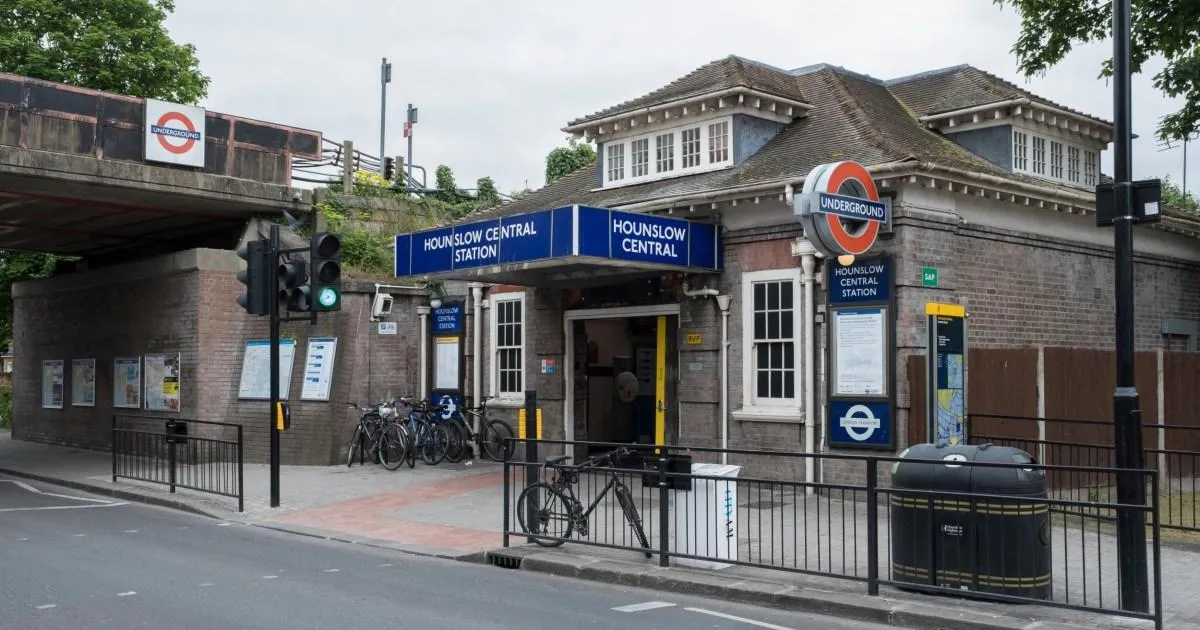
Hounslow Council has become the latest London borough to wave through plans for a massive new data centre, a decision that underscores the growing tension between the capital’s digital ambitions and its physical infrastructure limitations. The proposed facility, to be built on a 12.2-acre brownfield site at the Haslemere Heathrow Estate, was approved earlier this month despite significant concerns raised about its immense appetite for electricity and water. This approval comes hot on the heels of a similar decision by Ealing Council, which gave the green light for another huge data centre in Southall just weeks prior. The rapid succession of approvals highlights a pressing question for London: how can the city nurture its position as a global tech hub without overburdening the very systems that keep it running? The decisions are not just administrative footnotes; they represent a fundamental reckoning with the physical realities of our increasingly digital lives, where every streamed movie, every AI query, and every cloud-stored memory has a tangible cost on the ground.
To the casual observer, a data centre is little more than a nondescript, windowless warehouse on the outskirts of town. But these buildings are the beating heart of the modern digital economy, housing the powerful servers and intricate IT infrastructure that power everything from your favourite streaming service and social media feed to complex artificial intelligence algorithms and critical financial transactions. They are the unseen engines of the cloud, and London is, by a huge margin, the UK’s most important hub for them. According to the Greater London Authority, there are already nearly one hundred operational data centre sites in the capital, with a further twenty-six in the planning pipeline. That means around eighty percent of the UK’s entire data centre capacity is concentrated within London’s borders. This concentration makes economic sense, fostering a powerful ecosystem of connectivity and talent, but it also places an unprecedented strain on the city’s ageing infrastructure, a challenge that local councillors and residents are now grappling with on a near-weekly basis.
The specific concerns raised in Hounslow centred on the sheer scale of the facility’s demands. Planning committee members discussed the need for a high-capacity power connection, one that would be equivalent to powering tens of thousands of homes. That’s a staggering amount of electricity for a single building, enough to light up a small town. The worry is palpable: can the local grid handle it, and at what cost to residential and business customers who are already facing high energy bills? Similarly, the issue of water is critically important. While we often think of data centres as purely electrical consumers, they rely on vast quantities of water for cooling to prevent their sweltering servers from overheating. Affinity Water, the utility that supplies parts of Hounslow, told MPs in May that some data centres were seeking up to three million litres of water a day—a figure that is roughly equivalent to the peak water demand of around 3,500 homes. For a region already under water stress, this represents a monumental new pressure on a vital resource.
The decision to approve the Hounslow scheme was not taken without considerable deliberation and significant caveats. Councillors were persuaded, in part, by the argument that the facility would source its power from a connection point outside of the borough’s boundaries, thereby theoretically not exacerbating local grid constraints. However, this feels like a temporary solution rather than a fundamental one, simply shifting the pressure from one area to another. Furthermore, the developer is now obligated to submit a detailed water reduction strategy, a promise that will need to be carefully monitored to ensure it delivers meaningful results. It’s a bold, perhaps even hopeful, frontier of urban planning where we are betting on future efficiencies to solve present-day problems. This pattern is not unique to Hounslow. In Ealing, councillors acknowledged that electricity capacity is a “recognised issue across west London” and confirmed that the Bridge Road development in Southall would have to find its electricity outside of the existing grid capacity. Both projects still face a final, crucial hurdle: a Stage 2 referral to the Mayor of London, Sadiq Khan, whose office will have the final say on whether these massive projects can truly go ahead.
Behind these individual decisions lies a deeper, more systemic conflict playing out across the capital and indeed the entire country. The Greater London Authority had already voiced warnings that the Hounslow proposal did not fully comply with the London Plan, specifically flagging concerns about its transport impact and its high water and energy demands. The fact that these warnings were overridden or, at the very least, negotiated away in the final decision speaks to the immense political and economic pressure to be seen as “open for business.” Data centres are hugely valuable assets, bringing investment and jobs, and local councils are often eager to showcase their tech credentials. But this drive for growth is colliding with the fundamental limits of the physical world. Ofgem, the UK’s energy regulator, has explicitly identified data centres as a major driver of the country’s soaring demand for electricity, forcing a national conversation about where all this power will come from and how much it will cost consumers. The sprawling industrial blight of server farms is the unglamorous, water-guzzling, energy-hungry underside of our digital revolution, and London is now on the front lines of this new reality.
For the people living in Hounslow and Ealing, and for Londoners at large, this is far more than a planning issue; it’s a question about their quality of life and the future of their city. Every approval chips away at the notion that we can have endless digital growth without any physical consequences. The anxiety is that these facilities, while creating a modest number of jobs, will primarily serve global tech giants, while the local community bears the burden of potential energy price increases, water shortages, and the visual blight of these vast, windowless structures. There is a clear and present need for a more strategic, pan-London, or even national, policy on data centre development, one that prioritises renewable energy sources, mandates the most water-efficient cooling technologies, and ensures that the benefits of this digital gold rush are shared more equitably with the communities that host these facilities. The committee approvals in Hounslow and Ealing are not the final word on this issue; they are merely the opening chapters in a much longer and more complex story about how we balance our insatiable digital appetites with the finite resources of the world around us. As more of these centres are planned, the conversation will only grow louder, forcing us to decide not just where this infrastructure should go, but whether we are prepared to accept the true cost of our connected lives.